Case Report: Carbon‑Ion Re‑irradiation for Recurrent Laryngeal Cancer After Prior Radiotherapy
Case Report: Carbon‑Ion Re‑irradiation for Recurrent Laryngeal Cancer After Prior Radiotherapy
Laryngeal cancer is a common malignancy of the head and neck, arising in the glottic, supraglottic, or subglottic region. Treatment generally involves surgery or radiotherapy. For patients with recurrence after radiotherapy, treatment options are often limited, and carbon‑ion therapy represents a valuable alternative. The following is a case report of a patient with recurrent laryngeal cancer after prior radiotherapy.
I. Classic Case
Case: Mr. Wang, male, 69 years old
Diagnosis: Laryngeal malignancy, squamous cell carcinoma, T2N0M0 stage II, KPS 80
In April 2024, the patient presented with hoarseness. Laryngoscopy revealed a cauliflower‑like neoplasm on the right ventricular fold, involving the laryngeal surface of the epiglottis. Pathology indicated severe dysplasia with focal malignant transformation. He subsequently received four cycles of toripalimab combined with chemotherapy, radiotherapy to the larynx and cervical lymphatic drainage regions (66 Gy/22 fractions and 50 Gy/25 fractions, respectively), and continued maintenance immunotherapy for approximately one year.
In October 2025, follow‑up examination revealed a laryngeal mass; pathology indicated severe dysplasia with focal malignant transformation. In July 2026, repeat pathology confirmed local cancer recurrence. The local hospital in Heilongjiang considered the disease to be progressing and recommended that the patient seek further treatment in Wuwei, Gansu.
Pre‑treatment Assessment
After admission, PET/CT revealed a hypermetabolic soft‑tissue shadow on the right side of the larynx, indicating that tumor activity in this region warranted vigilance. Taking into account prior treatment, pathology, and imaging findings, the physicians considered this to be local recurrence of laryngeal cancer after chemoradiotherapy. Because the larynx had previously received a high radiation dose, re‑irradiation required careful weighing of expected benefits against potential risks.
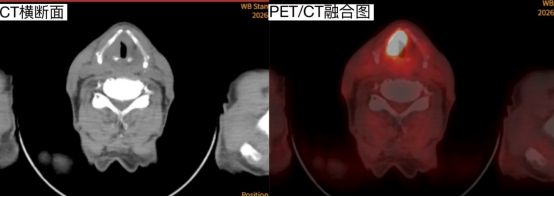
Figure 1. PET/CT before the current carbon‑ion therapy
Multidisciplinary Discussion at the Wuwei Heavy Ion Center: Development of an Individualized Treatment Plan
Following multidisciplinary discussion, the patient was approved to receive carbon‑ion radiotherapy to the local recurrent lesion, combined with weekly concurrent cisplatin chemotherapy.
The following three images show the laryngeal observation area (indicated by arrows) on August 14, 2026 (before carbon‑ion therapy), September 18, 2026 (during carbon‑ion therapy), and October 7, 2026 (after carbon‑ion therapy) at the Wuwei Heavy Ion Center. Comparison of these representative sections shows changes over time in the appearance of the laryngeal cavity and surrounding soft tissues; the laryngeal cavity appears markedly more patent in the later images.
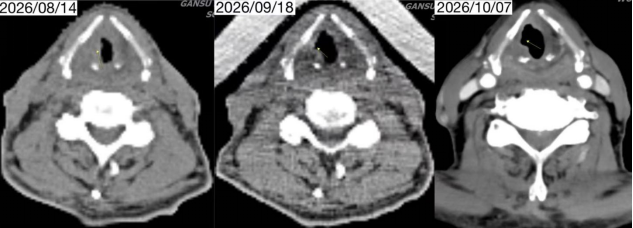
Figure 2. Comparison of laryngeal CT at different time points
Laryngoscopic Follow‑up: Local Lesion Improved Compared with Before
The left panel shows the laryngoscopic image from August 21, 2026, with an irregular surface elevation visible in the area indicated by the yellow circle. The right panel shows the follow‑up image after carbon‑ion therapy on October 8, 2026; the tumor in the previously elevated area has markedly regressed, and the structures of the laryngeal cavity and glottic region are more clearly visualized. Comparison of the two images demonstrates obvious regression of the laryngeal tumor.
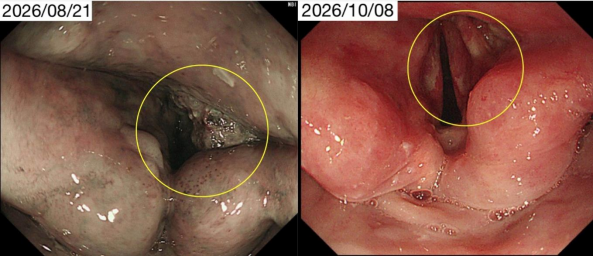
Figure 3. Comparison of laryngoscopic findings. Left: August 21, 2026; Right: follow‑up on October 8, 2026
At discharge, the patient was in good spirits. Sore throat had improved compared with before, hoarseness was markedly improved, and there was no dysphagia or dyspnea. Diet and sleep were good. Follow‑up examination indicated tumor regression with currently good control. Further follow‑up will continue to monitor tumor changes and laryngeal function. These findings demonstrate the unique value of carbon‑ion therapy in the treatment of recurrent laryngeal cancer after radiotherapy.
II. Advantages of Carbon‑Ion Therapy
Physical advantage — "precise blasting" via the Bragg peak: The carbon‑ion beam can concentrate energy release at the depth of the tumor, reducing irradiation of surrounding normal tissues.
Biological advantage — "armor‑piercing" effect with high RBE: Carbon ions can cause complex DNA damage and have therapeutic potential against some hypoxic or less radiosensitive tumor cells.
Spatial advantage — regional control: Treatment can cover the tumor itself, its invasion pathways, and regional lymph nodes, achieving "regional clearance."
III. Data on Laryngeal Cancer Treatment at the Wuwei Heavy Ion Center
From November 2018 to May 2026, the Wuwei Heavy Ion Center treated a total of 24 patients with laryngeal cancer, including 22 males and 2 females, with a mean age of 66.13 ± 10.32 years; patients with stage III/IV disease accounted for 70.8%. Survival analysis results (Kaplan‑Meier method) are shown in Table 1 and Figure 4.
Table 1. Cumulative survival probability of laryngeal cancer (%)
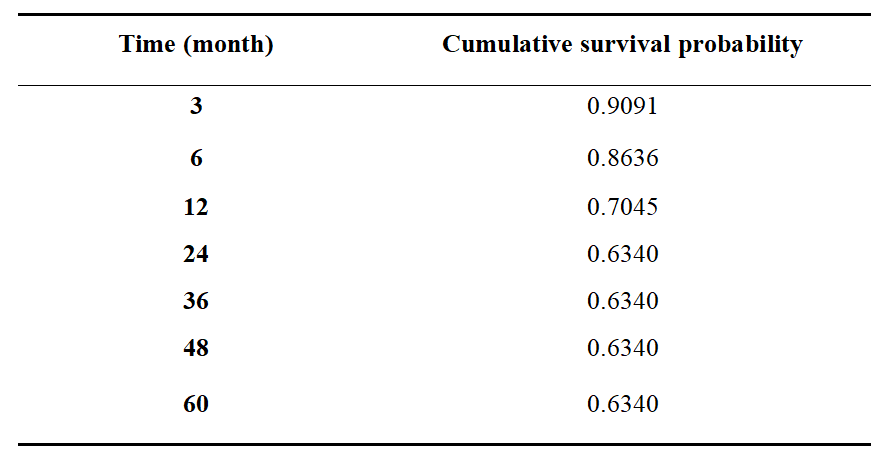
Among the patient cohort, the proportions of stage I and II cases were very small, while stage III/IV accounted for more than 70%. The mean survival time was 48 ± 6.91 months. After 24 months, the survival curve showed a clear plateau, with the survival rate at 24 months being the same as that at 60 months (63.40%), suggesting that patients who remain free of recurrence two years after treatment may achieve long‑term survival.
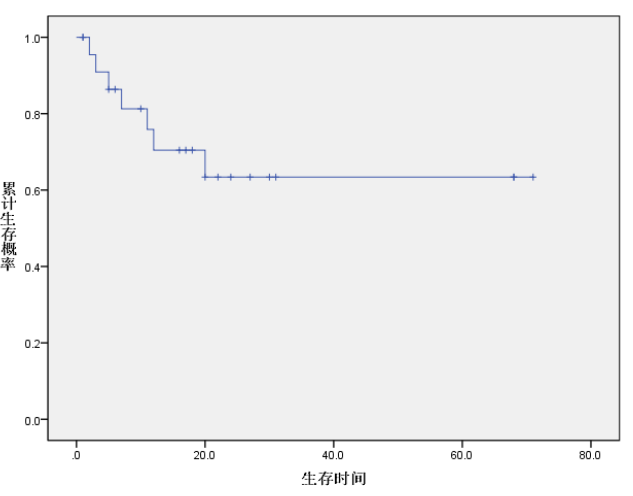
Figure 4. Survival curve of patients with laryngeal cancer after heavy (carbon) ion therapy (0–60 months)
Despite the very high proportion of locally advanced patients (70.45%) in the Wuwei Heavy Ion Center's laryngeal cancer dataset, its 5‑year survival rate (63.4%) is comparable to or better than mainstream historical data for surgery or chemoradiotherapy internationally. The core advantage lies in preservation of laryngeal function and avoidance of total laryngectomy. For patients with locally advanced laryngeal cancer who wish to preserve voice function and who, for medical reasons or by preference, do not wish to undergo total laryngectomy, the Wuwei Heavy Ion Center data provide evidence for a highly promising alternative, with good short‑ to mid‑term tumor control and a clear functional preservation advantage.
IV. Efficacy Comparison: Comparison with Conventional Treatment/International Data
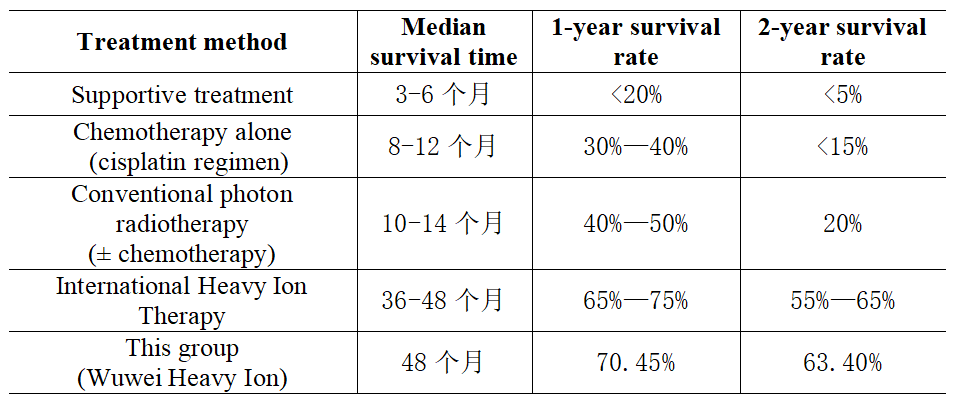
Conclusion: These data are comparable to internationally advanced levels. Notably, this outcome was achieved despite a higher proportion of stage III/IV patients (70.45%), and with preservation of laryngeal function, making the result even more significant. Based on comprehensive comparison, heavy (carbon) ion therapy offers a clear survival advantage over conventional treatment in laryngeal cancer, particularly in locally advanced, postoperative recurrent, or inoperable patients. It can prolong median survival and improve 1‑, 2‑, and 5‑year survival rates, with an extremely low incidence of severe adverse reactions. For patients who wish to preserve laryngeal function and avoid total laryngectomy, heavy ion therapy is an attractive organ‑preservation strategy. Real‑world data suggest that early‑ and intermediate‑stage laryngeal cancer may be treated with curative heavy ion therapy; for locally advanced patients, heavy ion therapy is also one of the preferred curative options. In cases of recurrence after radiotherapy and difficult‑to‑treat cases, heavy ion therapy is a highly important option, offering hope for life.
The greatest advantage of carbon‑ion therapy for laryngeal cancer is the greater opportunity to preserve the larynx and retain the functions of speech and phonation, without removing the larynx and losing the ability to speak. This treatment beam is mainly concentrated on the tumor, causing less damage to normal tissues surrounding the larynx. During treatment, reactions such as sore throat, dry mouth, and oral ulceration are milder, and the risk of long‑term sequelae such as laryngeal cartilage necrosis and chronic dysphagia is lower. It does not require surgery, has no surgical wound or anesthesia risk, and imposes a low systemic burden — suitable for elderly patients, those in poor physical condition who cannot tolerate surgery, or those who do not wish to undergo surgery. For locally advanced laryngeal cancer or recurrence after conventional radiotherapy, tumor control is also better.
V. Can Carbon‑Ion Therapy Be Considered for Local Recurrence After Radiotherapy?
Prior radiotherapy does not necessarily mean that re‑irradiation is absolutely contraindicated, but re‑irradiation requires more prudent evaluation. Carbon‑ion re‑irradiation may be considered as a treatment option for selected patients after individualized assessment. Before treatment, a team with relevant experience should comprehensively evaluate the patient's condition and fully communicate the expected benefits, potential risks, and other treatment options. After treatment, continuous follow‑up is required to monitor tumor changes, laryngeal function, and late adverse reactions.
Introduction to the First Department of the Radiotherapy Center, Wuwei Heavy Ion Center
The First Department of the Radiotherapy Center at the Wuwei Heavy Ion Center is a national key construction specialty, a Gansu Provincial key discipline, and a Wuwei Municipal key discipline. Under the leadership of Dr. Zhang Yanshan, the department focuses on basic research and clinical application of heavy ions and has become China's earliest clinical center dedicated to heavy ion clinical application, also cultivating talent for domestic heavy ion clinical application. It is currently the department in China that completes the largest number of heavy ion treatment cases for tumors at all body sites each year, with the most complex range of diseases and the largest case volume. On the basis of continuously summarizing and refining clinical experience, our department has now formed a model in which, building on heavy ion treatment for tumors at all body sites, the heavy ion treatment of three major tumors — liver cancer, lung cancer, and pancreatic cancer — serves as the leading disease focus. The department was the first in the world to carry out the "galloping scheme" for the treatment of bladder cancer, and the first in the world to use high‑frequency oscillatory ventilation to control respiratory motion, keeping organ motion within approximately 1 mm. It pioneered the "spacer technique" and introduced the concept of "heavy ion surgery," collaborating with surgery so that tumors adjacent to normal organs can safely receive heavy ion treatment.
Our department has accumulated relatively rich experience in the treatment of primary and metastatic liver cancer and has greatly expanded the heavy ion indications for liver cancer. Especially for intermediate‑ and advanced‑stage liver cancer, we have expanded the heavy ion indications for liver cancer from the common indications for early‑ and intermediate‑stage liver cancer to advanced cases, even including patients who cannot undergo liver transplantation and those with recurrence and/or metastasis after liver transplantation — all of whom have achieved good outcomes at our center. We have found that the non‑irradiated portion of the liver is considered helpful for preserving liver function; heavy ions can completely destroy the tumor while effectively protecting the non‑tumor portion of the liver. After heavy ion therapy, the tumor area gradually shrinks, while the normal liver rapidly undergoes compensatory enlargement. For patients with extensive infiltration and multiple lesions, we can proceed step by step and in stages, addressing each lesion individually. In addition, for liver cancers >3 cm and those adjacent to the hepatic hilum, carbon‑ion therapy can also achieve good local control. Using our department's original high‑frequency oscillatory ventilation to control respiratory motion, keeping organ motion within approximately 1 mm, and then applying our department's original "heavy ion surgery" technique, we have successfully treated patients with multiple liver metastases, even more than ten metastatic lesions. In some patients, because the tumor was close to the gastrointestinal tract, we collaborated with surgery so that tumors adjacent to normal organs could safely receive heavy ion treatment. In the treatment of liver tumors, heavy ion therapy offers greater advantages than hepatectomy, transcatheter arterial embolization (TAE), transcatheter arterial chemoembolization (TACE), percutaneous ethanol injection (PEI), and radiofrequency ablation (RFA), both in terms of radicality and comfort.
The department has pioneered and refined heavy ion treatment for esophageal cancer, bladder cancer, breast cancer, and other diseases both domestically and internationally, continuously accumulating experience in the treatment of gliomas and various sarcomas, and innovatively using general anesthesia with high‑frequency oscillatory ventilation, bladder capacity and pressure control devices, breast immobilization devices, and other world‑first technologies to strictly control organ motion — further increasing the local heavy ion treatment dose to the tumor, better protecting normal organs, and achieving the goal of highly precise heavy ion radiotherapy with improved efficacy and reduced side effects. The department also routinely uses advanced photon radiotherapy techniques such as stereotactic body radiotherapy/stereotactic radiosurgery (SBRT/SRS), intensity‑modulated radiotherapy (IMRT), and volumetric modulated arc therapy (VMAT).
Department members are proficient in English and routinely strengthen English‑language ward round communication. The latest National Comprehensive Cancer Network (NCCN) guidelines serve as the guiding principles for our comprehensive tumor treatment, forming a department that uses heavy ions as a powerful tool and comprehensively integrates targeted therapy, immunotherapy, cellular immunotherapy, chemotherapy, and other comprehensive tumor treatments. The department is deeply integrated with our hospital's follow‑up office, with well‑established post‑heavy‑ion‑therapy follow‑up tracking and continuous summary and observation. In terms of tumor diagnosis and comprehensive treatment, the department remains synchronized with the world and continuously writes papers, contributing our unique strength to the global heavy ion cause.
The department has a total of 16 medical and nursing staff. The team led by Professor Zhang Yanshan, Vice President, Director Zhang Yihe, Chief Physician, and Deputy Director Pan Xin has been engaged in the earliest domestic clinical practice of domestically produced heavy ions since 2018. With heavy ion technology as its core, the department follows the "two‑cycle, three‑multi" precision diagnosis and treatment quality management model. Department members are proficient in English and extensively carry out international and domestic academic exchanges, providing personnel training and technical output for newly established heavy ion facilities in China. Since its establishment, the department has been rated as an outstanding physician team in Gansu Province for many consecutive years, has registered and conducted more than 20 clinical trials, and has published multiple research results in core journals both domestically and internationally.
Under the influence of the department motto "Learned, Refined, Humble, Sincere" and the department culture of "cultivation rooted in the heart, self‑discipline that requires no reminder, freedom premised on restraint, and kindness that considers others," all medical and nursing staff of the First Department of the Radiotherapy Center have earned praise from a wide range of patients and their families through rigorous professional spirit and compassionate medical services.
Introduction to the Wuwei Heavy Ion Center, Gansu Wuwei Cancer Hospital
The Wuwei Heavy Ion Center is the clinical application base for China's first heavy (carbon) ion therapy system with complete independent intellectual property rights. It is technically supported by the Institute of Modern Physics, Chinese Academy of Sciences, and clinically operated by Gansu Wuwei Cancer Hospital. Since the first patient was treated in November 2018, as of October 15, 2026, the center has treated more than 3,300 patients, covering more than 100 tumor types, including lung cancer, pancreatic cancer, liver cancer, glioblastoma, nasopharyngeal carcinoma, rectal cancer, and various sarcomas. Heavy (carbon) ions have a strong tumor cell‑killing effect; the relative biological effectiveness of heavy (carbon) ions can reach 2 to 5 times that of conventional radiotherapy and proton therapy, with minimal impact on surrounding normal tissues [1‑2].
As the only medical institution in the world operating two heavy (carbon) ion therapy systems simultaneously, Wuwei Cancer Hospital continues to advance technological innovation and has achieved nine "world‑first" accomplishments, including precision treatment under ventilator control, bladder cancer treatment under precise bladder capacity control, single‑session treatment with surgical implantation of spacers between organs and tumors, and dual Bragg peak heavy (carbon) ion lattice radiotherapy. It has also developed China's first 360° rotatable and height‑adjustable ion radiotherapy chair and completed the world's first batch of multiple cases of cardiac tumor heavy (carbon) ion treatment.
Leveraging 30 research platforms including the CAS Key Laboratory of Heavy (Carbon) Ion Beam Radiation Biology and the Sydney University Biomedical Data Analysis and Visualization Laboratory, the center has conducted more than 30 clinical studies on key tumor types and published nine monographs including the Standard Operating Procedure for Carbon Ion Radiotherapy, gradually building a knowledge system covering physical technology, clinical diagnosis and treatment, and health management. On February 23, 2026, CCTV‑13's Morning News broadcast a special report on the operation of China's first medical heavy ion accelerator with independent intellectual property rights; Yang Jiancheng, Deputy Director of the Institute of Modern Physics, Chinese Academy of Sciences, provided an introduction in the program.
[1]Abousaida B, Seneviratne D, Hoppe BS, Ko SJ, Asaithamby A, Cucinotta FA, et al. Carbon ion radiotherapy in the management of hepatocellular carcinoma. J Hepatocell Carcinoma. 2021;8:1169-1182. (Table 1, reproduced with permission from Kavanagh BD. Introduction to clinical radiation oncology. Radiology. 1998;209(1):168.
[2]Apisarnthanarax S, Bowen SR, Combs SE. Proton beam therapy and carbon ion radiotherapy for hepatocellular carcinoma. Semin Radiat Oncol. 2018;28(4):309-320.
Writer: Liang Xuexue (Master's degree candidate)
Case provided by: Pan Xin (Deputy Director, First Department of the Radiotherapy Center)
Data support: Tumor Registry and Follow‑up Office (Chen Xuelian, Li Pengqing)
Reviewed by: Zhang Yanshan (Chief Physician)
Date: October 21, 2026