"Motion Dizziness? Blame Ear ‘Rocks’"
The Trouble of "Getting Dizzy as Soon as Moving" May Well Be Caused by the "Little Stones" in the Ears
Introduction: Feeling dizzy when getting up, turning over in bed, or even just bending down to pick something up... "Today, we will take you on a comprehensive journey to understand benign paroxysmal positional vertigo (BPPV)-from its pathophysiology to the miraculous evidence-based management. After reading this, you'll instantly master clinical strategies in dealing with dizziness!"
I. What is Benign Paroxysmal Positional Vertigo (BPPV)?
BPPV, also known as "benign paroxysmal positional vertigo", is a kind of vertigo caused by the "otoconia" that have dislodged in the inner ear straying into the semicircular canals, thus interfering with the balance signals.
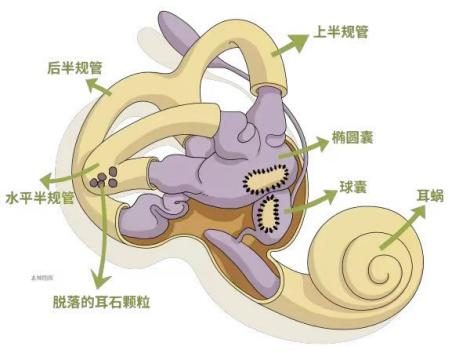
II. Why Do the Otoliths "Leave Their Original Position"?
Pathogenesis:
1.Aging of Otoconia: Calcium carbonate crystals are more likely to detachment with age (more prevalent among middle-aged and elderly people).
2.Traumatic Impact: Head trauma or severe vibrations can cause the otoliths to detach.
3.Calcium Deficiency/Metabolic Abnormalities: Osteoporosis and vitamin D deficiency reduce the stability of the otoliths.
4.Other Inducing Factors: Prolonged periods of keeping the head down, sleep deprivation, viral infections, etc.
III. Key Differentiating Points between BPPV and Other Types of Vertigo
| Symptoms | BPPV | Meniere's disease | vestibular migraine |
| Duration of vertigo | Several seconds to 1 minute | 20 minutes to 12 hours | 5 minutes to 72 hours |
| Associated symptoms | No tinnitus/deafness | tinnitus、 aural fullness、hearing loss | headache 、photophobia and phonophobia |
| Triggering actions | Specific head position changes | no specific inducements | stress, lack of sleep |
IV. Clinical Manifestations
• Sudden and Brief Vertigo: Related to specific head position changes (such as getting up, turning over, and bending down).
• Nausea/Vomiting: Severe vertigo may be accompanied by autonomic nervous system symptoms.
• No hearing abnormalities and no sequelae left behind.
V. The 10-Minute "Magic Repositioning": The SpecificTreatment for BPPV
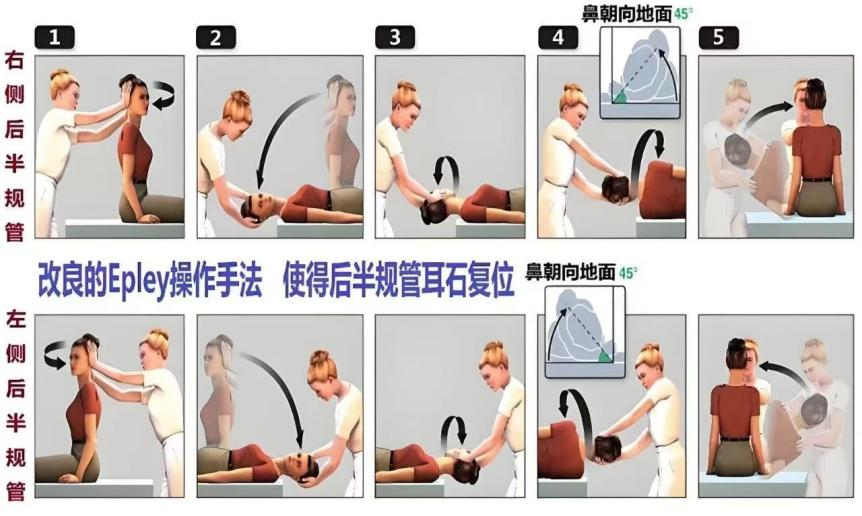
Epley Maneuver (the preferred repositioning method for posterior semicircular canal BPPV)
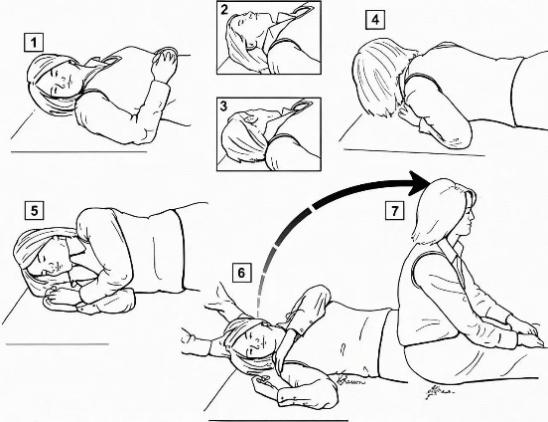
Barbecue Roll Maneuver (for horizontal semicircular canal BPPV)
Barbecue Roll Maneuver (for horizontal semicircular canal BPPV)
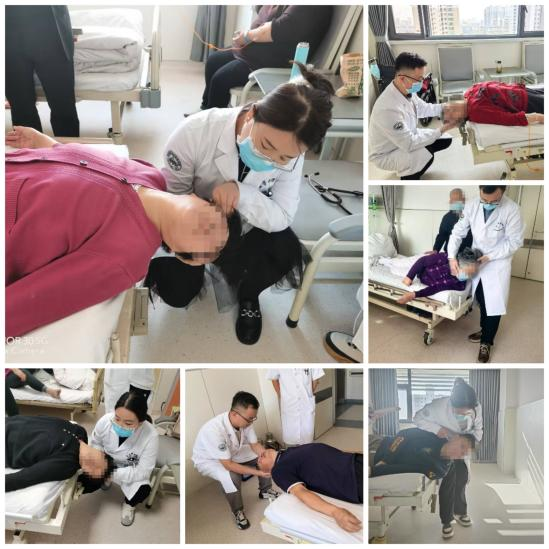
Daily Teaching and Treatment
Correction of Public Cognitive Misconceptions:
Misconception 1: "Vertigo = Cervical Spondylosis" → BPPV is more common and easier to cure.
Misconception 2: "Get an IV drip whenever feeling dizzy" → Vasodilators are ineffective and will delay the treatment.
Warning Sign: Vertigo and Disturbance of Consciousness/Limb Weakness → Immediately rule out a stroke.