What to Do If You Test Positive for Helicobacter pylori During a Health Check‑up?
What to Do If You Test Positive for Helicobacter pylori During a Health Check‑up? – All the Answers Are Here
"So I tested positive for Helicobacter pylori during my health check‑up – what should I do?" Many people feel anxious, worried, and uncertain when they see this result on their health report. Today, we will address these concerns one by one.
1. What Is Helicobacter pylori, and How Is It Detected?
1. Helicobacter pylori (H. pylori) is the only bacterium that colonizes the human stomach, adhering to the gastric mucosa and the intercellular spaces. In 1994, the World Health Organization (WHO) classified H. pylori as a Class I carcinogen.
2. Some gastric cancers belong to the "intestinal‑type" category. If H. pylori is eradicated before intestinal metaplasia develops, the prevention of intestinal‑type gastric cancer is nearly 100% effective.
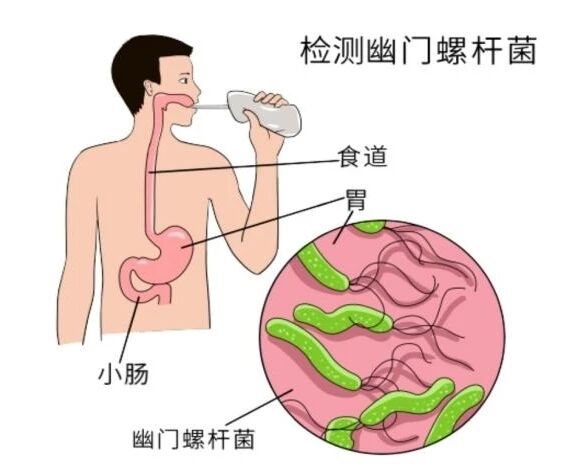
3. Detection is performed using the 13C or 14C urea breath test. The procedure is as follows:
- Fast for at least 4 hours
- Swallow a urea capsule
- Rest quietly for 20–30 minutes
- Blow into the collection bag or tube
- Receive the test result
If the result is positive, it indicates an active H. pylori infection.
Precautions:
- Do not take antibiotics for 1 month before the test.
- Do not take proton pump inhibitors (PPIs) or bismuth‑containing medications for 1–2 weeks before the test.
- Carbon‑14 urea breath test is not recommended for pregnant women or children under 12 years of age; the carbon‑13 test is preferred for these groups.
2. What should I do if I test positive? What about my family members?
According to current guidelines, once H. pylori infection is confirmed by a breath test in adults, eradication therapy is recommended regardless of whether gastrointestinal symptoms are present. Studies have shown that eradication between the ages of 18 and 40 offers the greatest benefit, providing maximal protection against the development of atrophic gastritis, intestinal metaplasia, and gastric cancer.
1. If you test positive, you should:
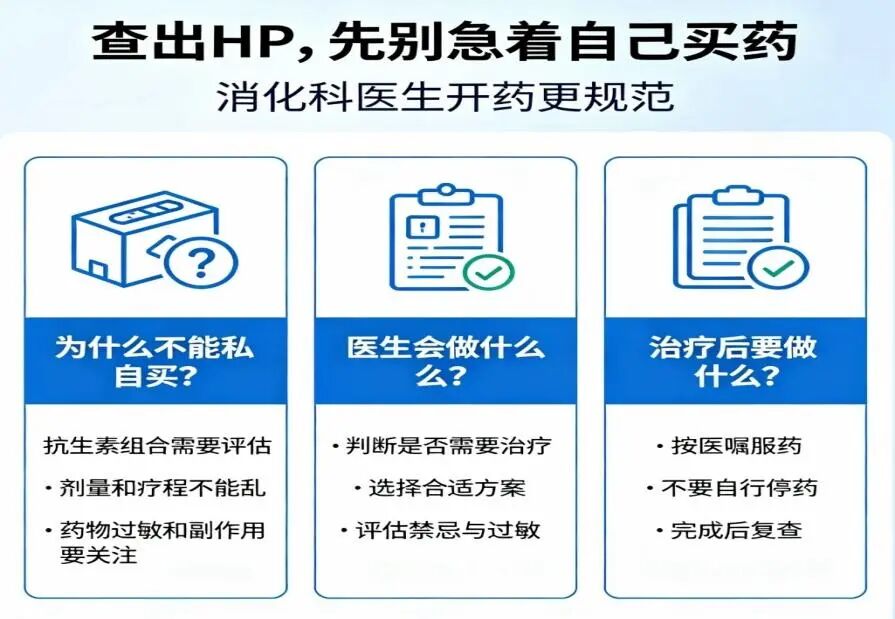
- Visit the Gastroenterology Department of a regular hospital and have a specialist prescribe the treatment.
- Because individual factors — such as constitution, history of drug allergies, liver and kidney function, and concurrent medications for underlying conditions — vary significantly, the physician will select a regimen with high eradication rates and low drug resistance tailored to your specific situation.
- Do not self‑medicate.
- Strictly follow the physician's instructions regarding timing of medication (before or after meals), duration of treatment, and precautions during the course — failure to do so may lead to treatment failure.
2. Since the oral cavity is the second largest reservoir of H. pylori, it is recommended to address any oral health issues concurrently to improve the eradication rate.
3. Since H. pylori is primarily transmitted through the fecal‑oral and oral‑oral routes, if one family member is infected, it is recommended that other adult family members also undergo breath testing. Test results generally fall into two scenarios:
Positive: They should receive treatment together with you.
Negative: They should adopt preventive measures, including:
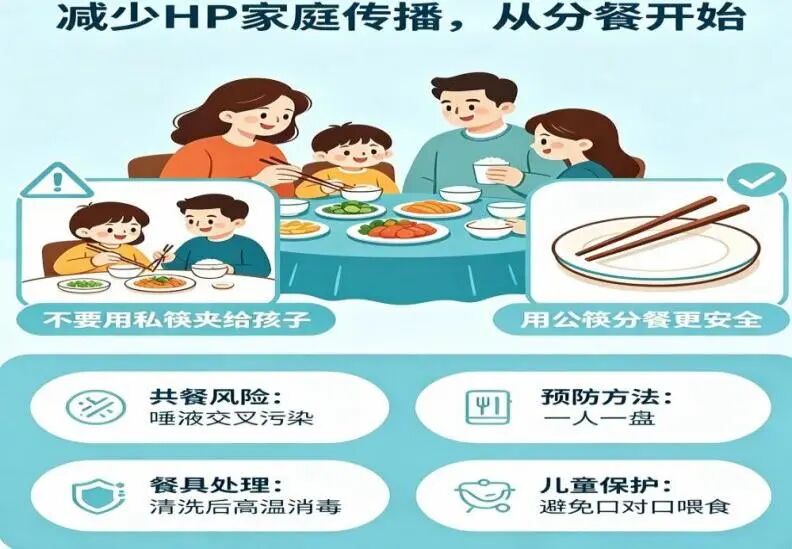
- Reducing the frequency of eating out;
- Washing hands before meals and after using the toilet;
- Not chewing food for infants or young children;
- Avoiding shared use of bowls, chopsticks, and cups;
- Using serving chopsticks or practicing individual serving during family meals;
- Disinfecting tableware — methods such as microwave heating, boiling in water, or soaking in 75% alcohol are all effective in eliminating H. pylori.
3. What if eradication fails? Why does eradication fail?
Friendly reminder:
A follow‑up breath test should be performed at least 4 weeks after completing eradication therapy.
- If the test is negative, eradication is successful. If it remains positive, the course has failed. In that case, do not start another course immediately — wait at least 3 months before attempting a second eradication treatment.
- Keep a record of the antibiotics used in this course. Some of them may not be suitable for reuse in subsequent treatments due to resistance. If possible, consider antibiotic susceptibility testing to guide the choice of more effective antibiotics.
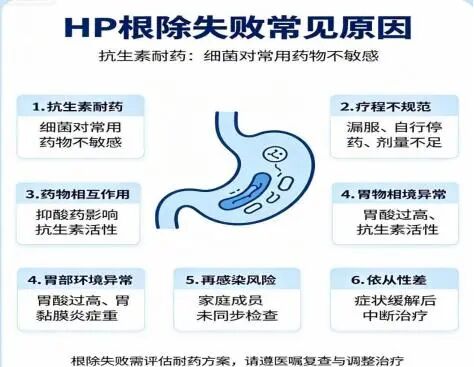
- Common causes of eradication failure include:
- Antibiotic resistance
- Inadequate adherence to medication (not taking the full dose or completing the full course)
- Unhealthy lifestyle habits such as drinking alcohol or smoking during treatment
- Inappropriate regimen selection
- Re‑infection
- Individual genetic differences
- Coexisting conditions such as diabetes that may affect eradication rates
4. Is recurrence likely after successful eradication? Should I have annual check‑ups?
For individuals without symptoms, annual retesting is generally not necessary. However, it is still important to follow the dietary and hygiene precautions mentioned above.
5. Who are the high‑risk groups? What should they do?
High‑risk groups include:
- Individuals with a history of peptic ulcer disease (regardless of whether it is active or has a history of complications)
- Patients with gastric mucosa‑associated lymphoid tissue (MALT) lymphoma
- Those with dyspeptic symptoms
- Patients who have undergone gastric surgery or subtotal gastrectomy
- Individuals with a family history of gastric cancer
- Those on long‑term non‑steroidal anti‑inflammatory drugs (including low‑dose aspirin)
- Unexplained iron deficiency anemia
- Idiopathic thrombocytopenic purpura
- Individuals with adenomatous or hyperplastic gastric polyps
People in these groups have a several‑fold higher risk of developing gastric cancer compared to the general population. Since H. pylori is a major driver of gastric cancer, it is recommended that they undergo annual testing for H. pylori and gastroscopy as part of routine surveillance.
Gastroenterology / Oncology Rehabilitation

Our Department of Gastroenterology / Oncology Rehabilitation is a flagship specialty of the center, combining clinical services, teaching, and research. It features two outpatient clinics (Gastroenterology and Oncology Rehabilitation) and one inpatient unit. Our team consists of 13 healthcare professionals: 1 senior specialist, 2 mid-level practitioners, and 10 junior staff. Academically, we have 1 Ph.D. and 5 Master's degree holders, along with 4 provincial-level distinguished TCM physicians who hold regular consultations. Our multidisciplinary staff includes clinical doctors, TCM physicians, rehabilitation therapists, psychological counselors, psychotherapists, health coaches, and dietitians — all trained in specialized rehabilitation techniques, TCM meridian hypnosis, Mindfulness-Based Stress Reduction (MBSR), Cognitive Behavioral Therapy (CBT), and psychological drawing analysis. We are dedicated to providing comprehensive care for digestive disorders and cancer rehabilitation, integrating Chinese and Western medicine, physical therapy, exercise therapy, psychological support, and nutritional guidance. Following an MDT (multidisciplinary team) approach, we craft individualized diagnostic, treatment, and rehabilitation plans for every patient.
I. Scope of Diagnosis and Treatment
1. Digestive System: We treat a full range of digestive conditions — from esophageal, gastrointestinal, hepatobiliary, and pancreatic disorders to psychosomatic digestive issues — and also provide palliative care and TCM-based therapies for gastrointestinal cancers.
2. Integrated Rehabilitation: Our rehabilitation services cover musculoskeletal and neurological conditions such as lumbar disc herniation, cervical spondylosis, degenerative joint disease, muscle atrophy, and peripheral nerve injuries. We also specialize in managing cancer-related complications and side effects from non-surgical oncology treatments — including nausea, vomiting, diarrhea, abdominal pain, fatigue, skin reactions, bone marrow suppression, hair loss, and lymphedema.
II. Diagnostic and Treatment Technologies
1. Routine Services: We provide painless gastroscopy and colonoscopy, along with a full range of endoscopic interventions — polypectomy, hemostasis, stricture dilation, stent placement, endoscopic mucosal resection (EMR), and endoscopic submucosal dissection (ESD) — all performed with minimally invasive techniques.
2. Specialized Services: Our advanced endoscopic offerings include POEM, EUS, ultrasound-guided radioactive seed implantation, ERCP, combined endoscopic-laparoscopic full-thickness resection, and sclerotherapy/ligation for esophageal and gastric varices. Beyond procedures, we specialize in integrated Chinese-Western medicine management of chemotherapy/radiotherapy GI side effects, especially radiation proctitis; physical therapy combined with CBT and MBSR for anxiety, depression, and sleep disorders; integrated TCM and psychological support for cancer-related fatigue and treatment side effects; prevention and management of radiation-induced lymphedema; TCM therapies for chemotherapy-induced hand-foot syndrome; and comprehensive rehabilitation for cancer pain and other chronic pain conditions.
III. Facilities and Equipment
1. State-of-the-Art Endoscopy Equipment: We are equipped with Olympus high-definition electronic gastroscopes, duodenoscopes, colonoscopes, endoscopic ultrasound (EUS), magnifying endoscopes, and small-bowel enteroscopes — covering all diagnostic and interventional needs.
2. Advanced Rehabilitation Equipment: Our rehabilitation unit features a full range of modern devices, including an automatic constant-temperature wax therapy unit, water-filtered infrared-A (wIRA) therapy, interferential current therapy, deep muscle stimulator, shockwave therapy, ultrasound therapy, lymphatic drainage device, air-wave pressure therapy, medium- and low-frequency electrotherapy units, transcranial magnetic stimulation (TMS), psychological CT, mental stress analyzer, computerized mindfulness training system, sandplay therapy kit, and polysomnography (PSG) for sleep monitoring.
Our Service Philosophy:
Precision medicine to ease your pain; compassionate care to enrich your life.
Clinic Location:
Room 418, 4/F, Inpatient Building, Lanzhou Campus, Gansu Wuwei Cancer Hospital
Ward Location:
10/F, Inpatient Building, Lanzhou Campus, Gansu Wuwei Cancer Hospital
Writer: Wan ShunMei
First Review: Liu Qiong
Second Review: Guo Yishan
Third Review: Cai Qinghua