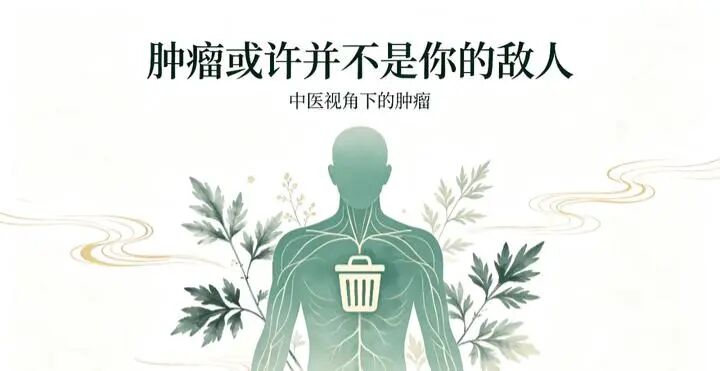
Tumors May Not Be Your Enemy – A Traditional Chinese Medicine Perspective on Cancer
Tumors May Not Be Your Enemy – A Traditional Chinese Medicine Perspective on Cancer
When it comes to tumors, most people's first reaction is fear — cut it out, kill it, get it out of the body as quickly as possible. But traditional Chinese medicine offers a completely different perspective: a tumor may not be the "enemy," but rather a "waste basket" that the body has reluctantly built.
1. What Is a Tumor? Perhaps a "Waste Basket"
When the body accumulates excessive toxins and waste products and fails to metabolize and expel them in time, it is forced to find a temporary place to store this waste. A tumor is precisely this "waste basket."
This view is consistent with the traditional Chinese medicine understanding of tumors. TCM holds that the occurrence of tumors is fundamentally a disturbance of the internal environment — deficient vital qi, imbalance of the zang‑fu organs, stagnation of qi and blood, accumulation of phlegm‑dampness, and internal binding of toxic heat. In simpler terms: the body's "cleansing system" is no longer functioning properly; waste accumulates to the point where the body has to find a corner to store it centrally.
Thus, the tumor itself is not the root cause of the disease, but rather a compromise made by the body when it is unable to expel pathogenic factors.
2. How Does a Tumor Develop? Yang Qi Deficiency and Impaired Transformation
According to the Yellow Emperor's Inner Canon, the development of cancer is attributed to the weakening of yang qi in the body — when the body's vital energy becomes too weak to drive proper circulation and transformation, internal toxins cannot be transported or eliminated.
The Lingshu (Miraculous Pivot) states:
"The Yellow Emperor asked: How does a mass (accumulation) begin, and how does it become established? Qi Bo replied: Accumulations arise from cold — when cold prevails, accumulations take shape."
(Chapter "On the Origin of All Diseases")
This passage clearly identifies cold as the originating factor in the formation of accumulations (masses).
The Lingshu (Nine Needles Treatise) further states:
"When the winds of the four seasons and eight directions lodge in the channels and collaterals, they may give rise to tumorous diseases."
This indicates that the invasion of external pathogenic factors (such as seasonal winds) into the meridian system, where they linger and fail to resolve, is one of the causes of tumor‑like conditions.
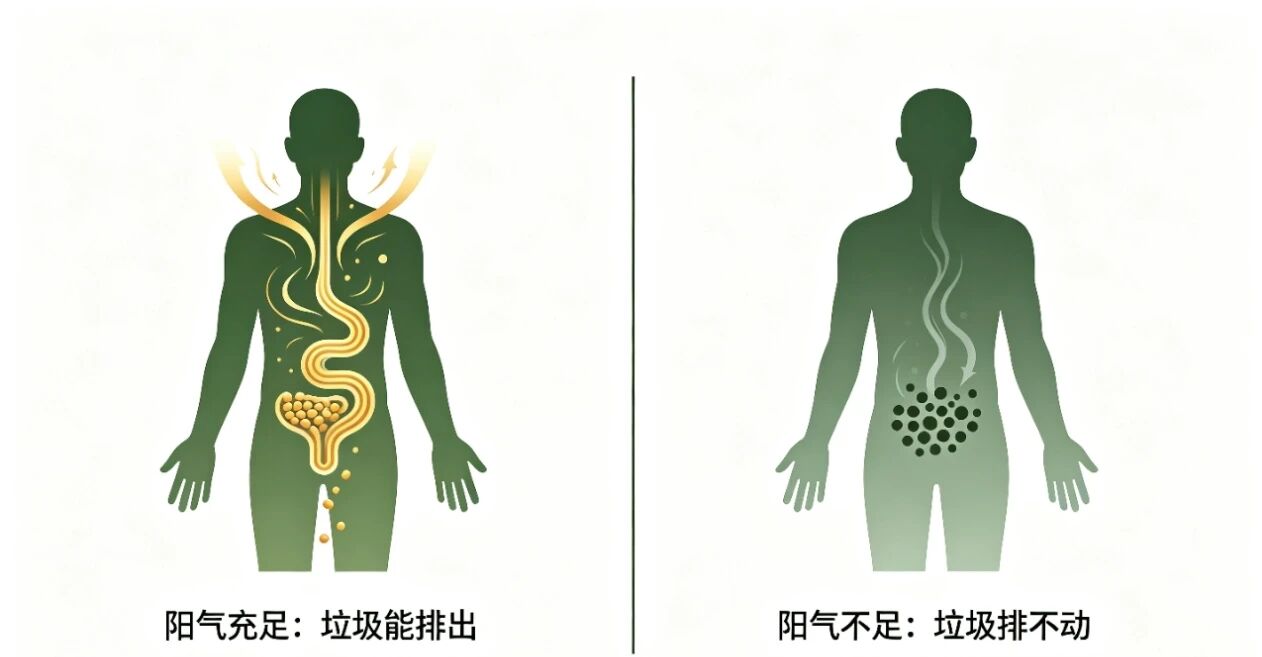
In simpler terms: the food we eat, the air we breathe, and the metabolic waste generated by emotional fluctuations all require the body's qi and blood energy to be transformed, broken down, and eliminated. However, when the body's yang qi is insufficient (you can think of it as "not enough energy"), these waste products cannot be transported out and accumulate over time.
For example: if there is phlegm in the lungs, and that phlegm harbors bacteria and toxins, the body will try to expel these harmful substances through coughing. But if lung qi is deficient and the phlegm is located too deep to be coughed out, the body can only keep coughing repeatedly — and if cough suppressants are used indiscriminately to "stop" the cough, it only makes the situation worse. When the body adapts and compromises, it can only gather that phlegm, bacteria, and toxins in one place. This is the same concept as "lingering without resolution" mentioned above.
The logic of tumors is similar — symptoms are the body's way of struggling to resist, rather than being purely "disease." They are signals of the body's effort to restore balance, not simply something to be silenced.
3. Why Can't We Just "Throw Away the Trash Can"?
In modern medicine, the common approaches to dealing with tumors include surgical resection, radiotherapy, chemotherapy, and targeted therapy. However, a more profound question arises: if you throw away the waste basket, what happens to the waste?
From the perspective of traditional Chinese medicine, why is chemotherapy or radiotherapy still needed after tumor resection? If a wooden board becomes damp and grows mold, killing the mold without addressing the dampness will never be enough — the mold will keep coming back. Similarly, after surgery, the body, in its state of disruption, may find another place to store the waste, and this new location is often more dangerous than the previous one.
This reminds us that we must not only focus on the tumor itself, but also address the underlying "soil" conditions that gave rise to it. Tackling the symptoms alone — without restoring the internal balance that allowed the tumor to form — is unlikely to lead to lasting recovery. A holistic approach that treats both the tumor and the internal environment is essential for long‑term health.
4. The TCM Approach to Tumor Prevention and Treatment
Following this line of thinking, how should tumors be treated? Namely: control toxin intake (reduce waste production) — nourish qi and blood (promote metabolism) — unblock the meridians (open the pathways for waste transport) — eliminate waste.
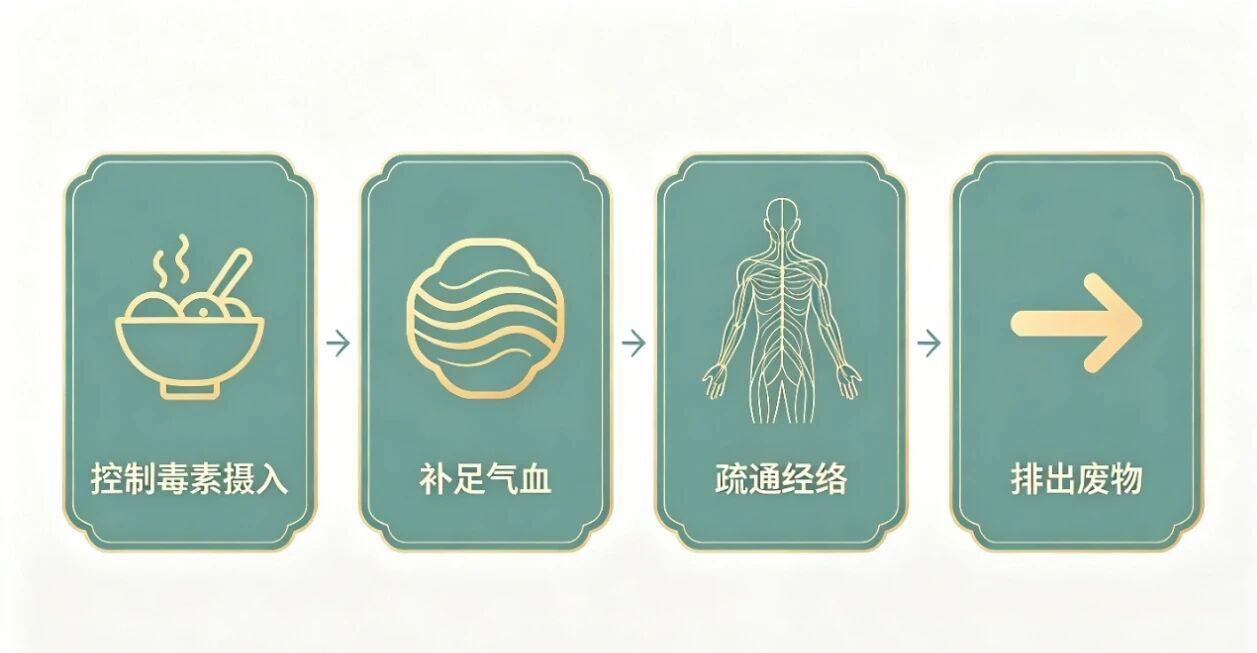
How should tumors be prevented? The principles are essentially the same: control toxin intake (eat easily digestible, nutrient‑rich foods while being mindful of pesticide residues and food quality), nourish qi and blood (support the body with practices such as moxibustion, conserve energy, and avoid exposure to wind and cold), and unblock the meridians (engage in appropriate physical activity to promote circulation).
When we begin to see tumors not as enemies to be vanquished, but as the body's reluctant form of self‑protection — a signal that the internal environment has become imbalanced — the direction of care shifts accordingly. The goal is no longer simply to "cut down the tree," but to improve the soil — to restore the body's innate capacity for balance, self‑repair, and health. By addressing the root conditions that allow tumors to develop, we create a foundation for sustainable recovery and long‑term well‑being.
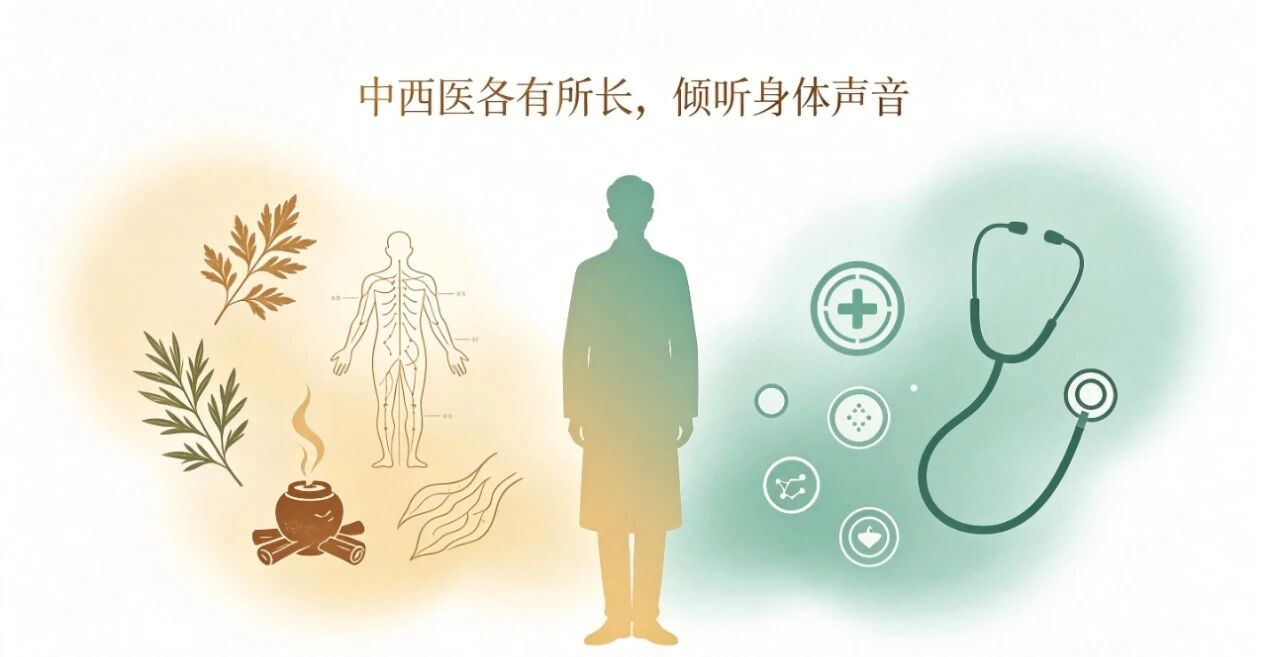
Of course, this is only one medical perspective for reference. When facing a complex disease like cancer, a scientific attitude is to remain open — both conventional medicine and TCM have their strengths, and the key is to find the most suitable approach for each patient. The value of TCM lies in reminding us that while we fight the disease, we should not forget to listen to the body's signals and understand the meaning behind its symptoms.
Gastroenterology / Oncology Rehabilitation
Our Department of Gastroenterology / Oncology Rehabilitation is a flagship specialty of the center, combining clinical services, teaching, and research. It features two outpatient clinics (Gastroenterology and Oncology Rehabilitation) and one inpatient unit. Our team consists of 13 healthcare professionals: 1 senior specialist, 2 mid-level practitioners, and 10 junior staff. Academically, we have 1 Ph.D. and 5 Master's degree holders, along with 4 provincial-level distinguished TCM physicians who hold regular consultations. Our multidisciplinary staff includes clinical doctors, TCM physicians, rehabilitation therapists, psychological counselors, psychotherapists, health coaches, and dietitians — all trained in specialized rehabilitation techniques, TCM meridian hypnosis, Mindfulness-Based Stress Reduction (MBSR), Cognitive Behavioral Therapy (CBT), and psychological drawing analysis. We are dedicated to providing comprehensive care for digestive disorders and cancer rehabilitation, integrating Chinese and Western medicine, physical therapy, exercise therapy, psychological support, and nutritional guidance. Following an MDT (multidisciplinary team) approach, we craft individualized diagnostic, treatment, and rehabilitation plans for every patient.
I. Scope of Diagnosis and Treatment
1. Digestive System: We treat a full range of digestive conditions — from esophageal, gastrointestinal, hepatobiliary, and pancreatic disorders to psychosomatic digestive issues — and also provide palliative care and TCM-based therapies for gastrointestinal cancers.
2. Integrated Rehabilitation: Our rehabilitation services cover musculoskeletal and neurological conditions such as lumbar disc herniation, cervical spondylosis, degenerative joint disease, muscle atrophy, and peripheral nerve injuries. We also specialize in managing cancer-related complications and side effects from non-surgical oncology treatments — including nausea, vomiting, diarrhea, abdominal pain, fatigue, skin reactions, bone marrow suppression, hair loss, and lymphedema.
II. Diagnostic and Treatment Technologies
1. Routine Services: We provide painless gastroscopy and colonoscopy, along with a full range of endoscopic interventions — polypectomy, hemostasis, stricture dilation, stent placement, endoscopic mucosal resection (EMR), and endoscopic submucosal dissection (ESD) — all performed with minimally invasive techniques.
2. Specialized Services: Our advanced endoscopic offerings include POEM, EUS, ultrasound-guided radioactive seed implantation, ERCP, combined endoscopic-laparoscopic full-thickness resection, and sclerotherapy/ligation for esophageal and gastric varices. Beyond procedures, we specialize in integrated Chinese-Western medicine management of chemotherapy/radiotherapy GI side effects, especially radiation proctitis; physical therapy combined with CBT and MBSR for anxiety, depression, and sleep disorders; integrated TCM and psychological support for cancer-related fatigue and treatment side effects; prevention and management of radiation-induced lymphedema; TCM therapies for chemotherapy-induced hand-foot syndrome; and comprehensive rehabilitation for cancer pain and other chronic pain conditions.
III. Facilities and Equipment
1. State-of-the-Art Endoscopy Equipment: We are equipped with Olympus high-definition electronic gastroscopes, duodenoscopes, colonoscopes, endoscopic ultrasound (EUS), magnifying endoscopes, and small-bowel enteroscopes — covering all diagnostic and interventional needs.
2. Advanced Rehabilitation Equipment: Our rehabilitation unit features a full range of modern devices, including an automatic constant-temperature wax therapy unit, water-filtered infrared-A (wIRA) therapy, interferential current therapy, deep muscle stimulator, shockwave therapy, ultrasound therapy, lymphatic drainage device, air-wave pressure therapy, medium- and low-frequency electrotherapy units, transcranial magnetic stimulation (TMS), psychological CT, mental stress analyzer, computerized mindfulness training system, sandplay therapy kit, and polysomnography (PSG) for sleep monitoring.
Our Service Philosophy:
Precision medicine to ease your pain; compassionate care to enrich your life.
Clinic Location:
Room 418, 4/F, Inpatient Building, Lanzhou Campus, Gansu Wuwei Cancer Hospital
Ward Location:
10/F, Inpatient Building, Lanzhou Campus, Gansu Wuwei Cancer Hospital
Writer: Ma Junfei
First Review: Liu Qiong
Second Review: Guo Yishan
Third Review: Cai Qinghua