Pancreatic Cancer: What Makes It So Different?
Pancreatic Cancer: What Makes It So Different?
(Note: The illustrations in this article are for general educational purposes only and are not intended as anatomical or physiological teaching diagrams.)
Pancreatic cancer is widely recognized as one of the most formidable malignancies in modern oncology, notorious for its extremely high mortality rate, insidious onset, and stubborn resistance to conventional treatments. Despite continuous advancements in medical technology, a retrospective analysis by Klara Dorman et al. points out that the five-year survival rate for pancreatic cancer has long hovered around 10%. As the disease progresses to advanced stages, this rate drops even further. What causes such a grim clinical prognosis? Let's explore the reasons one by one.
PART 01: Anatomical Location Determines Treatment Difficulty
The difficulty in treating pancreatic cancer is directly related to its "deeply hidden" and "systemically impactful" anatomical location. This is mainly reflected in three aspects: difficulty in early detection, challenges in surgical resection, and ease of invading surrounding tissues.
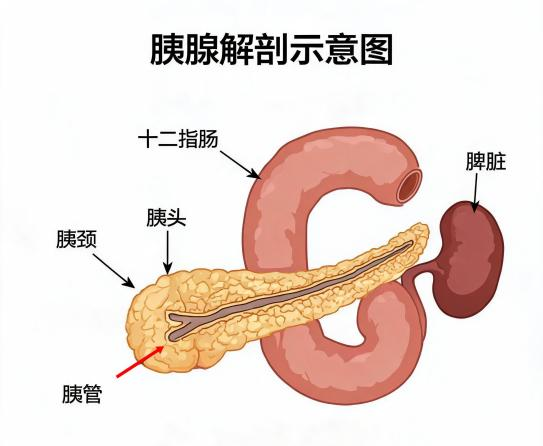
The pancreas is located deep within the abdominal cavity, tucked between the stomach and the spine. It cannot be felt during routine physical examinations, and early stages rarely cause discomfort. Cancer in the head of the pancreas may compress the bile duct, causing jaundice, which is often mistaken for liver or gallbladder disease. Cancer in the body and tail of the pancreas has no obvious symptoms throughout its course, making it very difficult to detect.
The pancreas is surrounded by a dense network of blood vessels, closely adjacent to major abdominal vessels such as the portal vein, superior mesenteric artery and vein, and celiac trunk. It also neighbors the duodenum and spleen. Tumors easily wrap around blood vessels and invade surrounding organs, leaving less than 20% of patients eligible for surgery.
While invading adjacent organs, pancreatic tumors can metastasize along abundant lymphatic vessels and nerves. For example, invasion of the celiac plexus can cause intractable lower back pain, severely affecting the patient's quality of life.
PART 02: Pathological Type Determines Treatment Sensitivity
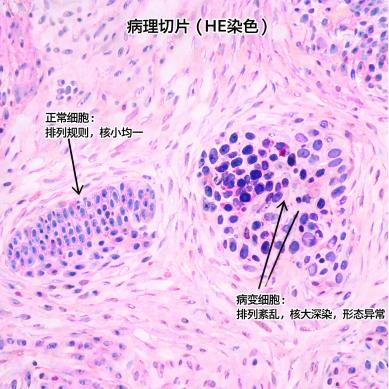
Unique molecular drivers and genetic characteristics: Pancreatic ductal adenocarcinoma (PDAC) is the most common pathological type of pancreatic cancer, prone to KRAS gene mutations, with an incidence of over 90%. This gene mutation not only induces tumorigenesis but also continuously drives and maintains tumor spread and metastasis. In addition to the generation of oncogenic driver genes, the occurrence of pancreatic cancer is also accompanied by the inactivation of key tumor suppressor genes such as TP53. There is also a rare pathological type of pancreatic cancer called pancreatic acinar cell carcinoma (PACC), which behaves completely differently from PDAC. Elevated serum lipase is its unique marker, and it occurs more frequently in men. Compared with PDAC, which has an extremely poor prognosis, patients with PACC who undergo radical surgery have a significantly improved long-term survival rate.
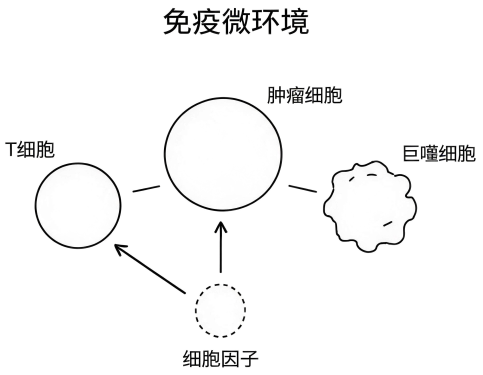
Dense stroma and immunosuppressive microenvironment: The periphery of pancreatic tumors is filled with fibrous tissue, acting like a wall that blocks the penetration of chemotherapy drugs, hindering drug delivery and promoting immune escape. Gene sequencing technology has revealed the existence of multiple cancer-associated fibroblasts (CAFs) in PDAC. Among them, the myofibroblastic CAF subtype is mainly responsible for extracellular matrix remodeling and the formation of a physical barrier, thereby promoting chemotherapy resistance. Inflammatory CAFs build an immunosuppressive microenvironment by recruiting inhibitory cells, promoting tumor progression.
PART 03: Biological Characteristics Determine Its Metastatic Nature
Perineural invasion and early metastasis tendency: Perineural invasion is a major pathological feature of pancreatic cancer, with a very high incidence, and is directly related to severe pain and poor prognosis in patients. Nerves not only provide a physical scaffold for tumors but also regulate the proliferation and metabolism of tumor cells through neurotransmitters and neurotrophic factors. Although CA19-9 is a commonly used serum marker, its sensitivity and specificity are limited, and its expression level is low in some populations. New markers such as CEMIP show potential diagnostic value but still require large-scale validation.
PART 04: High Incidence of Treatment Resistance
In terms of treatment, pancreatic cancer easily develops resistance to standard chemotherapy drugs such as gemcitabine. The mechanism involves genes that regulate the interaction between glycolysis and the immune microenvironment. The development of carbon ion radiotherapy combined with new drugs has brought new hope to patients.
In summary, what makes pancreatic cancer "different" lies in its complex KRAS-driven molecular network, dense and immunosuppressive microenvironment, high cellular plasticity, and unique perineural invasion characteristics. These factors work together to make it one of the most difficult-to-treat malignancies. Future breakthroughs depend on precision classification based on single-cell and spatial omics, as well as combination therapy strategies targeting the microenvironment and specific molecular pathways.
Department Profile
· Department Overview
The Department of Radiation Oncology III (Specialized in Pancreatic Carbon Ion Therapy & Abdominal/Pelvic Carbon Ion Therapy) focuses on carbon ion therapy for pancreatic cancer, as well as carbon ion and photon radiation therapy for abdominal and pelvic tumors such as liver cancer, colorectal cancer, and prostate cancer. Since its opening, pancreatic cancer patients from all over the country have come here seeking our reputation. We can precisely target and eliminate pancreatic cancer cells in a painless, non-invasive, and incision-free manner. We have treated dozens of pancreatic cancer patients from all over the country. The 1-year local control rate is as high as 96%, and the median survival time has increased from the traditional 11 months to 22 months. The efficacy is remarkable, with patients reporting positive treatment experiences. Our treatment outcomes have been fully recognized by renowned experts at home and abroad as well as by the vast number of patients. (Individual treatment outcomes may vary; specific evaluation should be based on the patient's condition.)
· Expert Team
All team members graduated from well-known medical universities in China, possessing solid medical theoretical foundations and rich clinical practical experience. The department has invited Professor Haofei from Germany, Professor Hirohiko Tsujii from Japan, Professor Yi-Min Ren from Taiwan, and Professor Chia-Ming Wu, among other experts, as distinguished consultants to guide our work, including consultations on difficult cases, academic lectures, and ward rounds. Department staff have completed training and further education at several well-known carbon ion and photon therapy centers in China. They possess extensive experience in carbon ion therapy and can formulate scientific and reasonable treatment plans for patients.
· Scope of Treatment
The department focuses primarily on carbon ion therapy for pancreatic cancer, while also providing carbon ion and photon therapy for abdominal and pelvic tumors such as liver cancer, colorectal cancer, and prostate cancer. We offer patients professional radiation therapy and personalized comprehensive tumor treatment services.
- Meet Our Specialist:
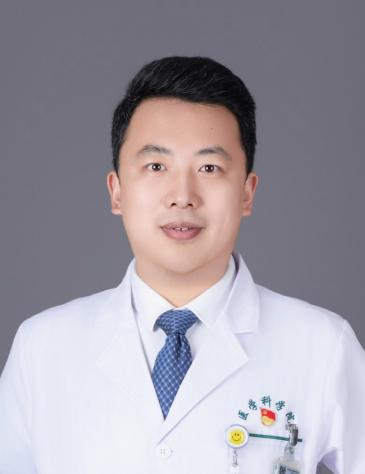
Chen Weizuo
Deputy Director and Associate Chief Physician of the Department of Radiation Oncology III, Heavy Ion Center, Gansu Wuwei Tumor Hospital
Gansu Province "Longyuan Young Talent"
Director of the Branch of Brachytherapy and Intelligent Radiotherapy, Chinese Nuclear Society
Member of the Ion Radiotherapy Branch, China Association of Medical Equipment
Member of the Oncology Branch, National Health Industry Enterprise Management Association
Member of the Youth Branch, Western Radiation Therapy Association
Member of the Youth Committee on Radioimmunotherapy (IR) of CRTOG (Chinese Radiation Therapy Oncology Group)
Member of the Youth Committee of the Gastric Cancer/Colorectal Cancer Professional Committee, Gansu Anti-Cancer Association
Member of the Radiation Therapy Professional Committee, Wuwei Medical Association
Principal investigator (PI) for 1 project under the Chinese Academy of Sciences "Light of the West" Talent Training Program; and 2 talent projects under the Gansu Provincial Party Committee Organization Department "Longyuan Youth Innovation and Entrepreneurship" program. The projects were awarded one Third Prize of the "Gansu Province Science and Technology Progress Award" and one Third Prize of the "Gansu Medical Science and Technology Award". Published 12 SCI papers and 6 papers in Chinese core journals. Holds 2 national invention patents and 3 utility model patents. The invention patents won the Gold Award at the "National Invention Exhibition" and the Second Prize of the National "Invention Entrepreneurship Award" project award.
With 20 years of clinical experience in oncology, he specializes in radiation therapy and comprehensive treatment for various tumors, particularly carbon ion therapy for abdominal and pelvic tumors. He has in-depth research on radiation therapy and personalized comprehensive treatment for abdominal and pelvic tumors such as pancreatic cancer, liver cancer, colorectal cancer, and prostate cancer. He has pursued advanced studies and training at institutions such as Shanghai Proton and Heavy Ion Center, Peking University Third Hospital, and Sichuan Cancer Hospital. He has been repeatedly honored as "Advanced Worker" by our hospital.
This section is for department information only and does not constitute medical advice. For specific diagnosis and treatment, please visit the hospital for an in-person consultation. Treatment outcomes vary from person to person.
Writer: Yu Rong
First Review: Yang Yang
Second Review: Guo Yishan
Third Review: Cai Qinghua
Gansu Wuwei Cancer Hospital (Wuwei Academy of Medical Sciences)
(甘)医广【2025】第11-14-387号