Gansu Wuwei Cancer Hospital Hospice Care Case Wins Award in National Competition
Good News! National Honor – Gansu Wuwei Cancer Hospital Hospice Care Case Wins Award in National Competition
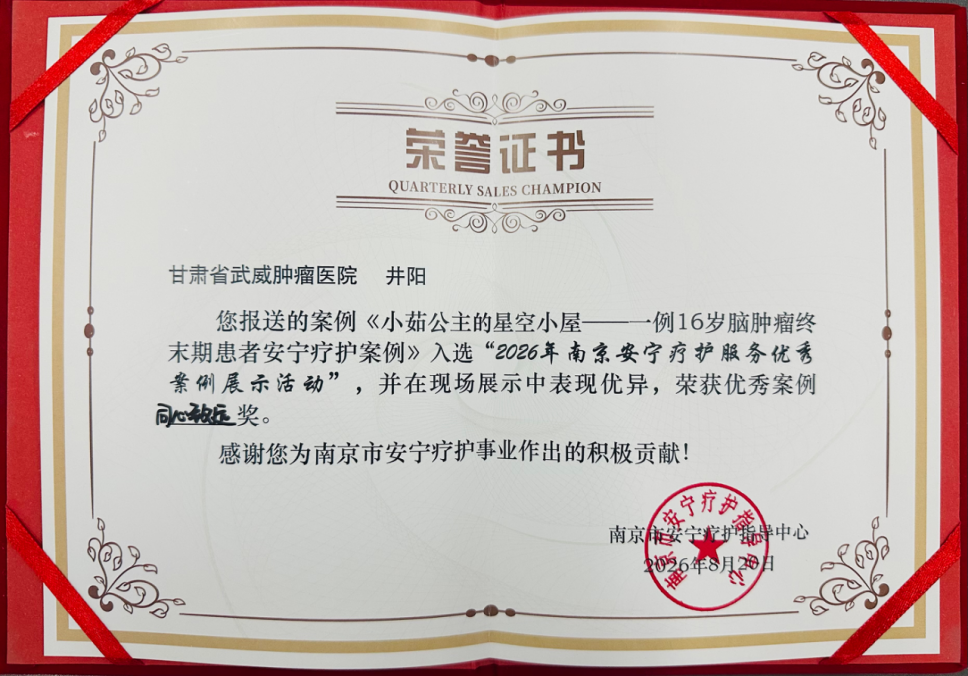
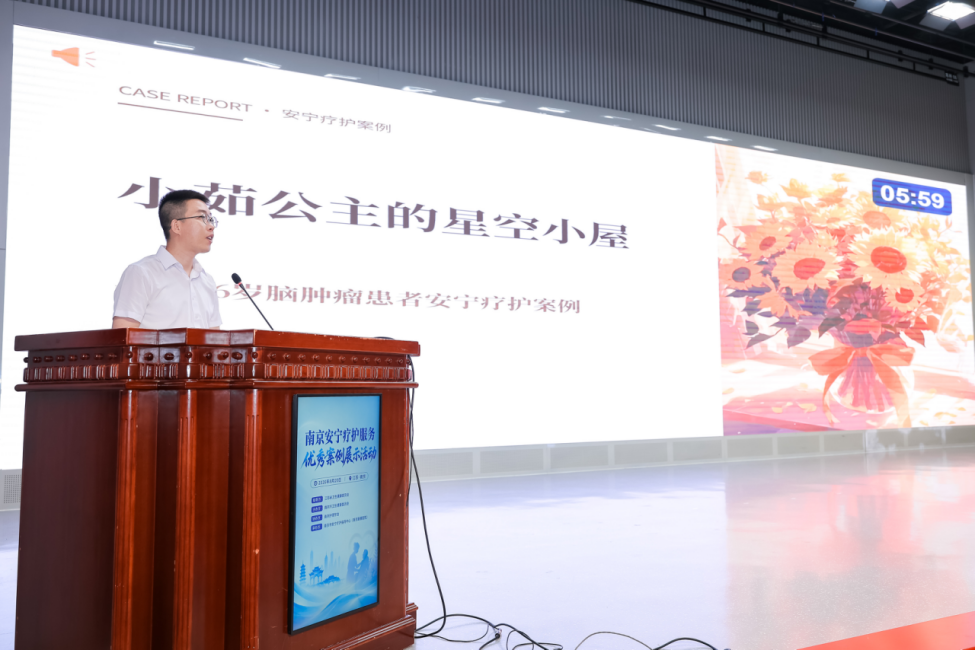
From August 19 to 21, 2026, at the "2026 Nanjing Hospice Care Service Outstanding Case Exhibition" held at Nanjing Drum Tower Hospital, Jing Yang, Head Nurse of our Hospice Care Center, presented the case Princess Xiaoru's Starry Cabin and received the "Outstanding Case – Heart to Heart Award." This is the first time our hospice care team has won an award in a national‑level competition, marking a significant recognition of grassroots hospice care practice in Western China by the professional community.
A Western Beginning: From "Following" to "Being Seen"
Hospice care provides comprehensive physical, psychological, social, and spiritual support for patients at the end of life, helping them pass their final days with dignity. While developed regions in eastern China have already established mature hospice care systems, Wuwei in Gansu — located in the inland northwest — is still in the exploratory phase of hospice care development. As the nation's first clinical base for heavy ion therapy, Gansu Wuwei Cancer Hospital has taken a leading position in precision cancer treatment. However, the hospital has not neglected the dignity of life at its end. Since 2025, under the leadership of Director Wu Chengbin of the Geriatrics Department, the hospital established a hospice care unit with 12 beds, beginning to explore a hospice care service model suited to the realities of Western China.
The Story of "Princess Xiaoru": An Umbrella, a Painting, a WeChat Message
The protagonist of this award‑winning case is Xiaoru, a 16‑year‑old girl in the terminal stage of a brain tumor. With hearing loss and only light perception remaining, compounded by family conflicts in a reconstructed household that left her feeling "unable to go home," she experienced profound physical and emotional isolation. Faced with the challenge of nearly impossible communication, Head Nurse Jing Yang innovatively used WeChat text messages to engage in patient, step‑by‑step conversations — responding to every word the girl typed. A painting of sunflowers became a bridge connecting their hearts. Together with Teacher Kong from Wuwei Vocational and Technical University, Jing Yang also handcrafted an umbrella adorned with stars and moonlight, turning a young girl's dream of a "pink starry cabin" into reality. When Xiaoru sent her final message — "I really feel like a princess" — all the effort found its warmest reward. Through the simplest acts of care, this case embodies the core principles of hospice care: "whole person, whole family, whole course, and whole team," and stands as a vivid reflection of our hospital's commitment to humanistic care.
A Journey of a Thousand Miles: From "Beyond Imagination" to the National Stage
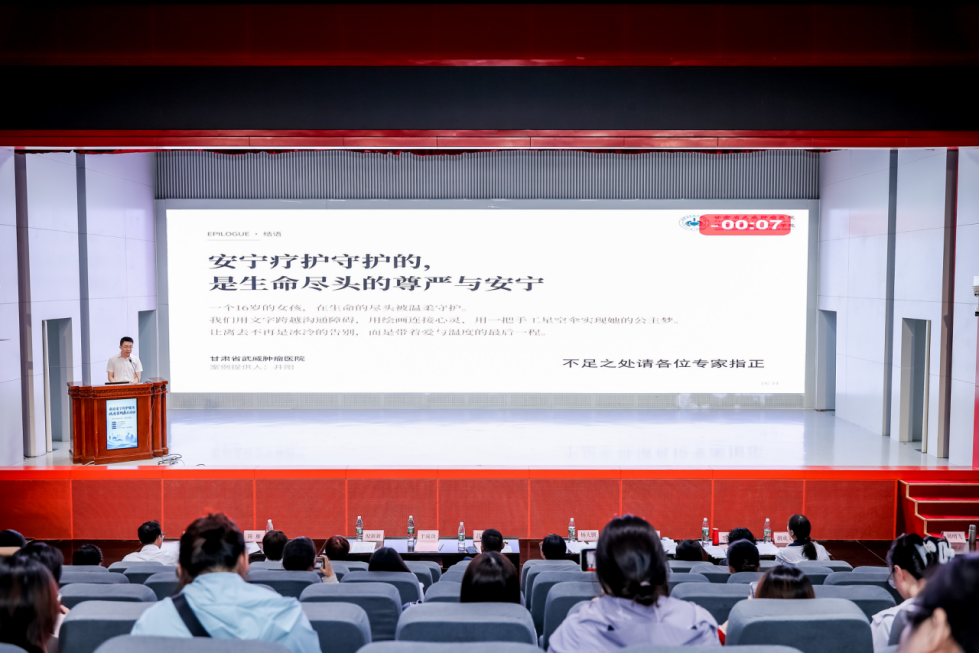
When the team learned about the national case exhibition in Nanjing, they felt both excitement and apprehension — with top‑tier hospitals from across the country gathering, could a small, newly established ward from Western China make the cut? With encouragement from hospital leadership and the department director, Jing Yang took the case to Nanjing. From August 19 to 21, she stood alongside representatives from Nanjing Drum Tower Hospital, Eastern Theater Command Air Force Hospital, Jiangsu Provincial Hospital, and other leading institutions. On stage, she told Xiaoru's story — from the WeChat conversations between a deaf and blind teenager and her head nurse, to the sunflower painting that took a week to complete, to the hand‑crafted "starry cabin" umbrella made by Teacher Kong. The conference hall fell silent. When the screen displayed Xiaoru's final message to the head nurse — "I really feel like a princess" — many in the audience wiped away tears.
Expert Commentary: True Excellence in Simplicity
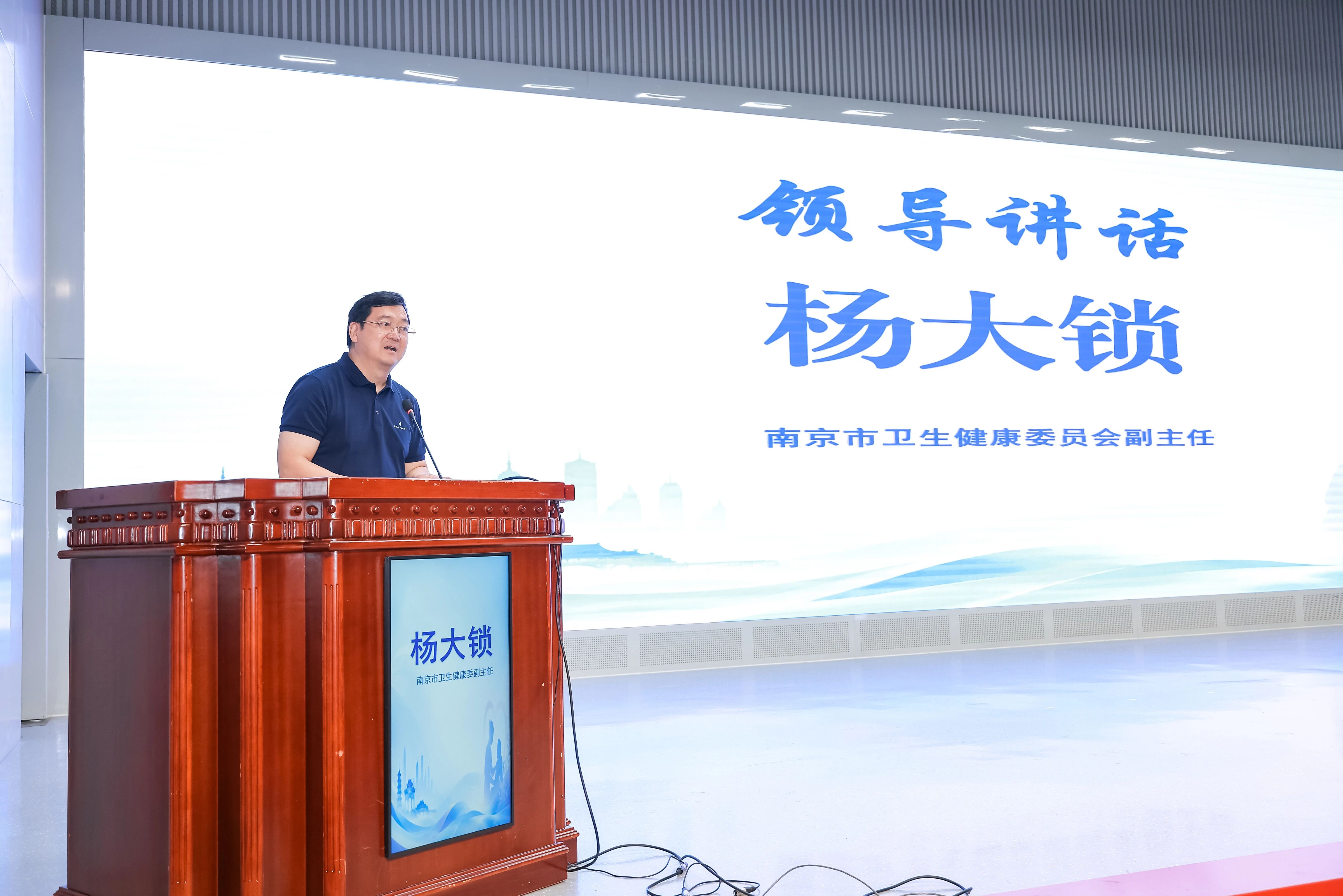
After the presentation, two judges offered dedicated feedback. Yang Dasuo, Deputy Director of the Nanjing Municipal Health Commission, noted that the most compelling aspect of the case was its ability to achieve "profound humanistic care through the simplest means." In a setting like Western China, where medical resources are limited and high‑end equipment is not available, the team was able to return to the essence of hospice care — seeing the patient with their heart and responding to needs with love. An umbrella, a painting, and a conversation came to embody the core values of hospice care. Zhou Ning, Deputy Director of the Nanjing Hospice Care Quality Control Center and Director of the Hospice Care Ward at Eastern Theater Command Air Force Hospital, offered a professional evaluation: the case fully demonstrated a multidisciplinary collaborative process, covering symptom control, comfort care, psychological support, and wish fulfillment. Notably, the creative use of written communication to build trust under extremely difficult conditions provided valuable experience for similar cases. Both experts expressed strong recognition of our hospital's humanistic practice under resource‑constrained conditions.
Looking Ahead: Lighting Up More "Starry Cabins" in Western China
This award is not just an honor — it is a renewal of our vision and a broadening of our horizons, reinforcing our commitment to exploring the hospice care path in Western China. Currently, Wuwei City has integrated hospice care into its 14th Five‑Year Health Plan. As a pioneer institution, our hospital is seizing this opportunity to accelerate the development of a service network centered on the hospital while extending into communities and homes. At the same time, we plan to expand hospice bed capacity, strengthen multidisciplinary team development, and upgrade service quality from "availability" to "excellence." From the Gobi Desert to the ancient city of Nanjing, from starting from scratch to standing on the national stage, our practice has confirmed that — regardless of geography — the commitment of every healthcare professional remains the same: to treat every life with gentleness and dignity. Moving forward, we will continue this journey, lighting up more "starry cabins" across the vast landscape of Western China.
Writer: Wu Chengbin, Jing Yang
First Review: Ma Shuqian
Second Review: Guo Yishan
Third Review: Cai Qinghua
Gansu Wuwei Cancer Hospital (Wuwei Academy of Medical Sciences)
(甘)医广【2025】第11-14-387号