Gansu's First Lutetium-177 Targeted Therapy Set to Launch in Prefectural-Level City
Gansu's First Lutetium-177 Targeted Therapy Set to Launch in Prefectural-Level City
Gansu Wuwei Cancer Hospital Scales New Heights in Precision Nuclear Medicine
From the early concepts of radionuclide therapy to the rise of precision radioligand drugs as powerful weapons against advanced tumors, nuclear medicine has continuously pushed boundaries—rekindling hope for patients with end-stage cancer. Recently, the Department of Nuclear Medicine at Gansu Wuwei Cancer Hospital has accelerated approvals and preparations to become the first prefectural-level medical institution in Gansu authorized to perform clinical Lutetium-177 (¹⁷⁷Lu) treatments. With the routine launch of ¹⁷⁷Lu-PSMA radioligand therapy for refractory cancers such as metastatic castration-resistant prostate cancer, the hospital fills a critical technological gap in Northwest China—marking its entry into the national forefront of precision nuclear medicine.
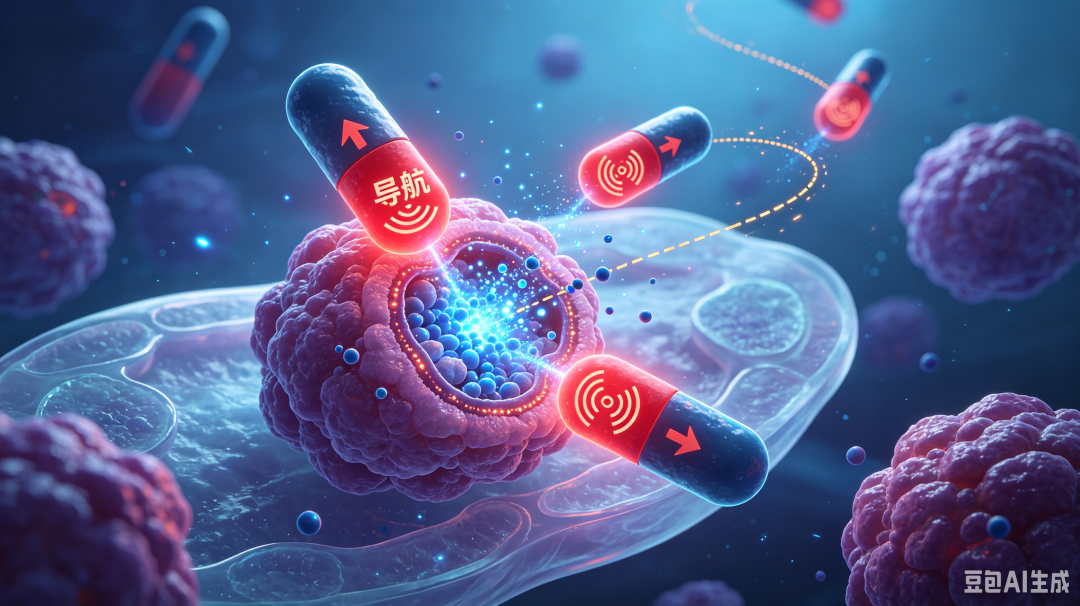
Decades of evolution have transformed nuclear medicine from conventional radionuclide applications to modern radioligand therapies—shifting from blunt-force impact to precision targeting. Globally recognized as a star therapeutic isotope, ¹⁷⁷Lu is an artificial radionuclide with a half-life of about 6.7 days, emitting both beta and gamma rays. This dual capability enables it to function as both a therapeutic agent and a real-time imaging tool. Its PSMA-targeted ligand drug, designed specifically for advanced prostate cancer and other difficult-to-treat malignancies, overcomes the limitations of traditional radiotherapy and chemotherapy—where harming healthy tissue is often unavoidable—opening entirely new survival pathways for patients whose prior treatments have failed.
Advanced prostate cancer frequently progresses to metastatic castration-resistant prostate cancer (mCRPC), often accompanied by widespread systemic metastases. Conventional hormone therapy and chemotherapy yield limited results, leaving patients with short survival times and diminished quality of life—creating urgent demand for highly effective, low-toxicity treatments. With its unique targeting properties, ¹⁷⁷Lu-PSMA emerges as a core weapon against such cancers, offering fresh hope for long-term survival.
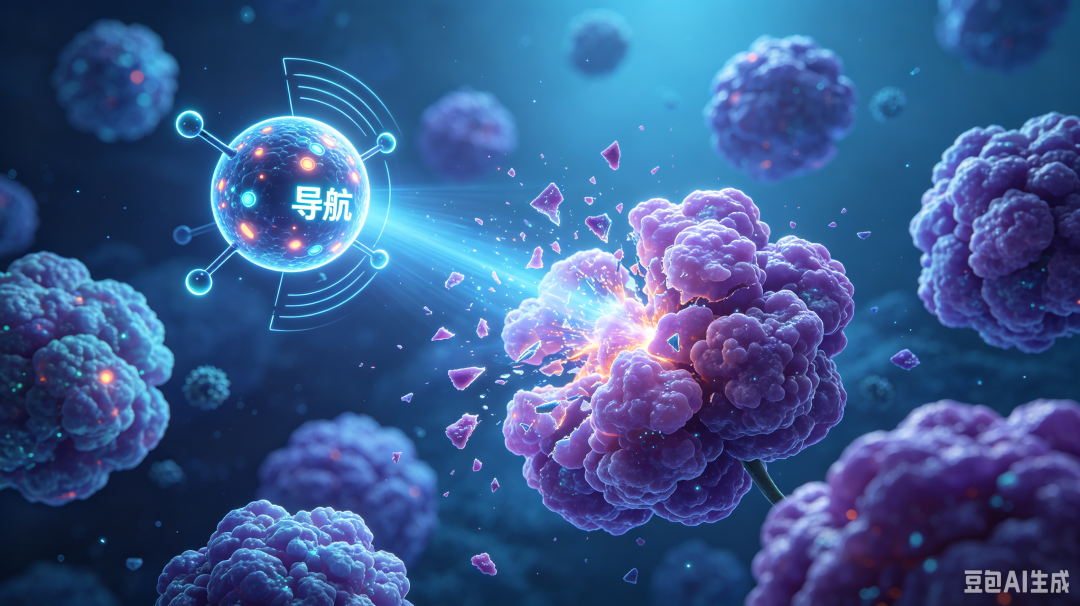
Functioning like a guided biological missile, ¹⁷⁷Lu-PSMA specifically recognizes and binds to PSMA (prostate-specific membrane antigen)—a protein abundantly expressed on prostate cancer cells—precisely concentrating in both primary and metastatic tumor sites. It delivers high-energy beta radiation with a penetration depth of just 0.2–1 mm, destroying cancer cell DNA within an ultra-short range while sparing surrounding tissues. Meanwhile, its gamma emissions enable simultaneous imaging, allowing clinicians to monitor tumor response in real time—truly integrating diagnosis and therapy in one approach.
Compared to conventional models, ¹⁷⁷Lu targeted therapy offers multiple clinical advantages:
1.Precision Targeting – Selectively binds to PSMA-positive tumor cells, focusing its effect where needed rather than applying indiscriminate damage.
2.Safety & Low Toxicity – Short-range beta emission confines radiation exposure, reducing side effects and making treatment viable for patients with varying health conditions.
3.Strong Clinical Adaptability – Supported by extensive domestic and international studies, the therapy effectively controls disease progression and improves outcomes for advanced prostate cancer patients.
4.Treatment Convenience – Administered via brief intravenous infusion, following standardized periodic protocols that reduce hospitalization time and overall costs.
For years, ¹⁷⁷Lu-based drugs relied heavily on imports—expensive, slow to supply, and inaccessible to many Northwest patients due to economic and geographic barriers. Anchored in China’s national strategy for nuclear medicine innovation, domestic large-scale production of ¹⁷⁷Lu isotopes has now broken foreign monopolies. The resulting price reduction for homegrown ¹⁷⁷Lu drugs makes cutting-edge therapy far more accessible.
Our hospital will deepen collaboration with the Institute of Modern Physics (Chinese Academy of Sciences) and leading nuclear pharmaceutical developers, accelerating the clinical adoption of domestic ¹⁷⁷Lu-PSMA across Northwest China. Leveraging our strategic location along the Hexi Corridor, we aim to extend affordable, high-quality, precision nuclear therapy to Gansu, Qinghai, Ningxia, Xinjiang, and beyond—resolving the dual challenges of distance and cost for regional cancer patients.
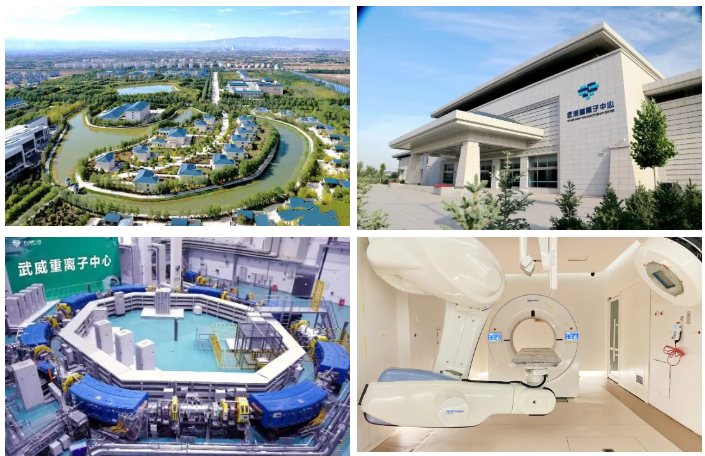
As the birthplace and clinical demonstration base of China’s domestically developed heavy ion technology, Wuwei Heavy Ion Center has spent years advancing world-class radiation oncology. Our Nuclear Medicine Department operates standardized facilities, advanced radiopharmaceutical platforms, expert clinical teams, and rigorous quality control systems—routinely performing ¹²⁵I seed implantation, ⁸⁹Sr bone metastasis therapy, ²²³Ra targeted therapy, and more. Together, these form a comprehensive, full-cycle cancer care system integrating heavy ion radiotherapy + precision nuclear therapy + multidisciplinary oncology services.
The approval of ¹⁷⁷Lu therapy marks another milestone following our breakthroughs in heavy ion treatment and ²²³Ra therapy—further cementing our leadership in nuclear medicine. Moving forward, we will continue integrating cutting-edge technologies, enhancing multidisciplinary collaboration (MDT), and leveraging our capabilities to safeguard public health in Northwest China—contributing “Wuwei strength” to the national mission of building a Healthy China.
Author: Guo Yishan
Initial Review: Ma Shuxian
Secondary Review: Guo Yishan
Final Review: Cai Qinghua
Gansu Wuwei Cancer Hospital (Wuwei Academy of Medical Sciences)
(甘)医广【2025】第11-14-387号