The "Ultimate Weapon" Against Peritoneal Metastasis: Hyperthermic Intraperitoneal Chemotherapy
The "Ultimate Weapon" Against Peritoneal Metastasis: Hyperthermic Intraperitoneal Chemotherapy (HIPEC)
The peritoneum was once considered a particularly challenging "battlefield" in the field of medicine. When cancer cells from gastric cancer, colorectal cancer, ovarian cancer, and other malignancies spread to this area, the resulting peritoneal metastasis is like a "spreading cloud of dust." Traditional treatments struggle to eradicate it completely, often leaving patients to endure immense suffering and a very poor prognosis.
However, the emergence of Hyperthermic Intraperitoneal Chemotherapy (HIPEC) technology has brought a revolutionary breakthrough to clearing this battlefield. It is hailed as a "critical weapon" in the fight against peritoneal metastasis and is now lighting the way to renewed hope for countless patients.
I. What is HIPEC? A Synergistic Battle of "Heat" and "Drugs"
HIPEC is a cutting-edge technique that involves directly perfusing chemotherapy drugs at a precisely controlled temperature into the abdominal cavity. It ingeniously combines the physical damage of "hyperthermia" with the chemical attack of "chemotherapy," producing a synergistic effect where "1+1 far exceeds 2," enabling a more thorough eradication of free cancer cells and micro-lesions.
II. Core Advantages: Precise Temperature Control and Uniform Perfusion
The cornerstone of its efficacy lies in "precise and constant temperature." The treatment must be strictly maintained within the narrow window of 43±1°C: if the temperature is too low, the killing effect is weak; if it's too high, it can damage healthy tissues. Only precise temperature control can selectively destroy cancer cells.
At the same time, a steady and uniform perfusion flow rate is essential for ensuring efficacy. It guarantees that the heated chemotherapy solution can cover the entire abdominal cavity without any blind spots, eliminating "treatment gaps" and exposing every potential lesion to effective treatment.
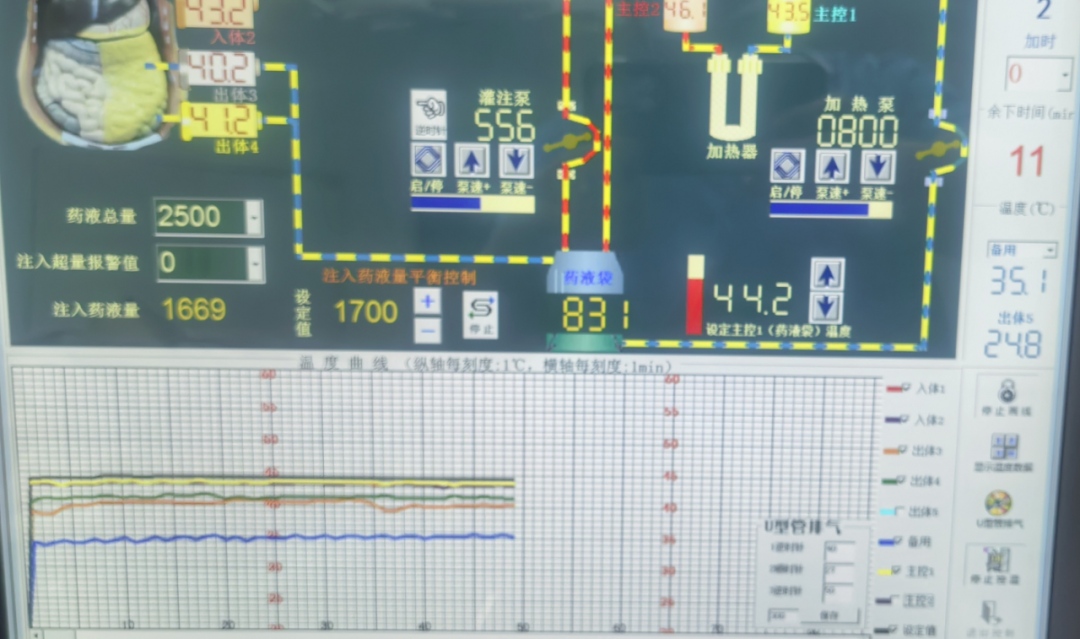
Precise perfusion flow rate
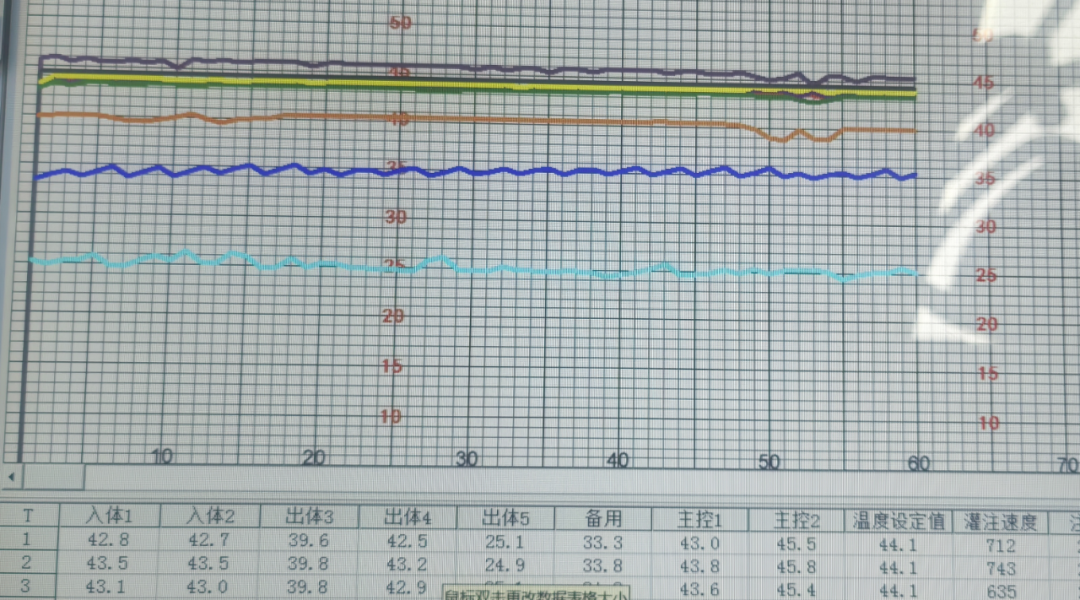
Precise Constant Temperature Control
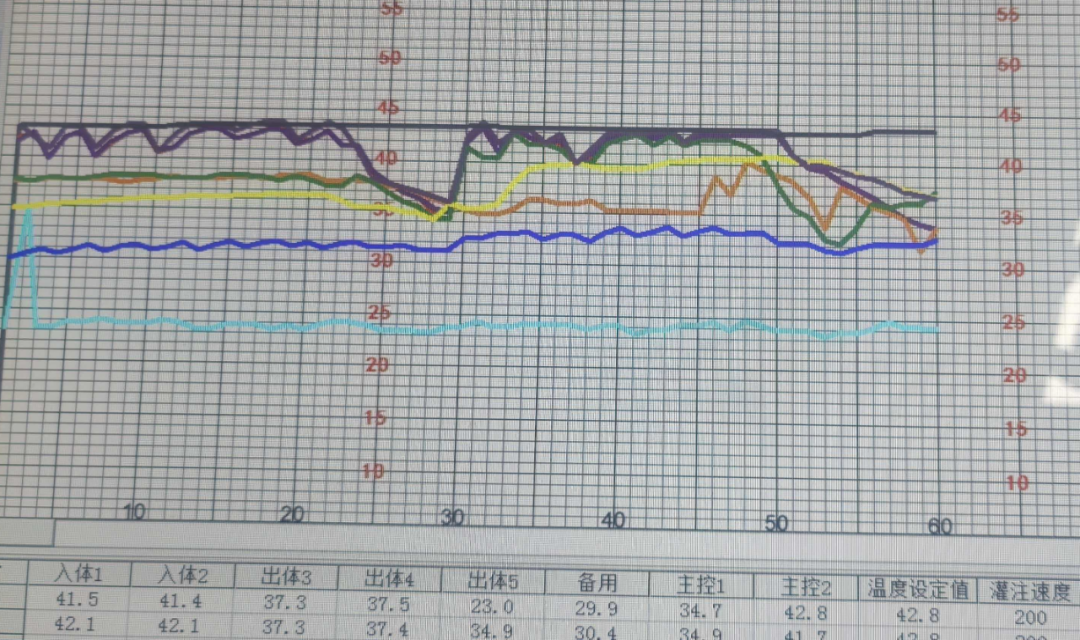
Failed to achieve precise temperature control
III. Main Target Groups
HIPEC offers significant survival benefits for the following patients:
Pseudomyxoma Peritonei (PMP): HIPEC combined with cytoreductive surgery has become the standard treatment that may achieve clinical cure.
Peritoneal Metastasis from Colorectal Cancer: For patients with completely resectable metastases, HIPEC can significantly extend median survival by several years, with some patients potentially achieving cure.
Peritoneal Metastasis from Gastric Cancer: Especially in cases of limited metastasis, HIPEC is internationally recognized as an important treatment strategy to effectively prolong life.
Ovarian Cancer: For patients with peritoneal metastasis or recurrence, HIPEC is a key option for clearing residual lesions and improving prognosis.
Additionally, it is also applicable in cases such as appendiceal mucinous adenocarcinoma and peritoneal mesothelioma.
IV. Patient Benefits: "Dual Improvement" in Survival and Quality of Life
Choosing HIPEC means significantly extending survival: transforming what was once considered an "incurable disease" into a condition that can be controlled long-term or even cured, with a substantial increase in the five-year survival rate.
It effectively controls malignant ascites, rapidly alleviating distressing symptoms such as abdominal distension and difficulty breathing, while improving the patient's physical condition and appetite.
Side effects are milder: due to localized drug delivery and minimal systemic absorption, common chemotherapy side effects like bone marrow suppression, severe hair loss, and vomiting are significantly reduced.
Hyperthermic Intraperitoneal Chemotherapy (HIPEC) exemplifies the shift in modern cancer treatment from palliative care toward curative outcomes. With its precise technology, it wins valuable time and dignity for life.
Department Overview
Tumor Minimally Invasive Treatment Center of Gansu Wuwei Cancer Hospital
Core Treatment Services:
1. Hyperthermic Perfusion Therapy
Hyperthermic Intraperitoneal Chemotherapy (HIPEC): For primary or metastatic peritoneal cancer.
Hyperthermic Intrathoracic Chemotherapy (HITOC): For pleural mesothelioma and malignant pleural effusion.
2. Thermal and Chemical Ablation
Microwave/Radiofrequency Ablation: Suitable for tumors and benign conditions in the liver, lungs, kidneys, prostate, bones, thyroid, breast, uterus, and other areas.
Chemical Ablation: Suitable for small hepatocellular carcinoma, liver/kidney cysts, ovarian cysts, etc.
3. Other Advanced Minimally Invasive Techniques
- 3D-Printed Template-Guided Radioactive Seed Implantation.
- Microwave Ablation Combined with Bone Cementoplasty for Bone Metastases.
General Surgery Routinely Performed: Minimally invasive surgeries for various gastrointestinal tumors, biliary diseases, acute abdominal conditions, hernias, and anorectal disorders.
Appointment Location: First Floor, Building 7, Inpatient Department, Heavy Ion Center, Gansu Wuwei Cancer Hospital
We are committed to supporting your recovery journey with advanced minimally invasive technologies.