Wuwei Heavy Ion Center made its first appearance in a global public newspaper
Wuwei Heavy Ion Center made its first appearance in a global public newspaper – Interview Special Edition of Singapore’s “Lianhe Zaobao”
Wuwei Medical Science Research Institute, Gansu ProvinceJanuary 24, 2024, 16:04, Gansu, China
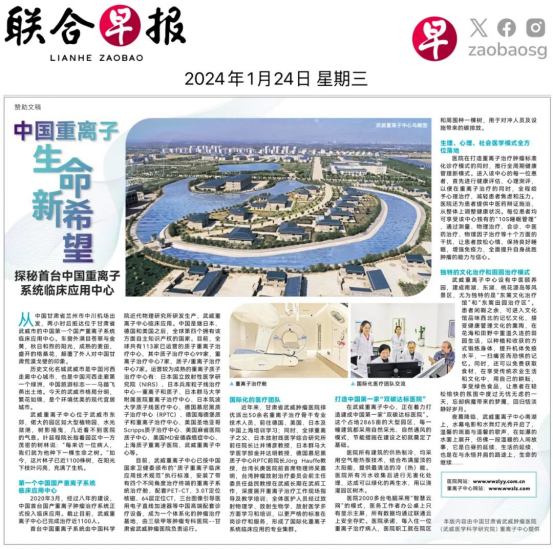
------Exploring the First Chinese Heavy Ion System Clinical Application Center
Departing from Zhongchuan Airport in Lanzhou, Gansu Province, China, and arriving at the first domestically-produced Chinese Heavy Ion System Clinical Application Center located in Wuwei City, Gansu Province, two hours later. The view outside the car window is filled with lush greenery and golden fields, bathed in the warm autumn sunlight, with ripe wheat fields and blooming Gesang flowers, overturning outsiders' impressions of the desolate Gobi Desert in Gansu, China.
Wuwei City, a historic and cultural city, is the central city of the Hexi Corridor in China and the first oasis along the Hexi Corridor. It is also the birthplace of the symbol of Chinese tourism - the Flying Horse of Gansu. Today, Wuwei City has a clear layout, with flourishing flowers, making it a modern and livable city with beautiful surroundings.
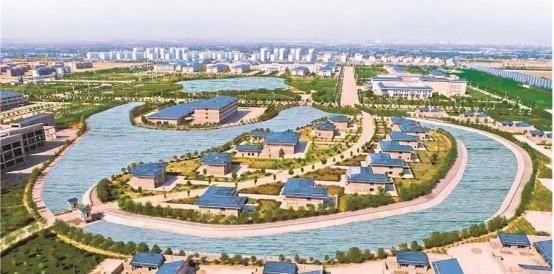
In March 2020, after eight years of construction, China's first domestically-produced heavy ion tumor treatment system was officially put into clinical use. As of now, the Wuwei Heavy Ion Center has treated nearly 1100 patients.
The first Chinese heavy ion system was developed and produced by the Institute of Modern Physics, Chinese Academy of Sciences, and is clinically applied at the Wuwei Heavy Ion Center. China is the fourth country globally to possess independent intellectual property rights in this field, following Japan, Germany, and the United States. Currently, there are a total of 113 operational proton and heavy ion therapy centers worldwide, including 99 proton therapy centers, 7 heavy ion therapy centers, and 7 combined proton/heavy ion therapy centers. Some of the mature proton and heavy ion therapy centers include: National Institute of Radiological Sciences (NIRS) in Japan, Hyogo Ion Beam Medical Center in Japan, Gunma University Heavy Ion Medical Center in Japan, Tsukuba University Proton Therapy Center in Japan, Heidelberg Ion Beam Therapy Center in Germany, Scripps Proton Therapy Center in San Diego, USA, Massachusetts General Hospital Proton Center in the USA, MD Anderson Cancer Center in the USA, Shanghai Proton and Heavy Ion Hospital, and Wuwei Heavy Ion Center.
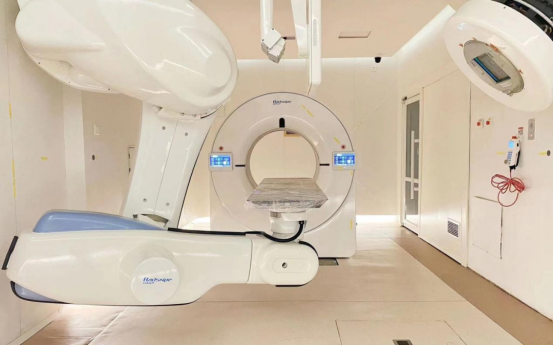
Currently, the Wuwei Heavy Ion Center has been operating in accordance with the "Proton and Heavy Ion Clinical Application Technical Specifications" issued by the Chinese National Health Commission. It has installed a heavy ion system treatment cabin with four different angle treatment terminals, equipped with PET-CT, 3.0T positioning nuclear magnetic resonance, 64-layer positioning CT, and three image-guided medical linear accelerators, among other high-end diagnostic and treatment equipment in China. It has become a systematic tumor treatment base operated by the Grade III Class A Tumor Specialty Hospital - Gansu Wuwei Cancer Hospital.
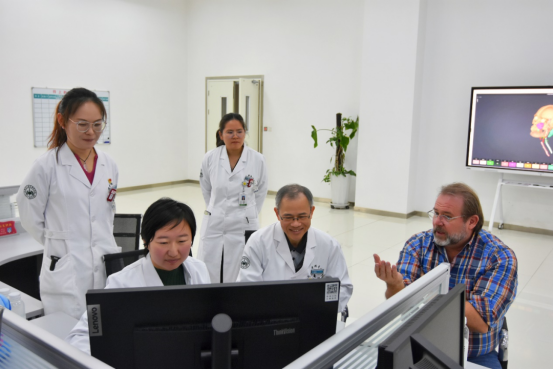
In recent years, Gansu Wuwei Cancer Hospital has selectively sent more than 50 core professional technical personnel in heavy ion therapy to receive training and education in Germany, the United States, Japan, and Shanghai, China. Meanwhile, globally renowned experts in heavy ion therapy, including Professor Hirohiko Tsujii, former director of the National Institute of Radiological Sciences in Japan; Professor Tatsuaki Kono, Gunma University School of Medicine in Japan; Professor Jörg Hauffe, former director of the Heidelberg Ion Beam Therapy Center in Germany; Mr. Wu Jiaming, former chief physicist at Chang Gung Hospital in Taiwan; and Professor Ren Yimin, former chairman of the Taiwan Society for Therapeutic Radiology and Oncology, have been working in Wuwei for an extended period, providing on-site guidance and teaching training in heavy ion therapy. All medical staff have undergone comprehensive training in radiological physics, radiobiology, and radiation medicine to ensure rigorous standards in diagnosis, treatment, and services, resulting in the formation of a professional cluster for the international clinical application of heavy ion systems.
Building China's first "Dual Carbon Standard Hospital"
At the Wuwei Heavy Ion Center, efforts are being made to build the first "Dual Carbon Standard Hospital" in China. This large 2865-acre campus features buildings that incorporate natural lighting and ventilation, with energy-saving measures laid down at the beginning of construction.
All heating and cooling systems in the hospital buildings are powered by air source heat pump technology, combined with solar panels covering the rooftops to provide the cleanest cold and hot energy. After collection, all wastewater in the hospital undergoes harmless treatment to produce recyclable water suitable for watering the trees in the campus.
The hospital utilizes a "Smart Cloud Network" model for over 2,000 computers, with medical staff having only display screens on their desks while all data is securely stored in the connected cloud. The hospital pledges that for every patient undergoing heavy ion therapy, a tree will be planted within the hospital campus and its surroundings to offset the carbon emissions from personnel and facilities.
Comprehensive implementation of the biopsychosocial medical model
While building a standardized diagnosis and treatment model for tumor treatment with heavy ion therapy, the hospital is promoting a new model of comprehensive health management throughout the entire treatment cycle. Every patient entering the center undergoes health assessment and psychological evaluation first, so that they can receive psychological therapy throughout the heavy ion therapy to alleviate anxiety and stress. The hospital also provides traditional Chinese medicine treatment based on syndrome differentiation to adjust the overall health condition. Each patient can enjoy the unique "10S Sleep Management" in the center, which involves interference in ten aspects such as measurement, physical therapy, consultation, traditional Chinese medicine treatment, and physical factor treatment, allowing patients to relax, maintain good sleep, enhance immunity, and comprehensively improve their ability and confidence to overcome tumors.
Unique cultural therapy and pastoral therapy model
The WUWEI Heavy Ion Center has a traditional Chinese medicine health garden, featuring scenic areas such as Nanhu Lake, Donghu Lake, and Taohuayuan Island. Particularly unique are the "Dongli Cultural Therapy Pavilion" and the "Dongli Pastoral Therapy Area". In their leisure time, patients can enter the cultural pavilion to savor the memory culture of Northwest China, immerse themselves in the culture of health management, revisit the long-lost pastoral life in the flower fields and countryside, exercise their bodies through planting and harvesting, enhance their immune levels, and sweep away painful and fearful memories. Additionally, they can also obtain ingredients for free, enjoy traditional agricultural life and culture, cultivate their own produce, enjoy green food, and spend a carefree day in a relaxed and pleasant atmosphere, forgetting the nightmares brought by illness and returning to a peaceful and happy time.
As night falls, at the Nanhu Lake of the WUWEI Heavy Ion Center, the water curtain movie and water dance light show begin, presenting a heartwarming scene accompanied by gentle songs on the cascading water surface. It unfolds like a warm human story, a continuation of the day, a continuation of life, and also a continuation of life on the journey side by side with eternity...