Unbearable "Pain" - Cancer Pain
Unbearable "Pain" - Cancer Pain
Cancer is a widespread social issue, with pain affecting 70% to 80% of patients with advanced-stage cancer. Severe pain is one of the most unbearable symptoms for cancer patients, particularly those in advanced stages. It often leads to emotional changes, weakened immune function, and exacerbation of the condition, significantly impairing the patient's quality of life.
What is "Cancer Pain"?
Cancer pain refers to persistent pain caused either by the cancer itself or during the course of cancer treatment, which may manifest as localized dull pain, radiating severe pain, or systemic pain.
The Harms of "Cancer Pain"
The harm of cancer pain is mainly reflected in the following aspects:
(1) Physiological Impact: Cancer pain leads to a decline in patients' quality of life, affecting normal eating, sleeping, and activities, thereby impairing the body's regulatory functions.
(2) Psychological Impact: Cancer pain causes significant mental stress and suffering for patients, leading to low mood, anxiety, and depression. It may even affect patients' social interactions and overall life state.
(3) Social Impact: Cancer pain interferes with patients' work and daily life, making it difficult for them to carry out normal activities. This imposes both economic and psychological burdens on patients and their families.
Treatment of "Cancer Pain"
1. Western Medicine Treatment: Focusing on standardized analgesia with hierarchical pain control.
(1) Pharmacotherapy (WHO Three-Step Analgesic Ladder):
① Mild Pain: Non-steroidal anti-inflammatory drugs (e.g., ibuprofen, celecoxib);
② Moderate Pain: Weak opioids + non-steroidal anti-inflammatory drugs (e.g., codeine + ibuprofen);
③ Severe Pain: Strong opioids ± adjuvant drugs (e.g., morphine, oxycodone).
(2) Non-pharmacological Treatments: Nerve block, radiofrequency ablation, radiotherapy (preferred for bone metastasis pain), chemotherapy (to control primary tumor lesions for pain relief).
2. Traditional Chinese Medicine Treatment: Diagnosis and treatment based on syndrome differentiation, aiming to alleviate pain, enhance efficacy, and reduce toxicity.
(1) Internal Herbal Therapy:
① Qi Stagnation and Blood Stasis Syndrome: Fixed pain location (e.g., chest, flanks, abdomen), pain like needle pricks or knife cuts, worsens at night, purple or dark tongue with possible ecchymosis, choppy pulse. Treatment principle: Promote qi circulation and activate blood, resolve stasis to relieve pain. Prescription: Modified Xuefu Zhuyu Decoction.
② Phlegm-Dampness Stagnation Syndrome: Pain accompanied by local swelling or masses, heavy limbs, copious sticky phlegm, white greasy tongue coating, slippery pulse. Treatment principle: Resolve phlegm, disperse nodules, and unblock collaterals to relieve pain. Prescription: Modified Erchen Decoction combined with Sanzi Yangqin Decoction.
③ Heat Toxin Accumulation Syndrome: Severe pain with a burning sensation, local redness, swelling, or ulceration, dry and bitter mouth, red tongue with yellow coating, rapid pulse. Treatment principle: Clear heat and detoxify, cool blood to relieve pain. Prescription: Modified Huanglian Jiedu Decoction.
④ Qi and Blood Deficiency Syndrome: Dull lingering pain, worsens after activity, pale complexion, fatigue, spontaneous sweating, pale tongue with white coating, thin and weak pulse. Treatment principle: Tonify qi and nourish blood, alleviate urgency to relieve pain. Prescription: Modified Bazhen Decoction.
⑤ Liver-Kidney Yin Deficiency Syndrome: Pain in the lower back or bones, worsens at night, feverish sensation in the palms, soles, and chest, red tongue with scant coating, thin and rapid pulse. Treatment principle: Nourish the liver and kidneys, relax tendons to relieve pain. Prescription: Modified Yiguan Jian combined with Shaoyao Gancao Decoction.
(2) External Therapies in Traditional Chinese Medicine:
① Herbal External Application: Grind blood-activating and pain-relieving herbs such as frankincense, myrrh, and corydalis into powder, mix with wine or petroleum jelly, and apply to the pain points.
② Acupuncture Treatment: Main acupoints include Zusanli (ST36), Neiguan (PC6), and Ashi points, supplemented by acupoints based on syndrome differentiation (add Taichong (LR3) for qi stagnation, Xuehai (SP10) for blood stasis, and Sanyinjiao (SP6) for deficiency syndromes), using reinforcing and reducing methods equally.
③ Moxibustion/Warm Needling Therapy: Suitable for pain due to cold congealing or yang deficiency, aiming to warm and unblock meridians, dispel cold, and relieve pain.
④ Acupoint Injection: Inject Danshen (Salvia) injection or vitamin B12 injection into pain points or acupoints.
⑤ Tui Na Massage: Gently relax the meridians and relieve muscle tension-related pain.
Introduction to Integrative Traditional Chinese and Western Medicine/Traditional Chinese Medicine Oncology Specialty
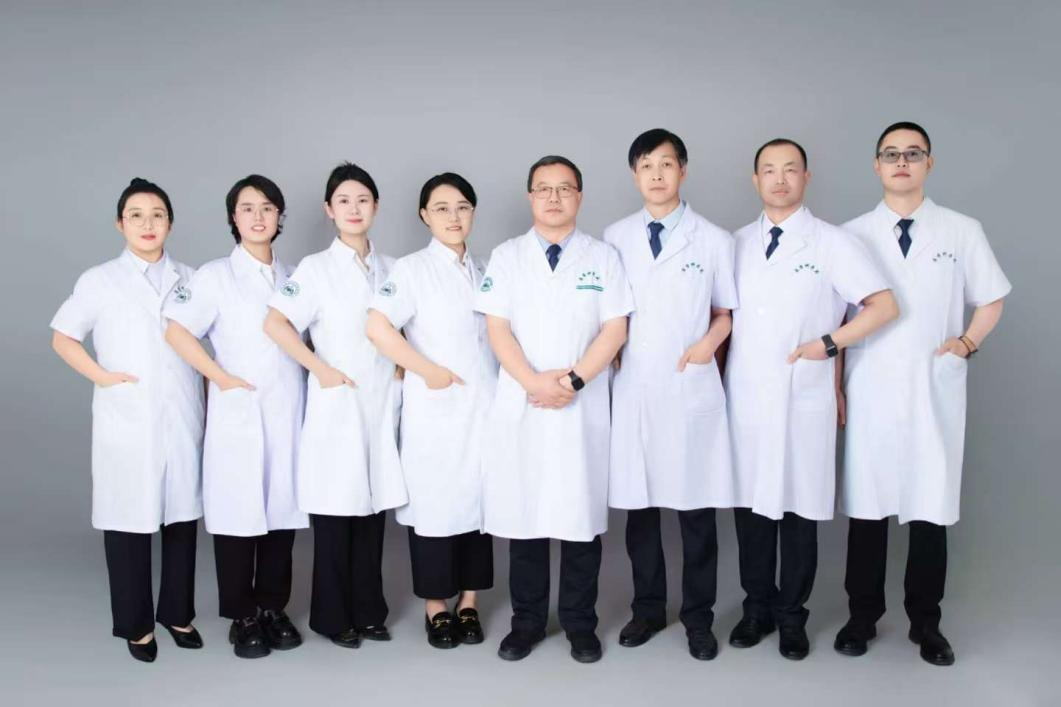
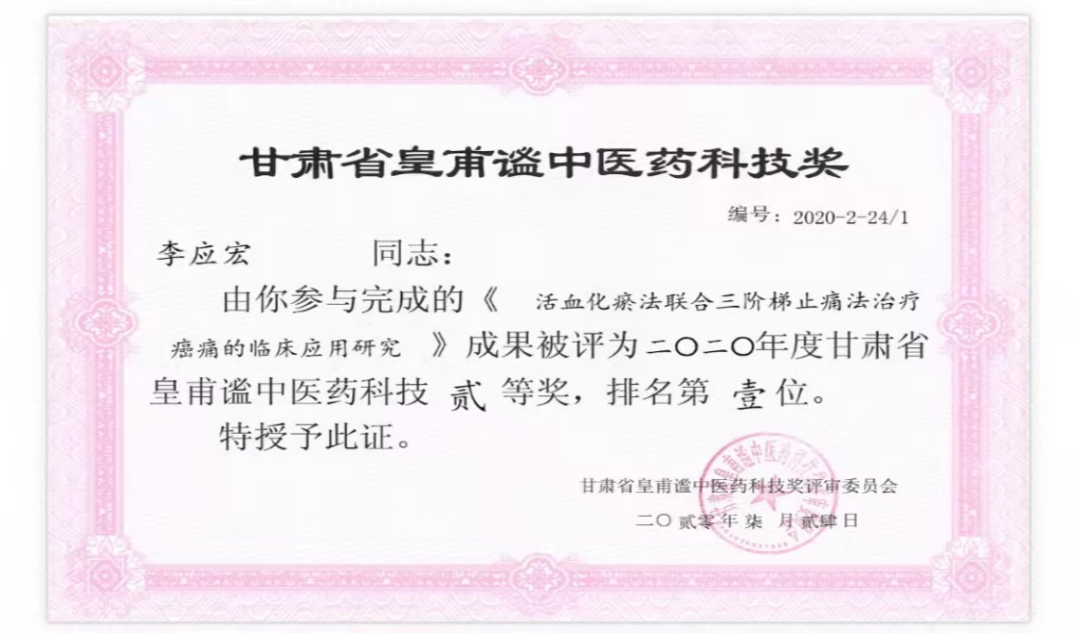
The Integrated Traditional Chinese and Western Medicine Department of Gansu Wuwei Cancer Hospital is a key TCM specialty and an advantageous TCM specialty in Wuwei City. The TCM Oncology Specialty is the largest of its kind in Wuwei. The department comprises 5 specialized TCM outpatient clinics and one inpatient ward. It currently has 20 medical staff, including 1 chief physician, 2 associate chief physicians, 4 attending physicians, 1 resident physician, 3 master's degree holders, and 1 renowned TCM practitioner in Wuwei City. Additionally, there are 8 disciples of Professor Pei Zhengxue, a renowned integrated Chinese and Western medicine expert and nationally acclaimed senior TCM practitioner. The nursing team consists of 12 members. The department focuses on the integrated treatment of tumors, gastrointestinal diseases, rheumatological and autoimmune disorders, skin conditions, and neck, shoulder, lower back, and leg pain. Upholding the philosophy of combining traditional Chinese and Western medicine in oncology treatment, it employs a systematic health management system known as "Comprehensive Whole-Life Cycle Rehabilitation Management for Cancer Patients." Throughout the entire treatment process—including pre- and post-surgery, heavy ion therapy, radiotherapy, chemotherapy, targeted therapy, and immunotherapy—the department leverages the strengths of TCM to reduce side effects and enhance efficacy, ultimately aiming to improve patients' quality of life, extend survival, and lower the risk of recurrence and metastasis. The department offers a range of TCM therapeutic techniques, including acupuncture, electro-acupuncture, wax therapy, moxibustion, spreading moxibustion, insulated moxibustion, herbal fumigation and washing, cupping, gua sha, external high-frequency thermotherapy, cervical and lumbar traction, tuina massage, acupoint catgut embedding, acupoint application therapy, acupoint injection, ear tip bloodletting, auricular acupressure, block therapy, foot baths, bloodletting therapy, as well as Sanfu Tie and Sanjiu Tie therapies. To facilitate patient access, our outpatient and inpatient services operate year-round without interruption. If you experience any discomfort, you are welcome to visit our department.
Location: Room 306, Outpatient Building, or 2nd Floor of the TCM Building, Gansu Wuwei Cancer Hospital (Main Campus).