Don't Panic at the Word "Tumor"! Understanding the Threats and Hopes of Cancer
Don't Panic at the Word "Tumor"! Understanding the Threats and Hopes of Cancer
"You see terms like 'lump' or 'hyperplasia' on your medical report—could it be a tumor?" "If someone you know is diagnosed with a tumor, does it mean there's no hope?" The word "tumor" often triggers fear and anxiety as a first reaction for many. But did you know? Tumors are not a monolithic "incurable disease"—they range from "slow-growing" to "aggressive," and modern medicine has already built a solid line of defense against them. Today, let’s break down the topic of tumors in plain, straightforward language.
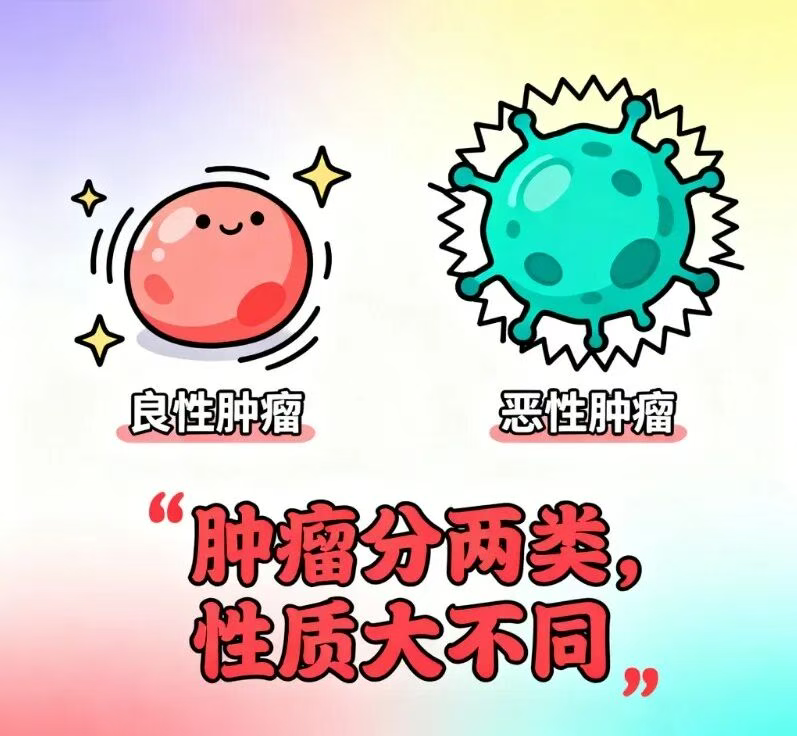
First Things First: What Exactly Is a Tumor?
Simply put, a tumor is a cluster of "disobedient" cells in our body. Under normal circumstances, cells follow a regulated cycle of growth, aging, and death. But when exposed to tumorigenic factors (like unhealthy habits or environmental triggers), some cells begin to defy the rules, multiplying wildly and forming an unnecessary mass called a "neoplasm." However, don't be alarmed by the term "tumor"—it comprises two fundamentally different types, and the outlook for each is vastly different.
❶ Benign Tumors: Slow-Growing and Often of Little Concern
These tumors are characterized by slow growth, a well-defined fibrous capsule that clearly separates them from surrounding tissues, and an inability to metastasize. A typical example is a lipoma: it is soft, often subcutaneous, well-defined, and can usually be completely cured with simple excision, having minimal to no impact on overall health or longevity. Other common benign tumors, such as uterine fibroids or breast fibroadenomas, may not require any surgery at all and can often be managed with a "watch-and-wait" approach through regular monitoring.
❷ Malignant Tumors: The "Fierce Invader" – But Not Invincible
This is the true definition of "cancer"—a "master of destruction" within the body. These rogue cells grow without restraint, infiltrating and damaging adjacent tissues much like invasive roots. Even more alarmingly, they can break away and "metastasize" via the blood or lymph systems, establishing new colonies in distant organs such as the liver, bones, or brain, and setting off a cascade of health issues. Take lung cancer: its early signs may be just a persistent cough. However, if allowed to progress, it can not only devastate lung function but also spread systemically, resulting in multi-organ failure. But there's no need to succumb to fear. "Aggressive" is not synonymous with "unstoppable." The crucial factors are early detection and prompt intervention.
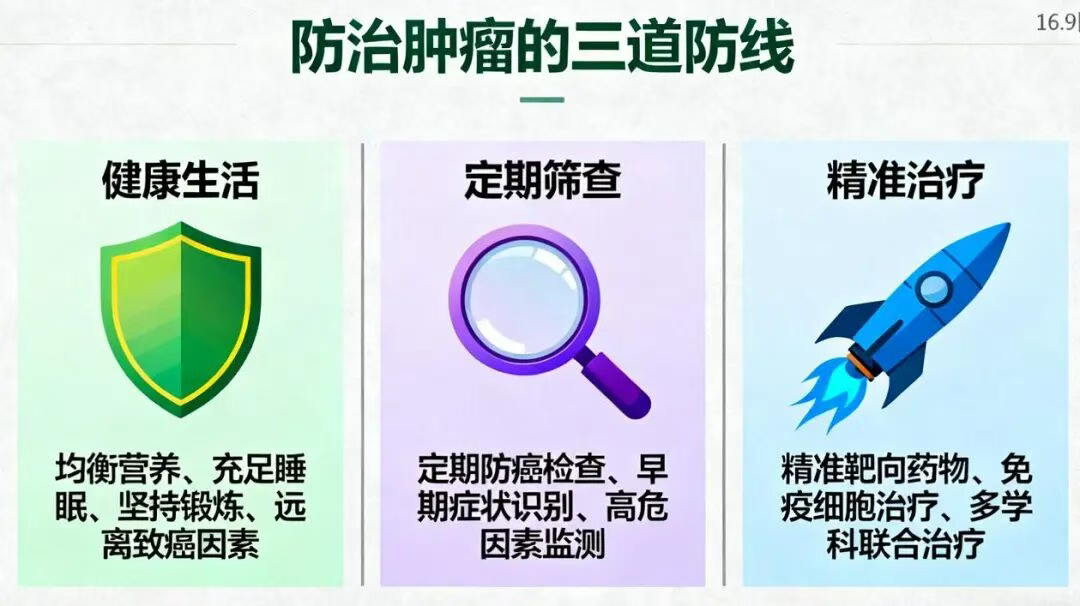
Fighting Tumors: Our Two Powerful Weapons – Prevention and Treatment
The World Health Organization has long stated that one-third of cancers can be prevented, one-third can be cured through early detection and treatment, and the remaining one-third can see life prolonged with appropriate therapies. By using the right methods, we can fully take control.
First Line of Defense: Prevention – Start by "Plugging the Leaks" in Daily Habits
Many tumors are closely linked to poor lifestyle choices. Significantly reduce your risk by focusing on these key areas:
•Steer clear of "cancer accomplices": Quit smoking, limit alcohol, eat less grilled and cured meats and other processed foods, and avoid prolonged exposure to polluted environments.
•Build a strong "immune barrier": Maintain a balanced diet, get regular exercise (at least 150 minutes of moderate-intensity activity per week), and cultivate a positive mindset. It's important to know that chronic anxiety and depression can weaken your immune system, potentially creating an opening for tumors.
•Utilize "vaccine weapons": Get vaccinated against HPV to prevent cervical cancer and against hepatitis B to prevent liver cancer. These are proven, effective measures.
Second Line of Defense: Screening – Catching "Early Signals" is Key
Early-stage tumors often have no obvious symptoms, but targeted screening can detect clues when they are just "sprouting." Intervention at this stage greatly improves the cure rate.
•For women: Regular mammograms after age 40, and regular HPV and TCT co-testing for cervical cancer from age 21.
•For men: Pay attention to prostate cancer screening after age 50. Those who have smoked long-term should consider an annual low-dose CT scan for lung cancer.
•For high-risk groups: Individuals with a family history of cancer or long-term exposure to carcinogens should start screening earlier and undergo it more frequently.
Third Line of Defense: Treatment – From "One-Size-Fits-All" to "Precision Strikes"
Even if diagnosed with a tumor, don't lose hope. Treatment options have moved far beyond the "big three" of surgery, chemotherapy, and radiation.
•Targeted Therapy: Like custom-made missiles for cancer cells, these drugs specifically target genetic mutations unique to the tumor, precisely attacking cancer cells while causing much less harm to normal cells and having far fewer side effects than chemotherapy.
•Immunotherapy: This approach activates your own immune system to "fight the enemy," empowering immune cells to recognize and eliminate cancer cells. It has brought hope for long-term survival to many advanced patients.
•Cutting-Edge Research: Technologies like gene therapy and cancer vaccines are continuously making breakthroughs, promising even more treatment options in the future.
Preliminary Review: Zhang Jie
Final Review: Ma Shuqian