【Health Popular Science】Endoscopic Retrograde Appendicitis Therapy (ERAT)
【Health Popular Science】Endoscopic Retrograde Appendicitis Therapy (ERAT)
If there is a technique that allows patients to undergo surgery with minimal incisions, it is undoubtedly minimally invasive surgery. But there is another technique that enables patients to have their appendicitis treated without any external incisions at all!
Open surgery for appendicitis has a history of over a hundred years and has long been the classic procedure. With the continuous development of minimally invasive concepts and techniques, surgeries are becoming less invasive, and many organs can now be preserved without removal, maintaining their function. Currently, our department offers the ERAT procedure for chronic appendicitis, bringing good news to many patients. The appendix is now understood to be an immune organ in the human body. Modern medicine has gained a new understanding of the appendix. Some anatomical studies indicate that the appendix contains abundant lymphoid tissue, participates in cellular and humoral immunity, and can be classified as a central immune organ. Other studies suggest that the appendix also contains numerous secretory cells that can secrete growth hormones and digestive enzymes, involved in endocrine functions and the gut-brain axis.
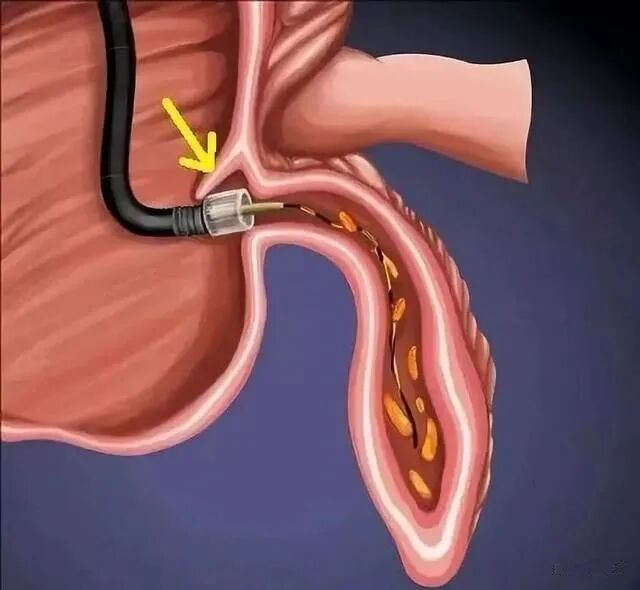
Endoscopic Retrograde Appendicitis Therapy (ERAT) achieves the goal of rapidly reducing pressure within the appendix and resolving inflammation through procedures such as cannulation, contrast imaging, irrigation, and drainage, thereby preserving the entire appendix.
I. What is ERAT?
ERAT (Endoscopic Retrograde Appendicitis Therapy) is a simple, incision-free, and scarless endoscopic minimally invasive procedure.
II. Preoperative and Postoperative Care
• Preoperative examinations include blood tests, coagulation function, liver and kidney function, appendix ultrasound, and electrocardiogram.
• Bowel preparation: Patients are instructed to cleanse their bowels the day before surgery, fast for 12 hours, and refrain from drinking water for 4 hours preoperatively.
• prepare intraoperative medications and have the patient sign the surgical consent form.
III. Discharge Instructions
• Follow-up ultrasounds should be performed at three months, six months, and one year after discharge.
• Avoid overeating, maintain a balance between work and rest, and ensure adequate rest.