
Not to Be Overlooked: "Radiation-Induced Xerostomia"
Not to Be Overlooked: "Radiation-Induced Xerostomia"
Head, neck, and oral cancer patients often experience symptoms after radiotherapy such as dry mouth and dry throat. It feels dry without drinking water, and still dry even after drinking. They have to carry a cup all day, get up to drink water several times at night, and even lose their sense of taste when eating. This is the misery of radiation-induced xerostomia that plagues head, neck, and oral cancer patients.
What is "Radiation-Induced Xerostomia"?
Radiation-induced xerostomia refers to damage to the salivary glands of patients with head, neck, and oral malignant tumors caused by radiation exposure. This leads to changes in the quantity, properties, and composition of saliva secretion, resulting in the loss of salivary gland function in the oral cavity. This subsequently causes a series of symptoms including dry mouth, burning sensation in the mouth, lip and tongue pain, dental caries, oral mucositis, and loss of taste.
The Hazards of "Radiation-Induced Xerostomia"
Patients with radiation-induced xerostomia may experience clinical manifestations such as oral mucositis and reduced saliva secretion. Symptoms include oral dryness, frequent drinking of water, loss of taste, soreness and weakness of teeth when chewing, painful swallowing, affecting both speech and eating. It can even lead to language and chewing dysfunction, dental caries, osteonecrosis, and ultimately result in hazards such as malnutrition and decreased quality of life.
Treatment for "Radiation-Induced Xerostomia"
1. Western Medicine Treatment:
(1) Artificial Saliva Substitution: Artificial saliva preparations containing carboxymethylcellulose and glycerol;
(2) Oral Moisturization and Care: Choose mild saline or specialized moisturizing mouthwash. Brush teeth gently with a soft-bristled toothbrush daily, clean the mouth promptly after meals to prevent dental caries and infection;
(3) Cholinergic Receptor Agonists: Pilocarpine, Cevimeline;
(4) Local Stimulants: Suck on sugar-free citric acid tablets, malic acid tablets, or chew sugar-free gum.
2.Traditional Chinese Medicine (TCM) Treatment:
Select appropriate TCM formulas based on clinical pattern differentiation.
(1) Syndrome of Qi and Yin Deficiency: Typical symptoms: Dry mouth and tongue, frequently drinking water or rinsing the mouth to moisten it, dry nasopharynx, affecting speech and appetite, difficulty swallowing requiring soup or water to aid swallowing, bodily fatigue and weakness, shortness of breath, and mental fatigue. Tongue: Red with little coating. Pulse: Thready and rapid or wiry and rapid. Treatment method: Boost Qi and nourish Yin, clear heat and promote fluid production. Formula: Modified Shashen Maidou Ganlu Decoction (Adenophorae and Ophiopogonis Sweet Dew Decoction).
(2) Syndrome of Phlegm-Dampness Internal Accumulation: Typical symptoms: Dry mouth and tongue, frequent drinking of water, sticky and bland taste in the mouth, bitter taste and bad breath, chest stuffiness and poor appetite, excessive nasal discharge, or possibly purulent discharge. Tongue: Pale red with yellow, greasy, or thick, greasy coating, or accompanied by a foul, turbid coating. Pulse: Soggy and rapid. Treatment method: Clear and transform dampness and turbidity, boost Qi and promote fluid production. Formula: Modified Huoxiang Zhengqi San (Pogostemon Qi-Correcting Powder) combined with Wangshi Lianpo Yin (Wang's Coptis and Magnolia Bark Decoction).
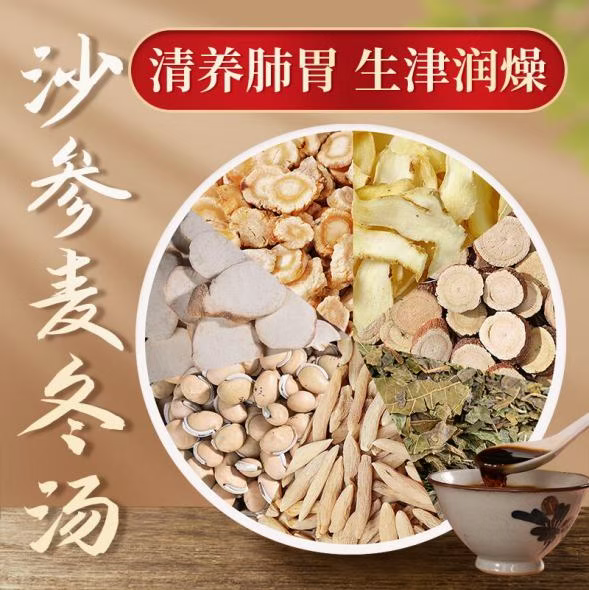
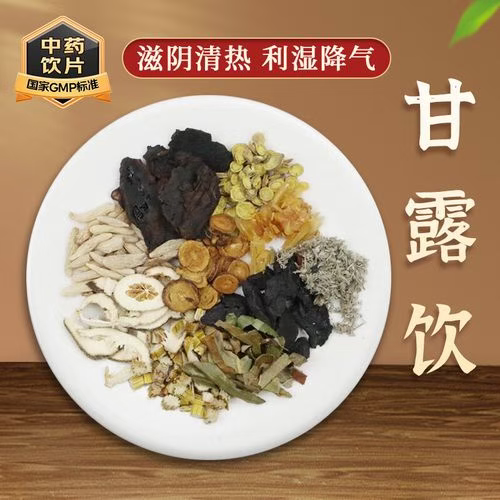
(3) Syndrome of Intense Internal Heat in the Blood: Typical symptoms: Dry mouth and tongue, frequent drinking of water, vexing heat in the five centers (palms, soles, chest), mental restlessness, nasopharyngeal discharge mixed with blood, scarlet red congestion of the oral mucosa. Tongue: Deep red or crimson, possibly with cracks, thin and scant coating or no coating. Pulse: Thready and rapid or wiry and thready. Treatment method: Clear heat and cool the blood, nourish Yin and promote fluid production. Formula: Modified Xijiao Dihuang Tang (Rhinoceros Horn and Rehmannia Decoction) combined with Shashen Maidong Tang (Adenophorae and Ophiopogonis Decoction).
3.Lifestyle Care and Dietary Therapy:
Eat more Yin-nourishing and dryness-moistening, easily digestible foods. Avoid spicy, fried, and warm-natured foods (such as chili, mutton, lychee). Recommended ingredients: Tremella fungus, lily bulb, lotus seed, Chinese yam, winter melon, pear, sugarcane, water chestnut, honey. These can be cooked into Tremella and lily congee, pear soup, or consumed as Ophiopogon tea (10g of Ophiopogon japonicus steeped in water).
Introduction to the Integrated Traditional Chinese and Western Medicine Department / TCM Oncology Specialty
The Integrated Traditional Chinese and Western Medicine Department of Gansu Wuwei Cancer Hospital is a key TCM specialty in Wuwei City and an advantageous TCM specialty. The TCM Oncology Specialty is the largest TCM oncology specialty in Wuwei City. The department has 5 TCM characteristic outpatient clinics and 1 inpatient ward. The department currently has 20 medical staff, including 1 chief physician, 2 associate chief physicians, 4 attending physicians, 1 resident physician, 3 master's degree holders, 1 renowned TCM physician of Wuwei City, and 8 disciples personally taught by the famous integrated TCM and Western medicine expert and nationally renowned veteran TCM practitioner Professor Pei Zhengxue. There are 12 nursing staff. The department focuses on the integrated TCM and Western medicine treatment of tumors, spleen and stomach diseases, rheumatic immune diseases, skin diseases, and neck, shoulder, back, and leg pain. Adhering to the concept of integrated TCM and Western medicine in treating tumors, the department applies the systematic health management system of "comprehensive rehabilitation management throughout the entire life cycle of cancer patients." It leverages the advantages of TCM in reducing toxicity and enhancing efficacy throughout the entire process of treatment, including pre- and post-surgery, heavy ion therapy, radiotherapy, chemotherapy, targeted therapy, and immunotherapy, to maximize the improvement of patients' quality of life, prolong survival, and reduce the risk of recurrence and metastasis. The TCM appropriate techniques carried out by the department include acupuncture, electroacupuncture, wax therapy, moxibustion, spread moxibustion, indirect moxibustion, herbal fumigation and washing, cupping, gua sha, external high-frequency thermotherapy, cervical and lumbar traction, tuina massage, acupoint catgut embedding, acupoint application, acupoint injection, ear apex bloodletting, auricular plaster therapy, block therapy, foot bath, bloodletting therapy, dog-day acupoint patch application, and sanjiu acupoint patch application, etc.
For the convenience of patients, our department's outpatient and inpatient services are available all year round without closure. If you have any discomfort, you are welcome to visit our department.
Location: Room 306, Outpatient Building, Gansu Wuwei Cancer Hospital (Main Campus) or the 2nd floor of the TCM Building.