
Temperature Plummets: How Can Cancer Patients Stay Safe and Healthy This Winter? Please Keep This Ex
Temperature Plummets: How Can Cancer Patients Stay Safe and Healthy This Winter? Please Keep This Exclusive Health Guide!
Recently, a cold wave has hit, causing temperatures to drop sharply. For cancer patients undergoing treatment, the cold winter is undoubtedly a severe challenge. Weakened bodies and lower immunity make them more sensitive to temperature changes and more prone to various health issues. Don't worry, we have compiled an exclusive winter health guide to help you and your family stay safe and healthy through this cold winter.

I. Why Are Cancer Patients More Afraid of "Plummeting Temperatures"?
Understanding the reasons is the first step to effective protection. Cancer patients' sensitivity to cold and susceptibility to issues mainly stem from the following points:
Relatively Low Immunity: Both the disease itself and treatments like surgery, radiotherapy, and chemotherapy can weaken the patient's immune system to some extent, making it harder to resist cold stimuli and subsequent germ invasions.
Altered Metabolic Rate: Cancer cells consume a large amount of energy, leading to metabolic disorders in the patient's body and insufficient heat production, making them feel cold more easily.
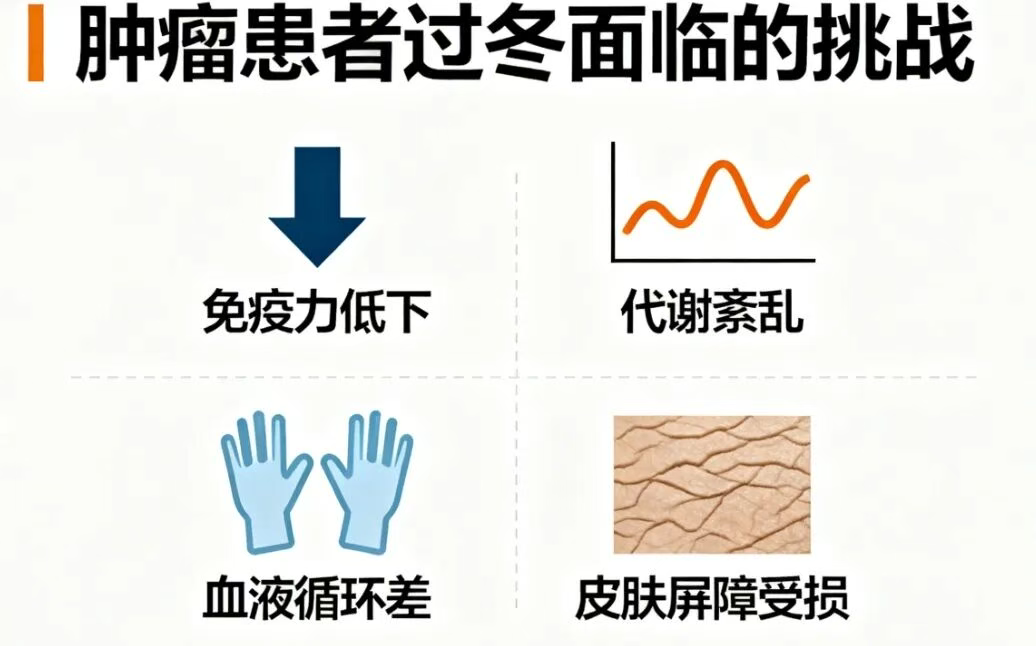
Poor Blood Circulation: Certain chemotherapy drugs may cause peripheral neuropathy or vasoconstriction, leading to cold, numb hands and feet, symptoms that worsen in low temperatures.
Impaired Skin Barrier: Radiotherapy can cause dry, fragile skin in the irradiated area. Cold wind and dry air can exacerbate this problem, causing itching, cracking, or even sores.
II. Effective Ways to Keep Warm, Focus on Four Key Areas
01 Dressing for Warmth – Thicker Isn't Always Better
Follow the "Layering Principle": Wear soft, breathable cotton underwear, a warm sweater or fleece as a middle layer, and a windproof/waterproof down jacket or coat as the outer layer. This makes it easy to add or remove layers according to temperature changes indoors and outdoors.
Protect "Vulnerable Areas": Wear hats, scarves, and masks to protect the head, neck, mouth, and nose, as a significant amount of body heat is lost from these areas. Also, wear gloves and thick socks to protect hands and feet.
Beware of "Low-Temperature Burns": Use hot water bottles and electric warmers with caution. As some patients have reduced skin sensitivity, prolonged contact with heat sources can easily cause burns, which are slow to heal. If necessary, always wrap them in a towel and avoid direct skin contact.

02 Dietary Regulation – Store Energy for Winter
High Protein, High Calories: Appropriately increase the intake of high-quality protein (such as fish, shrimp, eggs, milk, lean meat) and healthy carbohydrates to provide the body with sufficient energy to resist the cold.
Drink Warm Water, Ward Off Cold and Moisturize Dryness: Ensure adequate fluid intake, preferably 1.5-2 liters per day. Drinking warm water, broths, and soups (like chicken soup, fish soup, vegetable soup) can warm the body and relieve winter dryness. Avoid drinking overly hot liquids to prevent damaging the esophageal mucosa.
Supplement Vitamins: Increase intake of fresh vegetables and fruits to supplement vitamins and enhance resistance. If appetite is poor, consider juicing or making them into purees.
Pay Attention to Food Safety: Winter is a season with active viruses. Ensure food is thoroughly cooked, and keep raw and cooked foods separate to prevent foodborne illnesses.

03 Home Environment – Create a Warm and Safe Haven
Maintain Suitable Temperature and Humidity: The indoor temperature is recommended to be kept at 18-22°C, with a humidity of 50%-60%. Use a humidifier to prevent overly dry air, but clean it regularly to avoid bacterial growth.
Ventilate Regularly: Open windows for ventilation at least twice a day for 15-30 minutes each time to ensure fresh indoor air and reduce the risk of respiratory disease transmission. During ventilation, patients can temporarily move to another room to avoid direct exposure to cold drafts.
Prevent Slips and Falls: Wear non-slip indoor shoes, keep floors dry, and place non-slip mats in areas like bathrooms and showers to prevent falls.

04 Moderate Activity – Balance Movement and Rest to Boost Immunity
Choose the Right Time and Place: Engage in gentle exercises like walking or Tai Chi indoors during the warmer, sunnier afternoon hours.
Act According to One's Capability: Exercise to the point of slight sweating without feeling fatigued. Avoid sweating profusely, which can lead to cold invasion.
Persist with Functional Exercise: For postoperative patients or those with limited mobility, perform appropriate functional exercises as guided by a doctor to promote blood circulation.

III. Special Reminder: If These Situations Occur,
Please Seek Medical Attention Promptly!

Winter is a high-incidence period for cardiovascular diseases and respiratory infections. Cancer patients need to be especially vigilant. If any of the following situations occur, do not delay; contact your primary doctor or go to the hospital immediately:
Persistent Fever: Body temperature exceeding 38.5°C, or a persistent low-grade fever that doesn't subside.
Respiratory Symptoms: Severe cough, sputum, chest tightness, shortness of breath, or difficulty breathing.
Severe Discomfort: Unusual fatigue, worsening bone pain, or pain in a new location.
Worsening Treatment Side Effects: Uncontrollable vomiting or diarrhea, or severe oral mucositis preventing eating.
Limb Abnormalities: Numbness or weakness in one limb, or sudden dizziness, blurred vision.
Although winter has arrived, warmth remains. The medical staff of Gansu Wuwei Cancer Hospital are always your strong support, joining hands with you to withstand the severe cold and safeguard your health.