
True Minimally Invasive—Ultrasound-Guided Radiofrequency Ablation for Thyroid Nodules
True Minimally Invasive—Ultrasound-Guided Radiofrequency Ablation for Thyroid Nodules
In recent years, with the increasing prevalence and detection rate of thyroid nodules, patients' demand for thyroid nodule treatment and their requirements for surgical aesthetics have gradually increased. Ultrasound-guided percutaneous radiofrequency ablation technology for thyroid nodules has emerged, becoming a new tumor treatment method developed both domestically and internationally in recent years.
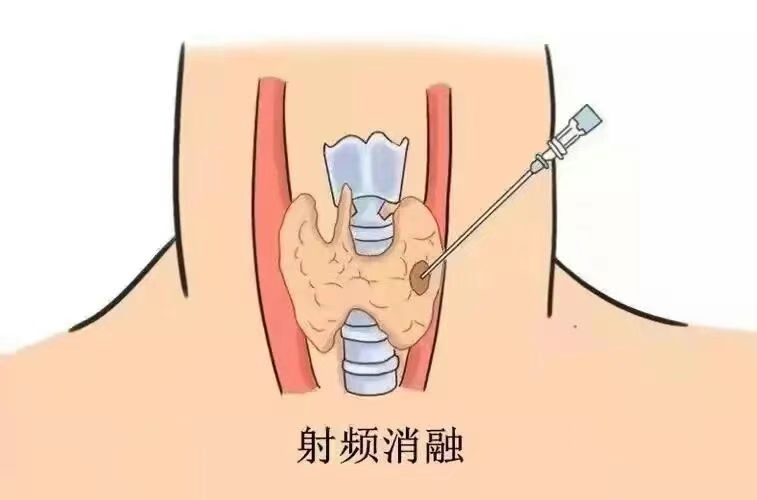
What is Ultrasound-Guided Percutaneous Radiofrequency Ablation for Thyroid Nodules?
It involves percutaneously and precisely inserting the ablation electrode into the lesion under ultrasound guidance. The radiofrequency needle generates high temperatures, causing coagulative necrosis of the lesion tissue. The necrotic tissue is then absorbed by the body, thereby achieving the goal of minimally invasive local lesion inactivation, with the same effect as traditional surgery. This method is minimally invasive, requires no open surgery, leaves no scar on the skin surface, preserves the organ, does not affect thyroid function, and offers good repeatability for treating new or recurrent lesions.
Advantages of Thyroid Nodule Radiofrequency Ablation Compared to Traditional Surgery:
- Outpatient treatment or hospitalization for only 1-2 days;
- Local anesthesia, minimal systemic impact;
- Minimal trauma, no surgical scar; aesthetic;
- Does not damage normal thyroid tissue, no hypothyroidism, no need for lifelong medication after treatment.
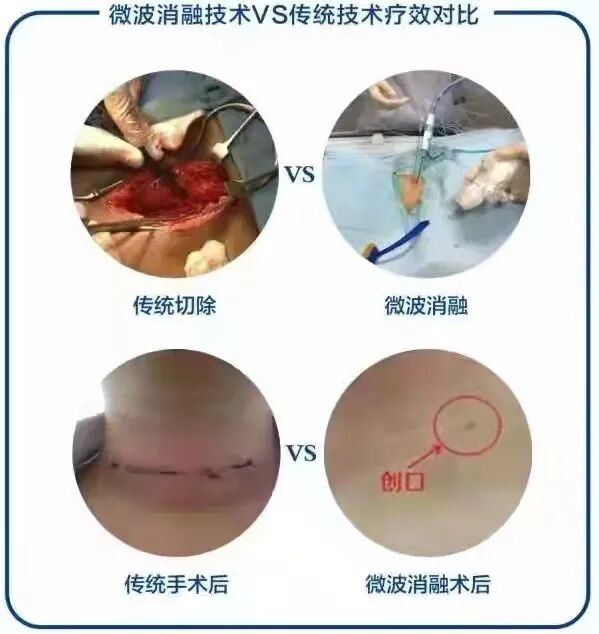
Efficacy of Thyroid Nodule Radiofrequency Ablation:
After 6-12 months of absorption, the volume of the inactivated thyroid nodule can significantly shrink or even disappear.
Surgical Indications for Thyroid Nodule Radiofrequency Ablation:
- Nodules diagnosed as benign by fine-needle aspiration cytology or core needle biopsy;
- Presence of significant compression symptoms, such as neck discomfort, pain, difficulty swallowing, or even difficulty breathing;
- Patients unsuitable for surgical resection or those who refuse surgery;
- Nodules protruding and affecting aesthetics, or patients with high aesthetic requirements post-surgery;
- Patients experiencing excessive anxiety about thyroid nodules.
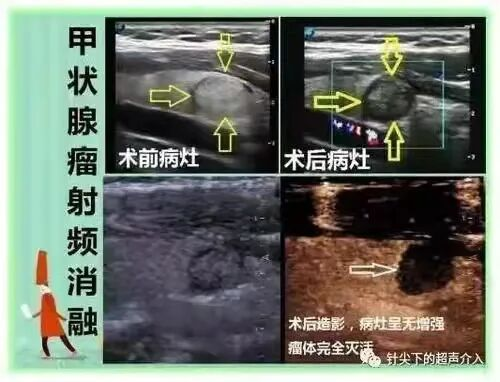
Indications for Radiofrequency Ablation of Benign Thyroid Nodules:
Must meet criteria 1-3 simultaneously and one of the criteria in item 4.
Pathology must confirm a benign nodule;
No history of childhood radiotherapy;
The patient is fully informed and requests radiofrequency ablation therapy, or refuses surgery and clinical follow-up;
Also meets one of the following conditions:
(1) Autonomously functioning nodule causing hyperthyroidism symptoms;
(2) The patient has obvious symptoms or the nodule affects aesthetics requiring treatment;
(3) Postoperative residual or recurrent nodules, or nodules with significant volume increase.
Contraindications for Radiofrequency Ablation of Benign Thyroid Nodules:
Excluded if any one of the following applies.
Large substernal goiter or most of the thyroid nodule is located retrosternally (For patients unable to tolerate surgery and anesthesia, consider staged ablation or palliative treatment);
- Contralateral vocal cord dysfunction;
- Severe coagulation dysfunction;
- Insufficiency of vital organ functions.
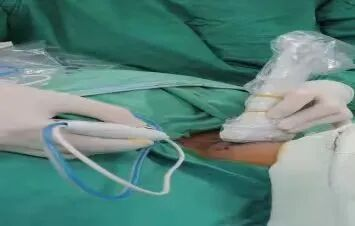
Indications for Radiofrequency Ablation of Thyroid Papillary Microcarcinoma:
Must meet all of the following 8 criteria.
- Non-pathological high-risk subtype;
- Recommended tumor diameter ≤ 5mm (can be extended to diameter ≤ 1cm for tumors not closely adhering to the capsule on all sides), and the nodule is >2mm from the inner posterior capsule;
- No thyroid capsule invasion and no surrounding tissue invasion;
- The cancerous focus is not located in the isthmus;
- No family history of thyroid cancer;
- No history of neck radiation exposure during adolescence or childhood;
- No evidence of lymph node or distant metastasis;
- The patient, after being fully informed, still refuses surgical treatment and also refuses close follow-up.
Contraindications for Radiofrequency Ablation of Thyroid Papillary Microcarcinoma:
Excluded if any one of the following applies.
- Metastasis found in the neck or distant sites;
- Progressive enlargement of the cancerous focus in a short period (increase ≥ 3mm within 6 months);
- Pathological high-risk subtypes (Tall cell variant, Columnar cell variant, Diffuse sclerosing variant, Solid/trabecular variant, Oncocytic variant);
- Contralateral vocal cord dysfunction
- Severe coagulation dysfunction;
- Insufficiency of vital organ functions.
Our hospital's Department of Ultrasound Medicine, as the earliest department in the region to perform interventional ultrasound, can currently independently complete ultrasound-guided radiofrequency ablation for thyroid nodules, providing many patients with thyroid nodules with minimally invasive treatment options and convenience.
Examination Appointment and Consultation Phone: 0935-6988516