Intrathecal Drug Delivery System (IDDS): Bid Farewell to Intractable Pain and Rediscover Quality of
Intrathecal Drug Delivery System (IDDS): Bid Farewell to Intractable Pain and Rediscover Quality of Life
In the long battle against advanced cancer, cancer-related pain often emerges as patients' greatest "invisible enemy." Nowhere is this more evident than in the severe pain caused by upper abdominal malignancies such as pancreatic cancer and gastric cancer, where conventional medications frequently fall short. Meanwhile, intrathecal drug delivery system (IDDS) implantation—a minimally invasive surgical procedure—is emerging as a breakthrough pain relief solution for countless patients.
From Despair to Renewal: Mr. Qin, a 52-year-old patient with advanced pancreatic cancer, endured persistent, severe, and widespread body pain that required him to take 280mg of oxycodone hydrochloride extended-release tablets orally every 8 hours (Q8h) daily. Accompanied by multiple side effects such as vomiting and constipation, he was deeply troubled by his condition. By chance, through a recommendation from a fellow patient, he learned about the IDDS implantation procedure offered by our hospital’s pain management department.
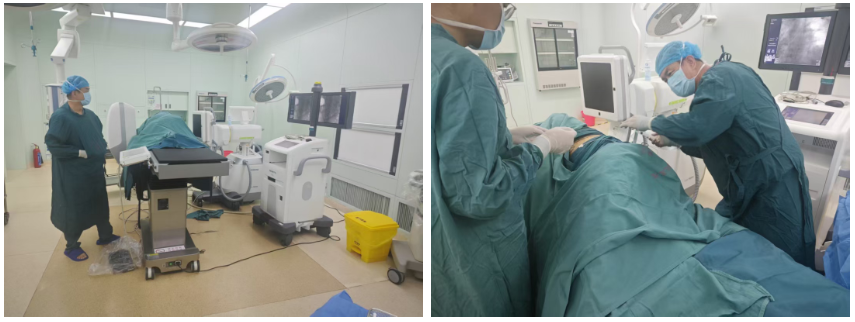
In the image, Director Zhang Depeng from the Department of Pain Medicine collaborated with doctors from the department in performing surgery.
After receiving intrathecal drug delivery system (IDDS) treatment, Mr. Qin’s pain score dropped from 9 (out of a maximum of 10) to 2-3. He can now gradually resume getting out of bed and moving around, with significant improvements in discomfort symptoms such as vomiting and constipation, and his quality of life has notably enhanced.
As an advanced, precise minimally invasive surgical treatment, IDDS implantation has become one of the internationally recognized "ultimate weapons" for combating intractable pain. It aims to achieve optimal pain relief with the minimum dosage, thereby significantly enhancing patients' quality of life.
Its advantages are remarkable:
Precise Targeting: The medication acts directly on the pain centers in the spinal cord and brain, requiring only 1/300 of the dosage used in oral administration.
High-Efficiency Pain Relief: By bypassing the systemic bloodstream, it takes effect rapidly, with analgesic outcomes significantly superior to those of oral medications.
Minimal Side Effects: Due to the extremely low dosage, systemic side effects—such as gastrointestinal reactions, hepatotoxicity, and nephrotoxicity—are greatly reduced. Cancer may not be curable immediately, but pain must be relieved.

Our hospital's Department of Pain Medicine has established specialized facilities, including pain outpatient consultation rooms, cancer pain MDT (Multidisciplinary Team) consultation rooms, pain outpatient treatment rooms, and a dedicated pain ward. We are committed to treating various types of acute and chronic pain, cancer-related pain, and intractable pain.
The department currently offers interventional therapies for cancer pain, such as intrathecal analgesic pump implantation, neural electrical stimulation implantation, celiac plexus neurolysis, neural radiofrequency modulation, and vertebroplasty for metastatic tumor-damaged vertebrae. Upholding our hospital’s long-standing philosophy of "patient-centered care" and leveraging extensive multidisciplinary diagnostic and treatment experience, we remain dedicated to alleviating your pain and striving to fulfill our sincere commitment to securing a pain-free life for you.
Preliminary Review: Zhang Jie
Final Review: Ma Shuqian