Varicose veins are not a "minor issue"! High-risk groups should be vigilant
Varicose veins are not a "minor issue"! High-risk groups should be vigilant
"A few small green veins popped up on my legs. They don't hurt or itch, so I probably don't need to worry about them, right?" In fact, the worsening of varicose veins follows a clear "three-step path," and its root cause lies in the "venous valves" that we cannot see. Scientific prevention and management are very important.
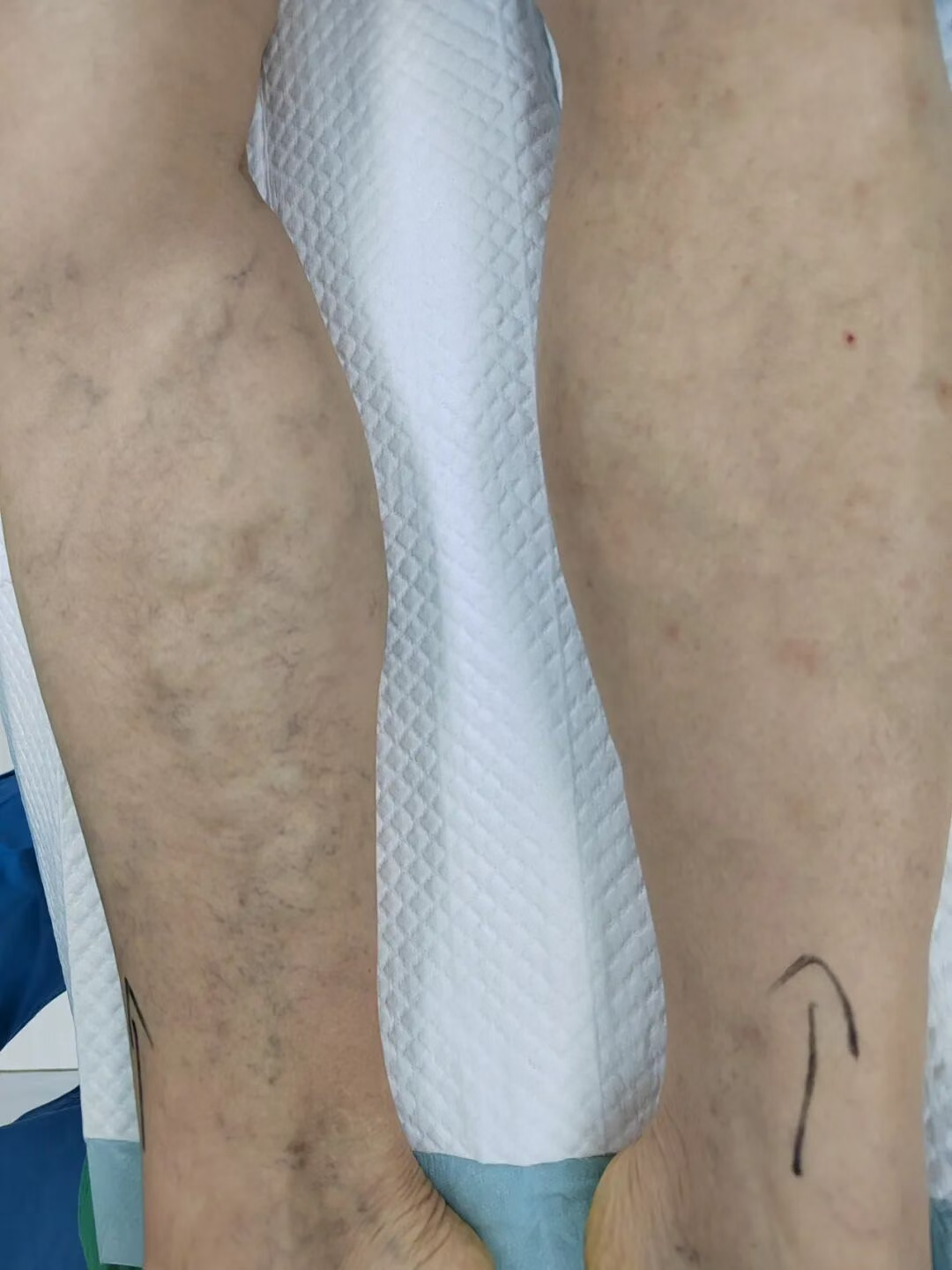
I. Don’t take "green veins" lightly! From valve damage to ulcers, it’s only three steps away
The venous valves in the lower limbs are like "one-way valves" in a water pipe, ensuring blood flows only toward the heart.
Once the venous valves are damaged and the "valve doesn’t close properly," the "deterioration trilogy" of varicose veins begins:
Step 1: Valve failure, blood "refluxes".
After the valves age or become loose (e.g., long-term standing "wears out" the valves, genetics make the valves inherently weak), blood pools in the veins of the lower limbs, and venous pressure begins to rise.
Step 2: Blood vessel expansion, "green veins" spread all over the legs.
Long-term high venous pressure in the lower limbs causes originally thin and straight veins to gradually thicken and bend. From the skin surface, they appear as bulging "green veins," some resembling earthworms. At this stage, symptoms like leg soreness and fatigue may occur, especially after prolonged standing, but many people still ignore them.
Step 3: Skin "malnutrition," eventually leading to ulcers.
Long-term "congestion" of blood in the lower limbs allows metabolic waste to seep into the skin: the skin first turns brown (pigmentation), then eczema develops, accompanied by itching. Finally, due to lack of blood nourishment, even a small wound can ulcerate into a "chronic leg ulcer," which is difficult to heal.
II. These people are most likely to be "targeted" by varicose veins—check yourself quickly!
Varicose veins do not occur "randomly". The following groups of people are at high risk because they are prone to "premature damage" of the venous valves:
People who "stand out": Teachers, traffic police, shopping mall guides, hairdressers, etc., who stand for more than 4 hours daily. Their venous valves are under long-term gravitational "pressure," making them prone to relaxation.
People who "sit it out": Programmers, long-distance drivers, office workers, etc. Sitting for long periods without movement lets the leg muscles "slack off," failing to assist blood return, gradually increasing venous pressure.
People who "weigh it out": Excess weight puts "extra burden" on the lower limb veins, like carrying sandbags every day, making the valves more prone to "wear out."
People born with it: Those with a family history have inherently weaker venous valves. If one parent has the condition, the children have a higher risk of developing it.
People in "special periods": Pregnant women (uterine pressure on veins + hormones relaxing blood vessels) and menopausal women (declining estrogen reduces blood vessel elasticity) are also high-risk groups.
III. Stepwise prevention and management: Different stages require different "leg protection plans".
Whether you are in a high-risk group or already have symptoms, you can control the condition and avoid worsening through "stepwise prevention and management":
Primary Prevention:
For high-risk groups (e.g., those who stand or sit for long periods, have a genetic history), "reduce the burden on the veins":
Move every hour: When standing, tiptoe 10 times every 30-60 minutes (toes on the ground, lift and lower heels) to activate the leg muscle "pump." When sitting for long periods, get up every 40 minutes and perform "ankle pumping" (pull toes toward knees, then relax, repeat 20 times) to help blood "move upward."
Wear the right "support stockings": High-risk groups should choose medical-grade "Class I compression" stockings; those already with symptoms should choose medical "Class II compression" stockings (not ordinary tight stockings!). Wear them during the day and remove them at night. They help venous blood return.
Secondary Intervention: First get an ultrasound, then decide on a plan.
If "green veins" appear on your legs, don’t use medication blindly. The first step is to go to the hospital for a lower limb venous ultrasound to distinguish between two situations:
If it’s only "capillary dilation" (like fine red or purple blood threads): No special treatment is needed. Persist with primary prevention methods and have regular check-ups.
If "worm-like vessels" (bulging, curved veins) appear: It indicates significant valve damage. Under doctor’s guidance, "venoactive drugs" can be used to relieve leg soreness, and an ultrasound should be done every six months to monitor vascular changes and avoid progression.
If leg swelling (pitting edema at the ankle), skin browning, eczema, or even ulcers have already appeared, timely treatment is needed. Many people fear "open surgery to strip veins," but modern minimally invasive techniques have long been "upgraded" to offer "zero incision" solutions.
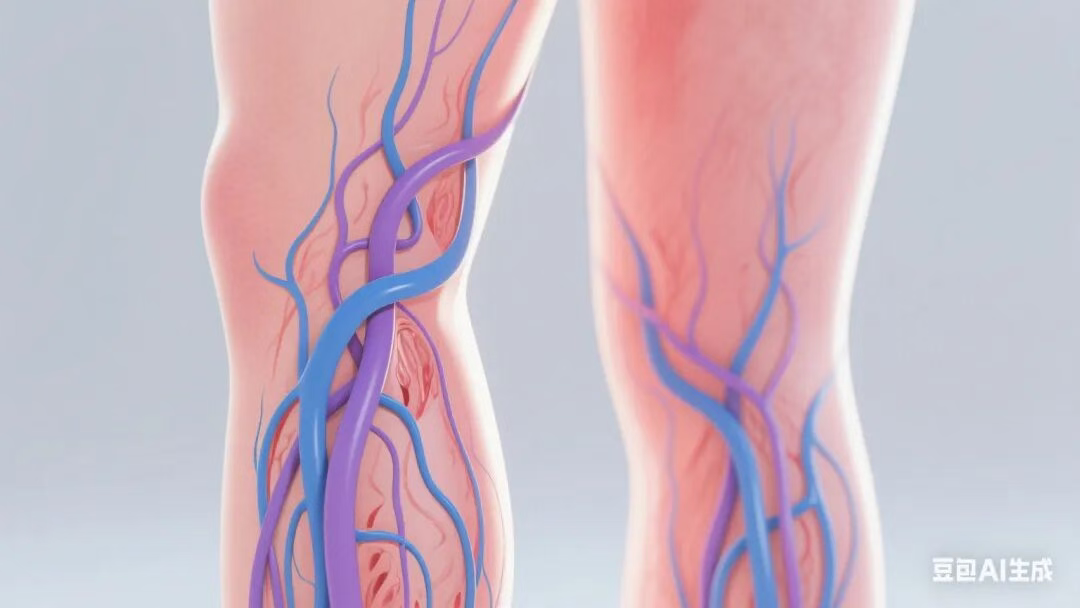
Our hospital’s Bone and Soft Tissue Department uses a combination of "microwave ablation + foam sclerotherapy" to precisely treat diseased veins: microwave "closure" for main trunk veins and sclerosing agent "blockage" for branch veins. It takes only 30 minutes, requires no incision, and no suture removal after surgery.
The key to varicose veins is "early detection, early intervention". Early "green veins" can be controlled through prevention. Mid-stage lesions can be resolved with minimally invasive methods. But once it progresses to ulcers and "chronic leg ulcers," treatment becomes more difficult and may affect quality of life.
Preliminary Review: Zhang Lihong Final Review: Zhang Jie