
Cured with Precision Tech: A Prostate Cancer Story from Lanzhou Heavy Ion Hospital
Tech-Powered Precision Medicine: A High-Risk Prostate Cancer Patient's Recovery at Lanzhou Heavy Ion Hospital
When patients lie on the six-degree-of-freedom treatment couch and are automatically and accurately transported to the treatment position, and when the over 30 multi-field focused photon irradiations are replaced by merely a dozen single-field carbon ion layer-by-layer spot scanning irradiations, this series of revolutionary changes in radiotherapy methods marks the arrival of a non-toxic radiotherapy era for prostate cancer patients. Recently, the radiotherapy team of the Third Department at Lanzhou Heavy Ion Hospital, under the leadership of Director Zhang Yingdong, successfully completed a carbon ion radiotherapy treatment for a high-risk prostate cancer patient. Combining cutting-edge technology with exquisite medical skills, they helped the patient overcome this "male" issue and return to the path of health.
I. Background Story
Mr. Cui, aged 53, past medical history: In good health with no family history of prostate cancer. Lifestyle habits: Regularly engages in physical exercise, but has experienced frequent urination and a sensation of incomplete bladder emptying over the past year, which were not taken seriously.
II. Discovery, Diagnosis, and Initial Signs
Discovery and Diagnosis:
A routine physical examination prevented a major health crisis.
Initial Signs:
Over the past year, Uncle Cui's nighttime urination frequency increased from once to 2-3 times, with occasional daytime symptoms including a weaker urine stream and prolonged waiting time to void. He initially attributed these changes to normal aging. However, an abnormal Prostate-Specific Antigen (PSA) test during his annual workplace health examination this year revealed an underlying issue.
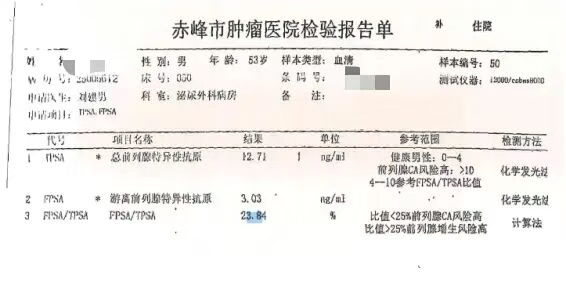
Check Results:
PSA value: 12.7 ng/mL (Normal reference range is typically <4 ng/mL. While levels may slightly increase with age, this result requires further attention.)
Rectal digital examination (DRE):
The doctor detected a small nodule in his prostate with a slightly firm texture.
Multiparametric MRI:
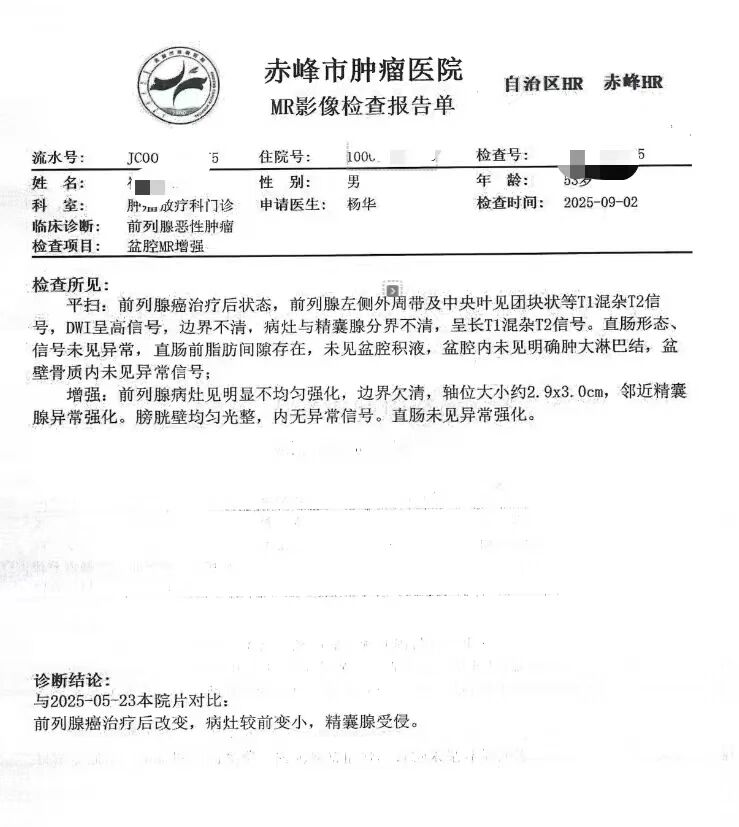
The results indicate a mass in the left peripheral zone and central gland of the prostate, suggesting malignancy, with invasion of the left seminal vesicle.
Prostate needle biopsy (gold standard):
Under ultrasound guidance, a precise biopsy was performed. The pathological report confirmed [prostate adenocarcinoma, Gleason score 5+5=10], classified as high-risk, locally advanced prostate cancer.
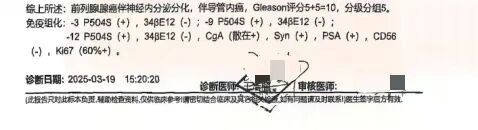
Popular Science Tips:
PSA screening serves as a "sentry" for detecting early-stage prostate cancer and requires only a simple blood test. Men over 50 should undergo this test annually; those with a family history are advised to start at age 45. Do not neglect it just because you "feel fine"!
III. Treatment Decision: Choosing the Most Suitable Plan for Yourself
After the diagnosis, Uncle Cui and his family were understandably anxious. We patiently explained the situation: "Your cancer was detected relatively early, and the cancer cells are still confined to the prostate area with no distant metastasis. The cure rate for such cases exceeds 95%. There are several treatment options, each with its own advantages and disadvantages." Initially, he underwent three months of endocrine therapy for prostate cancer, also known as androgen deprivation therapy (ADT). Endocrine therapy is a critical and indispensable component of prostate cancer treatment. For patients with locally advanced disease who have a high tumor burden or extensive invasion, combining endocrine therapy before (neoadjuvant), during, and after (adjuvant) radiotherapy allows for a "dual approach and synergistic effect":
- 1. Shrinking the tumor to create optimal conditions for radiotherapy, enhancing its precision and effectiveness.
- 2. Eliminating micrometastases and synergizing with radiotherapy to eradicate cancer cells.
- 3. Extensive studies confirm that the combination of "radiotherapy + endocrine therapy" significantly improves patient survival and cure rates, far surpassing the efficacy of either treatment alone.
(After three months of endocrine therapy, Uncle Cui’s prostate-specific antigen (PSA) level dropped to 0.05 ng/mL.)
After endocrine therapy has taken effect, localized radical treatment for prostate cancer can be considered:
- Radical Prostatectomy: Surgical approaches for prostate cancer include traditional open surgery, laparoscopic surgery, and the more advanced robot-assisted minimally invasive surgery. Robot-assisted surgery enables complete removal of the prostate with minimal trauma and faster recovery. However, all surgical methods carry risks such as urinary incontinence, erectile dysfunction (ED), and loss of fertility.
- Radical Radiotherapy: This approach uses high-precision radiation to "kill" cancer cells without the need for surgery.
After thorough discussions with his family and doctors, Uncle Cui—considering his relatively young age and the desire to both permanently resolve the issue and minimize treatment-related side effects—ultimately opted for "carbon ion radical radiotherapy for prostate cancer."
Popular Science Tip: There is no "best" treatment, only the "most suitable" one. Be sure to make decisions collaboratively with urology and radiation oncology doctors (through MDT multidisciplinary consultation) based on cancer stage, age, physical condition, and personal preferences.
IV. Treatment and Rehabilitation Process: High Technology Delivers High Efficacy and Non-Toxic Radiotherapy
Radiation Therapy Process:
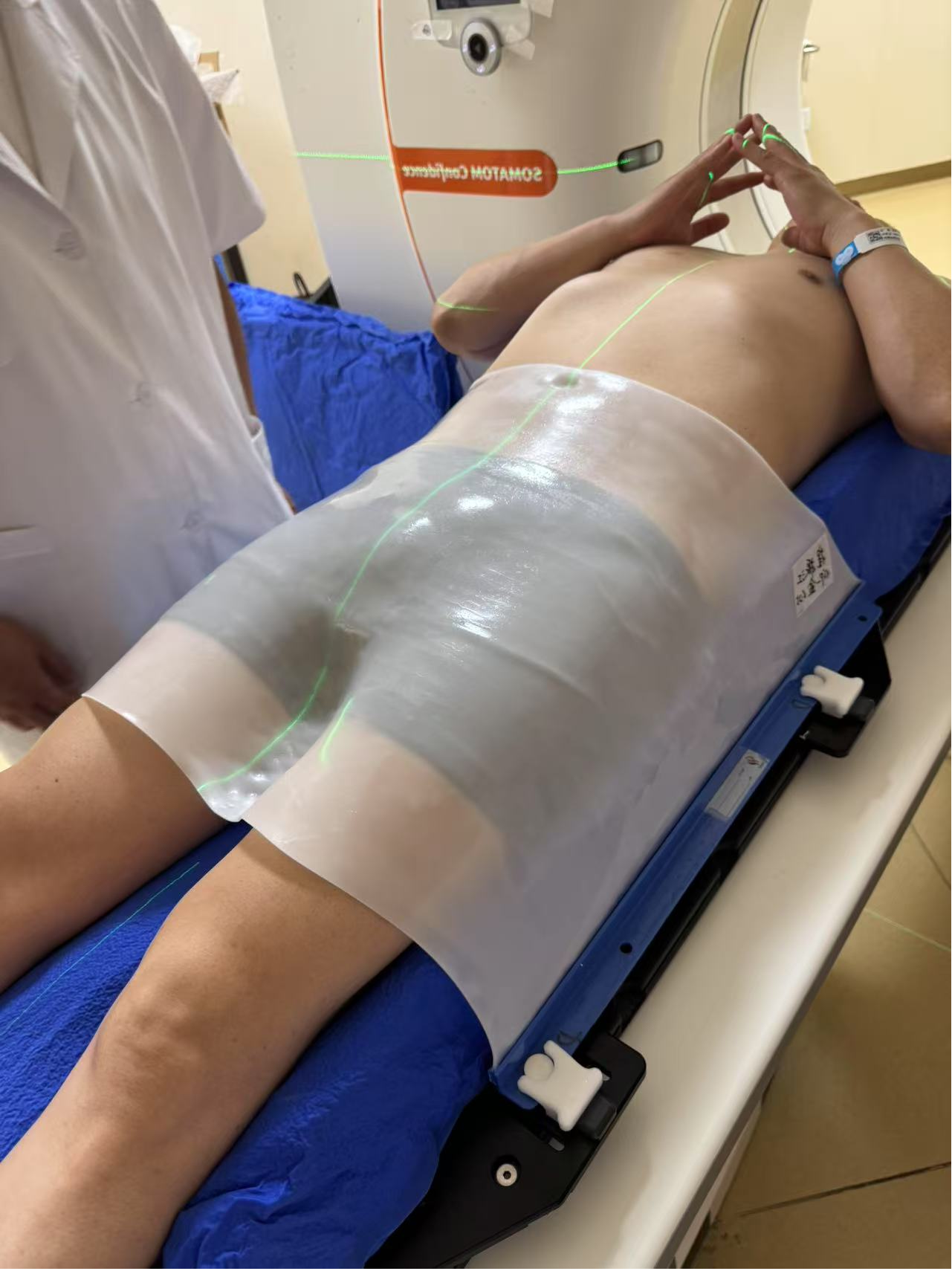
- Positioning: The body is fully immobilized using a full-size vacuum cushion wrapping the entire body combined with a thermoplastic film fixation for the pelvic region. CT, MRI, and PET-CT thin-slice scans (1.5 mm thickness) are performed for precise target delineation.
- Planning: Carbon ion radiotherapy is a type of particle therapy, while conventional photon radiotherapy (including the most advanced intensity-modulated radiotherapy (IMRT) and stereotactic body radiotherapy (SBRT)) uses X-rays. The two approaches differ fundamentally in both physical and biological properties, which determines the unique advantages of carbon ion radiotherapy.
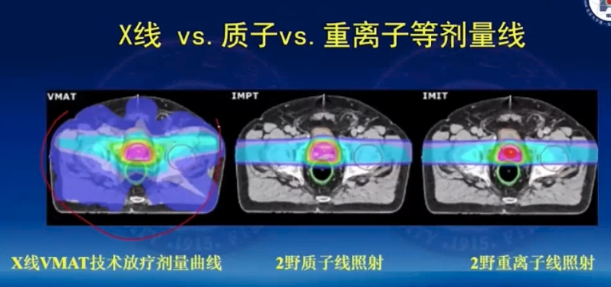
• Conventional Photon Radiotherapy (X-rays): When X-ray beams pass through the body, the highest dose is delivered near the skin surface upon entry, with energy gradually attenuating as it penetrates deeper and eventually exits the body. This means normal tissues surrounding the tumor (such as the rectum and bladder) receive unnecessary radiation exposure. It is akin to a bullet penetrating the body, causing damage along its entire trajectory.
• Carbon Ion Radiotherapy: The "Bragg Peak" — enabling "precision-targeted destruction" — Carbon ion beams release minimal energy upon entering the body, with the majority of energy abruptly released only upon reaching a specific depth (i.e., the tumor location), forming a sharp dose peak known as the Bragg Peak. Physicians can precisely adjust this peak to fully cover the entire tumor shape. Like a "smart depth charge," it causes almost no damage during travel but detonates violently at the predetermined depth (the tumor site), with energy rapidly diminishing thereafter.
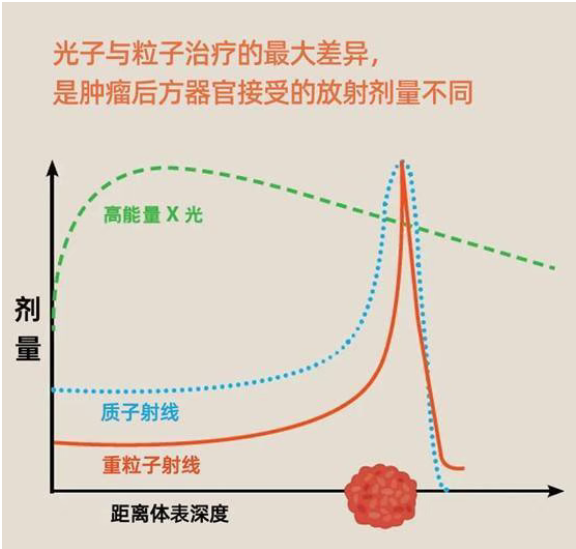
- Comparison of Physical Treatment Plans: Carbon Ions vs. Photons, Carbon ion therapy achieves protection of surrounding normal tissues, significantly reducing radiation exposure to the rectum (behind the tumor) and bladder (in front of the tumor). Simultaneously, it safely delivers higher radiation doses to the tumor, thereby more effectively destroying cancer cells. (Dose distribution comparison diagram)
- Treatment: For prostate cancer, conventional photon radiotherapy requires a total dose of over 80Gy, delivered in more than 30 sessions over 7 weeks. In contrast, carbon ion radiotherapy requires only about 60Gy total dose, completed in just over 10 sessions within 3 weeks. When patients lie on the six-degree-of-freedom treatment couch and are automatically and accurately positioned, and when multi-field focused photon irradiation is replaced by single-field carbon ion layer-by-layer spot scanning, this series of revolutionary changes in radiotherapy marks the arrival of a non-toxic radiotherapy era for prostate cancer patients.
- Efficacy and Side Effects Observation: Throughout the treatment, Uncle Cui’s work and daily life were almost entirely unaffected. Despite being far away in Lanzhou, he continued to coordinate the operations of his company with thousands of employees via phone and video conferences. His daily routine remained unchanged, with no differences in urination or bowel movements compared to before treatment. Only during the final three sessions did he experience Grade 1 leukopenia (low white blood cell count), which was promptly addressed with a single dose of granulocyte-stimulating factor to complete radiotherapy. By the end of treatment, his prostate-specific antigen (PSA) level had dropped to 0.01 ng/mL. On the very day of his final session, Uncle Cui returned to his company thousands of miles away. Before departing, he remarked emotionally: "This method is incredible! I barely felt anything while being treated. If I had chosen surgery, there could have been major bleeding, inability to urinate or defecate normally, and at least a week stuck in the hospital doing nothing. Now, I didn’t miss a beat—the treatment is already over. I also looked into photon radiotherapy and heard that by the later stages, the skin, bladder, and intestines get ‘burned.’ But with carbon ion radiotherapy, I felt absolutely nothing. Can it really cure the disease just like that?"
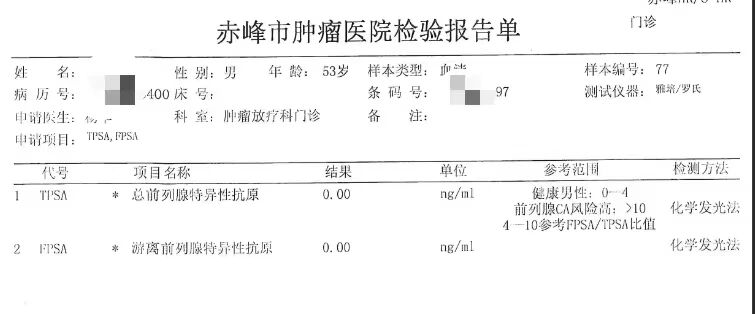
- Follow-up Examination: In recent follow-up tests, Uncle Cui’s PSA level was measured at 0.00 ng/mL (undetectable), indicating that the cancer has achieved "biochemical cure." Over the phone, he marveled: "This treatment is so advanced—it truly cured me with almost no side effects. I must spread the word to fellow patients."
V. Expert Commentary
- Traditional photon radiotherapy belongs to low linear energy transfer (Low-LET) radiation. It primarily damages cancer cell DNA (mainly through single-strand breaks) by indirectly generating free radicals. This type of damage is easily repaired by cancer cells (particularly hypoxic cells), leading to radiotherapy resistance or recurrence. Therefore, the efficacy of photon radiotherapy is closely related to the radiosensitivity of tumor cells. Prostate cancer cells have an α/β ratio of approximately 1.5, making them radioresistant. Only when the total radiation dose exceeds 80Gy can photon radiotherapy effectively control the tumor.
• Carbon ion radiotherapy: Belongs to high linear energy transfer (High-LET) radiation. It acts like a "heavy artillery shell," directly striking cancer cell DNA and causing irreparable double-strand breaks. This damage is devastating. The resulting clinical benefit is that carbon ion radiotherapy effectively overcomes the radioresistance of prostate cancer cells and has stronger killing power. A dose of approximately 64Gy (RBE) is sufficient to eliminate almost all cancer cells. Even if tumor cells are in a quiescent or hypoxic state resistant to photon radiotherapy, carbon ion radiotherapy can still indiscriminately destroy them.
VI. Conclusion
Carbon ion radiotherapy represents the current pinnacle of technological advancement in prostate cancer radiation therapy. It holds theoretical absolute advantages in both physical precision and biological lethality, which translate into lower side effects and potentially higher cure rates.
Introduction to Experts in the Third Department of Radiation Oncology

Chief Physician
Zhang Yingdong
Chief Physician, Clinical Director of the Radiation Oncology Department at Gansu Wuwei Cancer Hospital (Lanzhou Heavy Ion Hospital)
Former Administrative Head of the Radiation Oncology Department at Peking University International Hospital, and Director of the Radiation Oncology Center at Capital Medical University Sanbo Brain Hospital
Graduate of the Radiation Oncology postgraduate program at Peking University Third Hospital
With over 30 years of experience in clinical radiation oncology.
Specializes in radiotherapy for malignant tumors of the central nervous system, head and neck, thorax, abdomen, pelvis, and extremities. Has extensive research experience in combining chemotherapy, targeted therapy, immunotherapy, and other comprehensive treatments during radiotherapy. Proficient in developing personalized integrated treatment plans tailored to patients' specific conditions. Possesses rich clinical experience and profound academic expertise. Has published multiple papers in authoritative journals such as Cancer Cell International, Chinese Journal of Radiation Oncology, and Chinese Journal of Oncology, including:
• "EGFR inhibitor C225 increases the radiosensitivity of human non-small cell lung cancer cells"
• "Research progress on vascular injury induced by continuous low-dose-rate irradiation"
• "Study on the radiosensitizing effect of epidermal growth factor receptor monoclonal antibody on lung squamous cell carcinoma lines"
• "Advances in the mechanisms of irradiation-induced tumor cell apoptosis"
◆ Member of the Radiotherapy Professional Committee of the Bethune Charitable Foundation
◆ Member of the Central Nervous System Tumor Radiotherapy Group, Radiation Oncologist Branch of the Chinese Medical Doctor Association
◆ Member of the Tumor Radiotherapy Professional Committee of the Beijing Anti-Cancer Association
◆ Member of the Head and Neck Tumor MDT Professional Committee of the Beijing Cancer Prevention and Control Association
Preliminary Review: Liu Wenyu
Final Review: Ma Shuqian

