From Pigmentation to "Old Rotten Leg": A Detailed Look at Complications of Lower Limb Varicose Veins
From Pigmentation to "Old Rotten Leg": A Detailed Look at Complications of Lower Limb Varicose Veins
Lower limb varicose veins are very common in daily life. Many people think they are just some extra "green veins" on the legs and don't need attention if they don't hurt or itch. However, this problem of damaged venous valves and blood pooling can actually lead to a series of complications. From skin discoloration to recurrent ulcers, these seemingly independent symptoms are all closely related to the progression of varicose veins.
I. Skin Pigmentation:
From Reddish to Brown-Black: Veins "Staining" the Skin
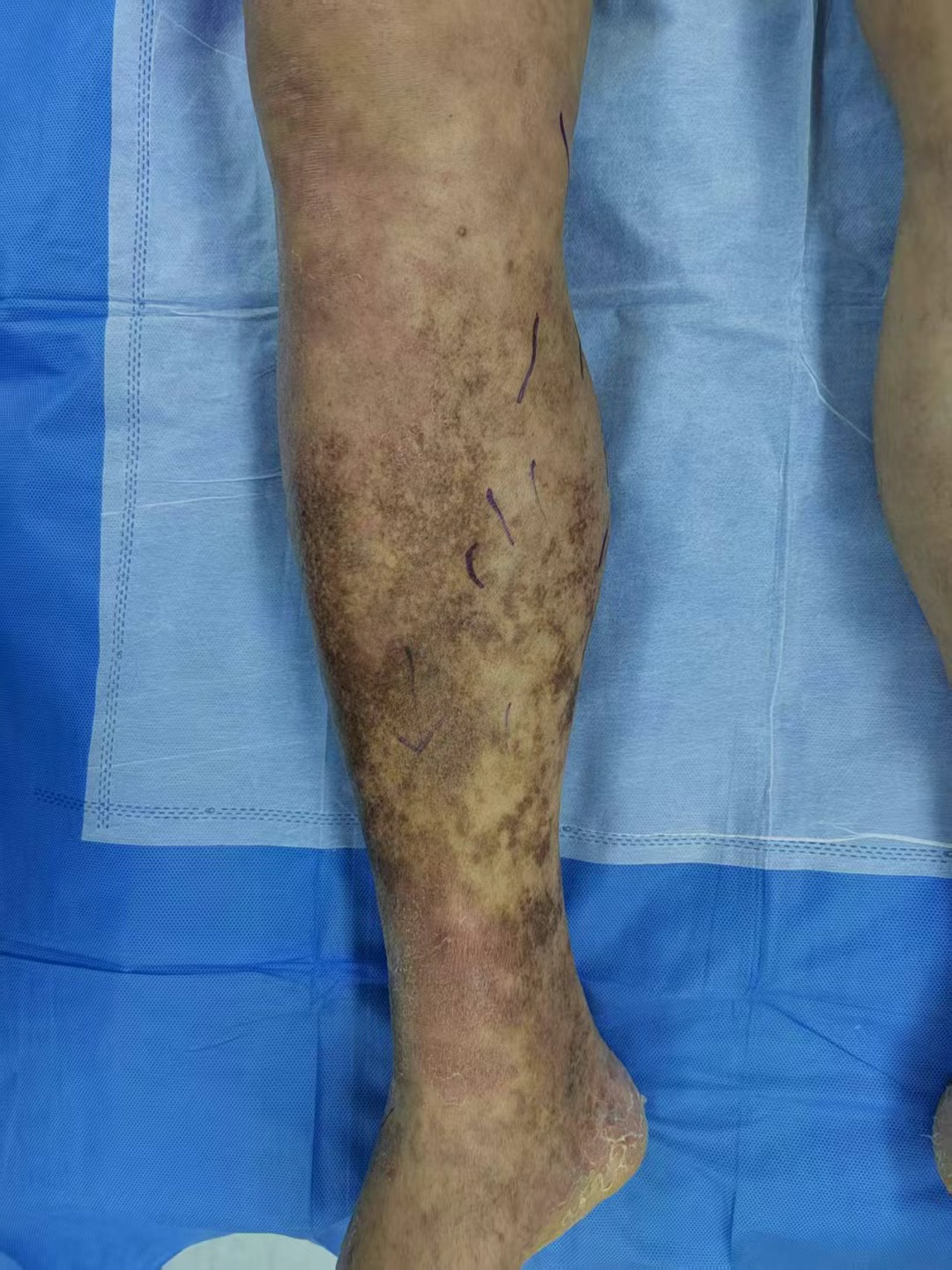
Many patients with varicose veins will notice the skin on the inner side of the calf or around the ankle gradually changing color: starting as a faint reddish hue, it slowly turns brown, dark brown, or even as if stained by "dirt." This is actually a "sequela" of blood pooling. When venous valves fail, blood pools in the lower limb veins for a long time, causing continuous increase in venous pressure. This leads to red blood cells being "squeezed out" of the blood vessel walls into the surrounding tissues. The hemosiderin released after red blood cells rupture is a brownish substance that, when deposited over time, discolors the skin. Once this pigmentation appears, it is difficult to completely fade, and it often indicates that the varicose veins have progressed to a certain extent, and the skin's nutrient supply is beginning to deteriorate.
To address this, the key is to control venous pressure: wear medical compression stockings as early as possible and reduce prolonged standing; elevate the legs when resting to help blood return. If the pigmentation area expands, seek medical attention promptly. Medications or minimally invasive treatments can improve venous function and prevent further deterioration.
II. Eczema and Itching:
Not an Ordinary Skin Disease; the Root Cause Lies in the Veins
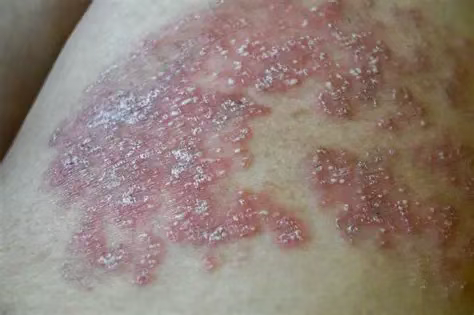
"My legs are always itchy, with patches of small rashes, and many ointments haven't helped." This may not be ordinary eczema but "stasis eczema" caused by varicose veins.
Long-term blood pooling leads to poor microcirculation in the skin of the lower limbs, preventing metabolic waste from being excreted in time. At the same time, the skin's barrier function is compromised, making it susceptible to external irritants. In this case, the skin may develop erythema, papules, blisters, and intense itching. Patients who scratch uncontrollably may break the skin, leading to infection.
This type of eczema is "stubborn." Using anti-itch ointments alone only provides temporary relief. The root cause—varicose veins—must be addressed. In daily life, avoid hot water washing and excessive scratching; wear loose, breathable pants to reduce friction. Simultaneously, use compression stockings and venoactive drugs to improve local circulation. If eczema recurs frequently, consider minimally invasive surgery to repair the damaged veins as early as possible.
III. Thrombosis and Superficial Phlebitis:
Redness, Swelling, Heat, and Pain—Beware of "Cord-Like Hard Lumps"
In patients with varicose veins, blood flow is slow and stagnant, making it easy for blood clots to form. When clots occur in superficial veins, they can cause superficial phlebitis, a common and painful complication.
Patients may suddenly notice that the "green veins" on their legs become red, swollen, and warm to the touch, feeling like hard "cords" that are painful when touched. This is because the blood clot irritates the venous wall, triggering an inflammatory response. Although superficial vein clots rarely break off and cause pulmonary embolism (the risk is much lower than with deep vein thrombosis), the pain and swelling can severely affect daily life and may recur repeatedly.
If superficial phlebitis occurs, seek medical attention promptly. Doctors may prescribe anticoagulants to prevent the clot from enlarging and recommend local cold compresses and elevating the affected limb to alleviate symptoms. Surgery to remove the diseased vein is often advised to prevent recurrent clots.
IV. Vascular Rupture and Bleeding:
Seemingly Sudden, Actually a Result of "Chronic Damage"
Among the complications of varicose veins, vascular rupture and bleeding may seem sudden but are actually the result of long-term vein damage. Due to persistently high venous pressure, the vessel walls gradually become thin and brittle. Coupled with skin weakened by ischemia and hypoxia, even minor external force (such as a bump, scratch, or even inadvertent friction) can cause the varicose vein to rupture and bleed.
This type of bleeding has a characteristic: the bleeding volume may be substantial, and due to high venous pressure, blood continues to ooze, making it difficult to stop spontaneously. More dangerously, bleeding sometimes occurs at night, with patients unknowingly bleeding while asleep and even waking up due to excessive blood loss. Fortunately, venous blood pressure is relatively low, and as long as treated promptly, it is generally not life-threatening.
If vascular rupture and bleeding occur, take first aid measures immediately: press the bleeding point tightly with a clean towel or gauze, and elevate the affected limb above heart level to reduce bleeding. Apply pressure for at least 10-15 minutes without frequently checking, to avoid interrupting clotting. After stop bleeding, seek medical attention promptly. A doctor will assess the severity of the varicose veins and, if necessary, perform surgery to fundamentally prevent recurrent bleeding.
To prevent vascular rupture, the key is to protect the skin over the varicose veins: wear soft, loose clothing to avoid friction; do not scratch the affected area; be cautious to avoid bumps during daily activities. Simultaneously, actively treat varicose veins to reduce venous pressure and minimize the risk of bleeding at the source.
V. "Old Rotten Leg":
From Ulcer to Refractory Wound—The "End-Stage Damage" of Varicose Veins
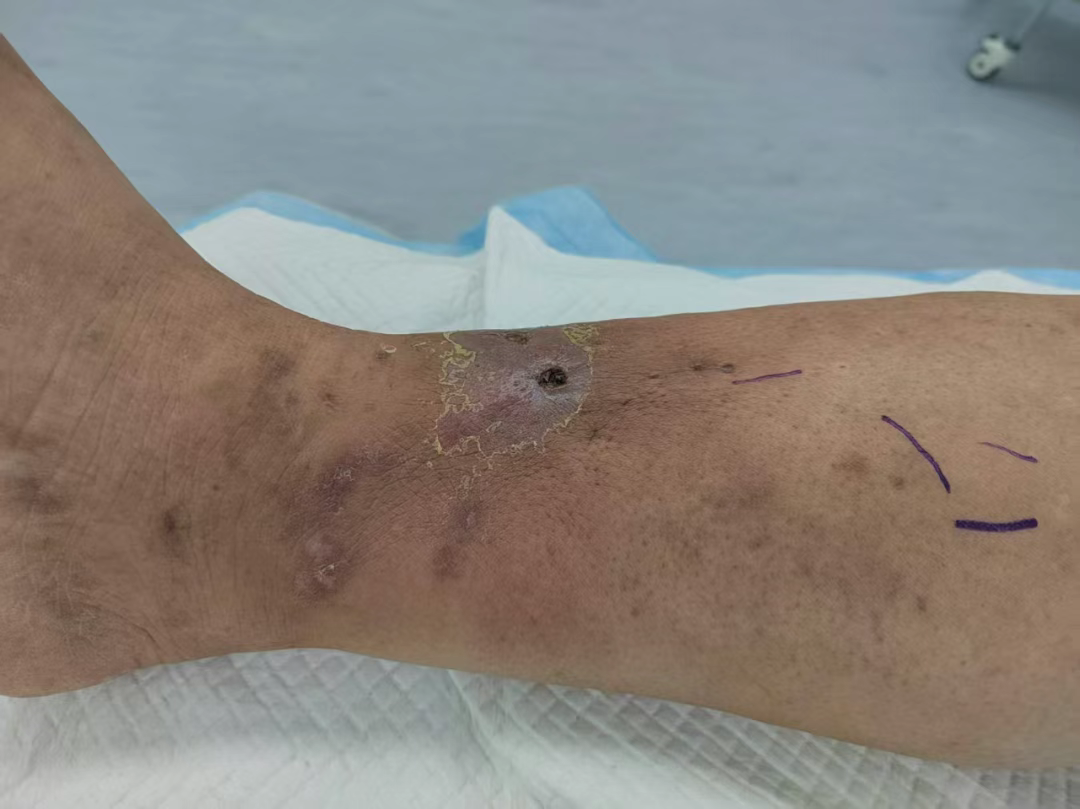
"Old rotten leg" is a common term for chronic lower limb ulcers and one of the most severe complications of varicose veins. When venous pressure remains high for a long time, skin nutrition is severely deficient, and with minor trauma (such as a scratch or insect bite), skin ulceration may occur. Once ulcerated, it is very difficult to heal.
These ulcers often occur on the inner side of the ankle. Initially, it may be a small wound, but it gradually expands and deepens, oozing fluid and even emitting an odor. Patients often find it painful to walk, and the ulcers recur persistently, potentially lasting for years, severely affecting quality of life.
To prevent "old rotten leg," early intervention for varicose veins is key. If skin ulceration occurs, seek medical attention immediately. Debridement, dressing changes, and compression therapy can promote healing, while addressing venous reflux is essential. The longer the delay, the more difficult the treatment becomes.
These complications of lower limb varicose veins are essentially chain reactions triggered by "blood pooling." From mild pigmentation to severe "old rotten leg" and sudden vascular rupture and bleeding, the progression of the condition is often silent, but the harm gradually escalates.
Therefore, if you notice "green veins" bulging on your legs, don’t assume it’s "not a big deal." Get examined by a vascular surgeon as early as possible. Through lifestyle adjustments, compression stockings, or minimally invasive treatments, complications can be effectively prevented, keeping your legs free from these troublesome issues.
Preliminary Review: Ma Shuqian
Final Review: Liu Wenyu