
Knowledge on Chikungunya Fever Prevention and Control - Please Check!
Knowledge on Chikungunya Fever Prevention and Control - Please Check!
Chikungunya fever is an acute mosquito-borne infectious disease caused by the chikungunya virus, primarily characterized by fever, joint pain/arthritis, and rash. The name chikungunyaoriginates from the Kimakonde language (spoken by indigenous people in Tanzania, Africa), meaning "to become contorted"—describing the stooped posture of patients due to severe joint pain. The geographic distribution of this disease aligns with that of its Aedes mosquito vector, being endemic in tropical or subtropical regions such as sub-Saharan Africa, Southeast Asia, the Indian Ocean coastal areas and islands, and the Western Pacific region.
1. How is Chikungunya fever transmitted?
Source of infection: Patients, asymptomatic carriers, and virus-carrying non-human primates.
Transmission route: Primarily spread through the bite of Aedes mosquitoes (commonly known as tiger mosquitoes). After biting an infected person or animal, the virus multiplies inside the mosquito (within 2–10 days). When the infected mosquito then bites a healthy person, it transmits the virus.
Susceptible population: The general population is universally susceptible, but people who have been infected with the virus can develop long-lasting immunity.
2. What are the vectors of chikungunya fever?
The main vectors of chikungunya fever are the Aedes albopictus (Asian tiger mosquito) and Aedes aegypti (Egyptian mosquito), commonly known as the "tiger mosquitoes" with black-and-white stripes that we call "flower mosquitoes" in daily life. These mosquitoes primarily breed in container-stored water and usually bite people during the daytime, with peak activity occurring two hours after sunrise and two hours before sunset.
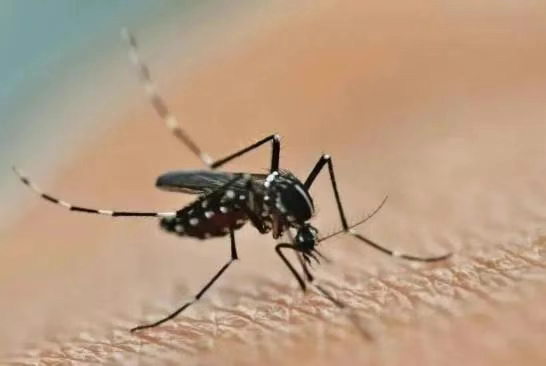
△ Aedes albopictus (Asian tiger mosquito)
(Source: WeChat Official Account of the Chinese Center for Disease Control and Prevention)
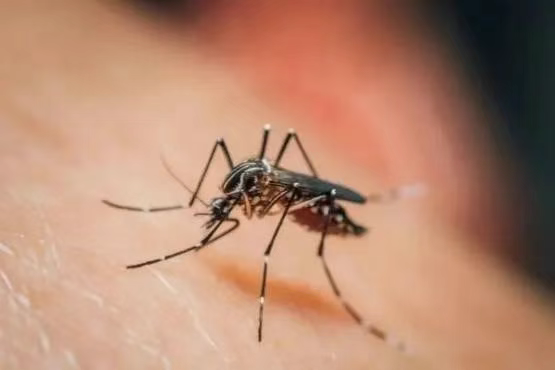
△ Aedes aegypti (Egyptian mosquito)
(Source: WeChat Official Account of the Chinese Center for Disease Control and Prevention)
3. What are the clinical manifestations after infection?
The incubation period of chikungunya fever ranges from 1 to 12 days, most commonly 3 to 7 days. The chikungunya virus can launch the following "triple attack" on patients:
Fever Attack (High Fever):
Sudden onset with chills and fever, with body temperature reaching up to 39°C, accompanied by headache, nausea, vomiting, loss of appetite, and lymphadenopathy (swollen lymph nodes).
Rash Appearance:
In over half of the patients, a rash appears on the trunk, extensor sides of the limbs, palms, and soles 2 to 5 days after onset. The rash may present as macules (flat discolored spots), papules (small raised bumps), or purpura (purple spots), with normal skin between lesions. Some patients may experience itching.
Severe Joint Pain:
The pain mainly affects small joints such as the wrists, ankles, fingers, and toes, and may be accompanied by generalized myalgia (muscle pain). The pain is particularly intense.
4. How to Prevent Chikungunya Fever During Travel?
The summer vacation is the peak season for travel and also the active period for mosquito-borne diseases. It is important to take precautions against chikungunya fever.
① Before Departure: Check Destination Disease RisksBefore traveling, check travel advisories from tourism authorities and entry-exit inspection and quarantine agencies to learn about infectious disease risks at your destination. Study relevant prevention knowledge and prepare mosquito prevention and control measures in advance.
② During Travel in Endemic Areas: Take Mosquito Protection MeasuresWhen traveling in regions where chikungunya fever is prevalent, take strict mosquito prevention measures. For outdoor activities, wear long-sleeved shirts and long pants to prevent mosquito bites, and apply insect repellent to avoid being bitten. Ensure temporary accommodations are equipped with protective items such as mosquito nets or electric mosquito repellent devices.
③ After Returning Home: Monitor Your HealthAfter returning from international or other endemic areas, conduct self-health monitoring. If you develop symptoms such as fever, rash, or joint pain within two weeks of returning, seek medical attention immediately. Be sure to inform your doctor of your travel history and any mosquito bites to facilitate accurate diagnosis and treatment.
5. How to Prevent Chikungunya Fever at Home?
Currently, there are no specific antiviral drugs for chikungunya fever, so mosquito prevention and elimination, as well as avoiding mosquito bites, are the key protective measures.
Eliminate Mosquito Breeding Sites:
- Turn over unused containers to prevent water accumulation, and promptly remove all types of stagnant water around and inside your home.
- Change the water in household aquatic plants thoroughly once a week.
- Tightly cover water storage containers (such as water tanks and basins), or add safe larvicide slow-release agents.
- Remove all hygiene blind spots and garbage where mosquitoes may breed.
Mosquito Prevention at Home and Outdoors:
- Install mesh screens on doors and windows, hang mosquito nets in bedrooms, and keep mosquito coils, electric mosquito swatters, or mosquito traps on hand.
- When going out, wear light-colored long-sleeved shirts and long pants, and apply mosquito repellent on exposed skin.
Avoid lingering in mosquito-prone areas such as tree shades, grasslands, or pavilions outdoors.
Lanzhou Heavy Ion Center
Gansu Wuwei Cancer Hospital is a state-owned public Grade III Class A specialized oncology hospital. The Lanzhou Heavy Ion Center is the second heavy ion clinical application center in China with independent intellectual property rights, operated by Gansu Wuwei Cancer Hospital. It houses the second Chinese heavy ion tumor treatment system, which was officially put into clinical operation on November 15, 2024, alongside the first Chinese heavy ion therapy system. To date, the center has completed over 250 cases of photon and heavy ion therapy, covering cancers such as lung cancer, pancreatic cancer, liver cancer, and glioblastoma.
The Lanzhou Heavy Ion Center has established an elite expert team, led by 50 top authorities in the field, including Shen Wenjiang, Lifetime Honorary Professor of the Department of Radiation Oncology at Peking University Health Science Center, and Professor Xu Bo, Standing Committee Member of the Radiation Oncology Branch of the Chinese Medical Association. The center is headed by Professor Wang Junjie, Chairman of the Radiation Oncology Branch of the Chinese Medical Association, providing strong technical support for heavy ion therapy.
Additionally, the facility is equipped with a range of cutting-edge medical devices, including:
- Varian VitalBeam medical linear accelerator
- Elekta Infinity 4D image-guided linear accelerator
- 3.0T MRI for simulation and positioning
- GE 256-slice high-end CT scanner
- Varian Ir-192 imported afterloader
These advanced facilities form a solid technical foundation for heavy ion therapy, ensuring high efficiency and precision in treatment.
The hospital is committed to building a comprehensive, full-life-cycle oncology treatment system, offering specialized departments such as:
- Radiation Oncology Department
- Oncology/Hematology Department
- Surgical Oncology Department
- Integrated Traditional Chinese and Western Medicine Oncology Rehabilitation Department
- Critical Care Medicine Department
- Digestive Endoscopy Center
- Imaging Department
- Clinical Laboratory
- Ultrasound Medicine Department
- Blood Bank
- Hematology Center Laboratory
The center provides comprehensive cancer treatments, including:
- Photon radiotherapy
- Chemotherapy
- Heavy ion therapy
- Surgical and medical oncology combined treatments
- Diagnostic services (imaging, laboratory testing, ultrasound, bone marrow cytology, etc.)

