The Magical "Reservoir" - The Ommaya Cyst
Mr. Huang, from a certain city in Hebei Province, was diagnosed with glioma of the brain two years ago. He underwent a series of treatments including surgery, radiotherapy, and chemotherapy at a top tertiary hospital in Beijing, and the tumor was well controlled. However, a year ago, he experienced symptoms again such as dizziness, headache, repeated vomiting, and weakness in the lower limbs. When he was examined at a local hospital, he was diagnosed with multiple metastases in the lateral ventricle and the spinal canal. The patient and his family sought medical treatment in many places but were all told that the treatment effect for this situation was not good. His family couldn't bear to give up seeing Mr. Huang suffering. At this time, they went to the top tertiary hospital in Beijing again. The outpatient expert suggested implanting an Ommaya cyst for special drug treatment. But due to the tight hospital beds, they were advised to go back to the local hospital for this operation. The local hospital informed them that they had not carried out similar operations and treatments before. Later, they remembered that they had seen in a patient group that someone had introduced a similar situation and the news that satisfactory results had been achieved after treatment. So they quickly contacted the group owner, who introduced to them that the heavy ion treatment in Wuwei could handle this situation. With the thought of giving it a try anyway, the patient came to Wuwei.

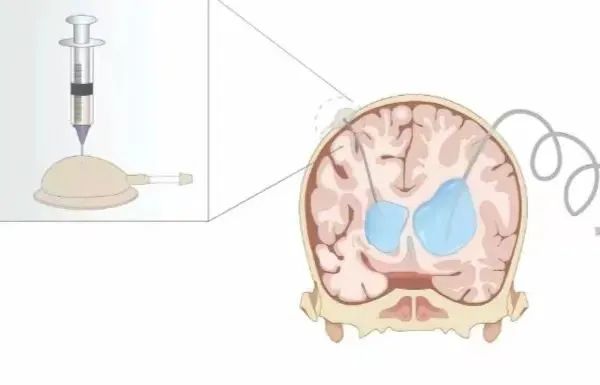
After a comprehensive evaluation by the department team and the anesthesiology department, a comprehensive and detailed assessment of the patient was carried out, and a personalized surgical plan was formulated to ensure the safety and effectiveness of the operation. Doctor Cheng Ping, the attending physician, quickly performed the operation on Mr. Huang under general anesthesia. The Ommaya cyst is composed of a flat reservoir buried under the scalp and a drainage tube inserted into the anterior horn of the lateral ventricle. The entire operation was carried out under the guidance of a surgical robot. A precise ventricular puncture was performed to insert the catheter, the reservoir was placed after subcutaneous expansion, and then the catheter and the reservoir were connected. After the operation, with the meticulous care of the medical staff, the patient recovered well, and the symptoms were significantly improved. The concept of rapid rehabilitation was applied throughout the diagnosis and treatment process, which caused little pain, had a small trauma, and allowed for a quick recovery, achieving the best results at the smallest cost. "I didn't expect it. It's really so magical." After the operation, Mr. Huang's family felt relieved, and Mr. Huang and his family decided to continue the follow-up treatment of the tumor at Gansu Wuwei Heavy Ion Hospital.
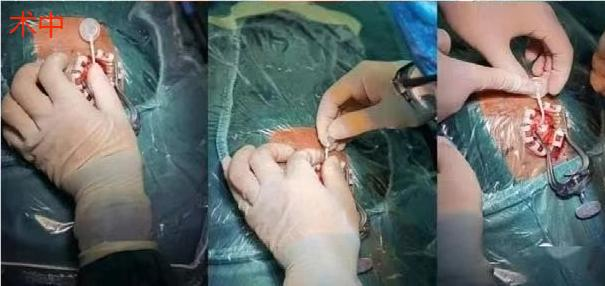
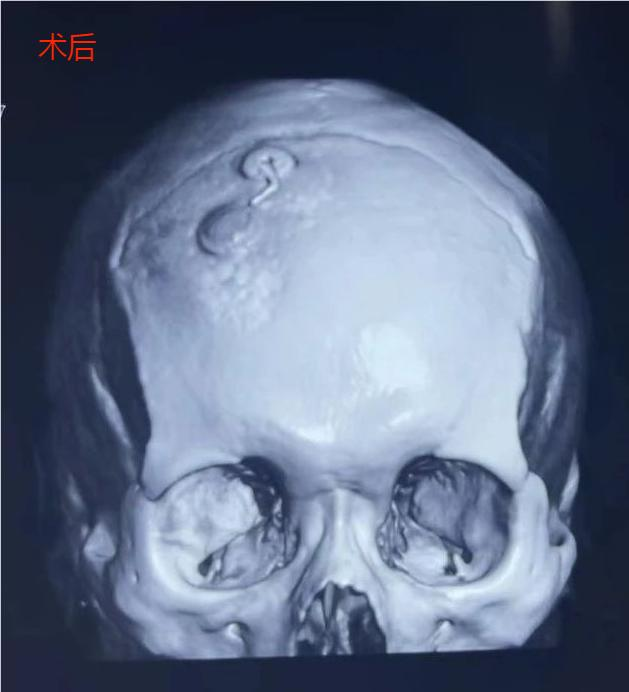
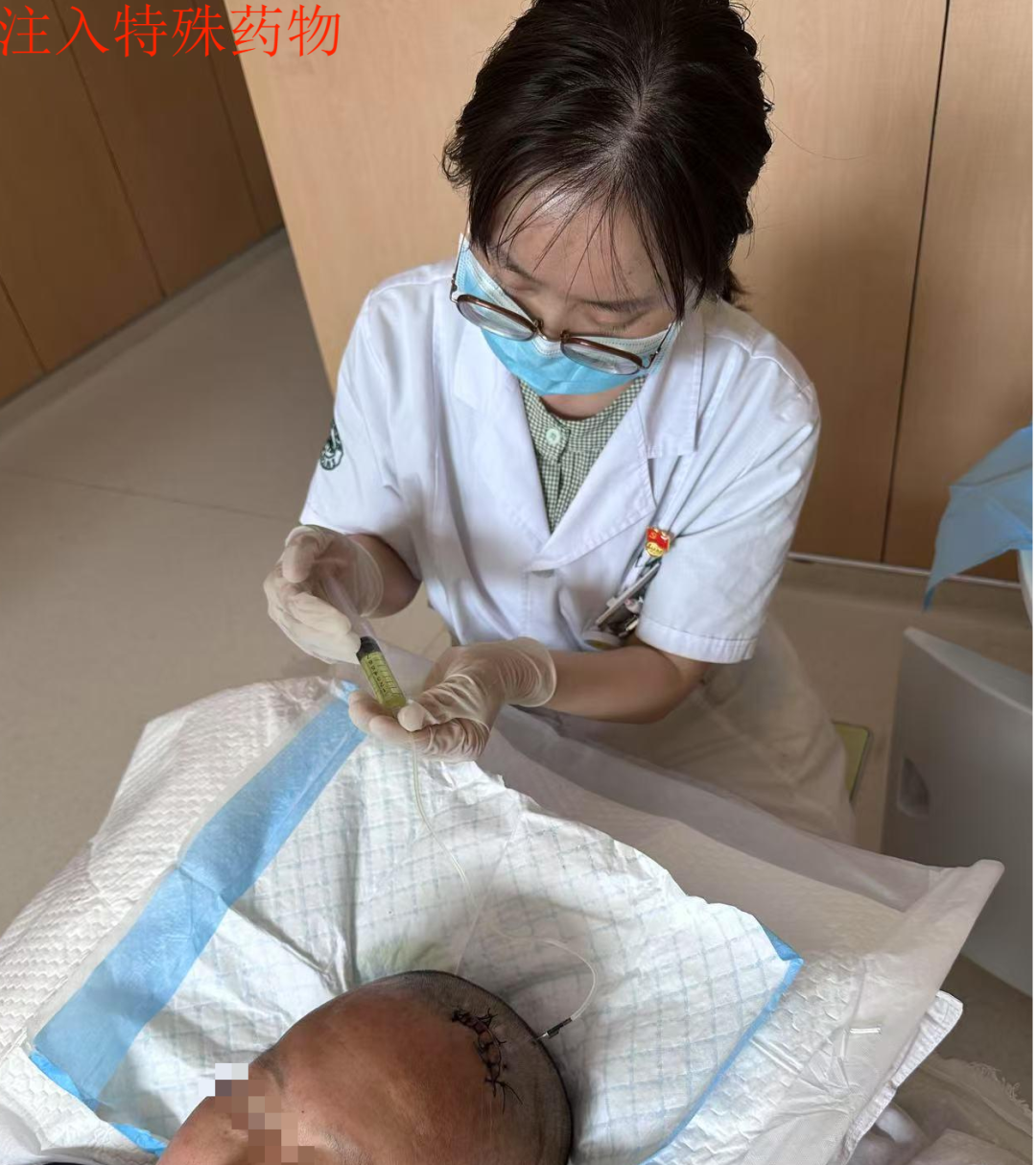
Introduction to the Ommaya Cyst

The Ommaya cyst is a ventricular drainage device invented by Professor Ommaya in 1963. It is formed by connecting a flat reservoir buried under the scalp and a drainage tube inserted into the anterior horn of the lateral ventricle. The original design purpose of the Ommaya cyst was to continuously administer drugs into the lateral ventricle for the treatment of fungal meningitis, so it was then called the "drug reservoir." Later, its application scope expanded and it was applied to the treatment of a variety of nervous system diseases, including craniocerebral tumors, intraventricular hemorrhage, meningitis, lymphoma, leukemia, and other diseases.
Now, the most widely used application is in the treatment of meningeal metastases. It can repeatedly send cerebrospinal fluid for inspection, and conduct routine, biochemical, cytological, genetic testing, etc., dynamically monitor the pressure of cerebrospinal fluid, and monitor the drug concentration in the brain. In neoplastic diseases, through the Ommaya cyst, controlled-release chemotherapy is carried out, and chemotherapy drugs are directly injected into the ventricle, so that the drugs can be continuously released outward, thus continuously and effectively killing tumor cells. This method can bypass the blood-brain barrier, reduce the toxic and side effects caused by systemic medication, and at the same time increase the local drug concentration. It is an effective means for the treatment of nervous system tumors, as well as brain metastases and meningeal metastases of solid tumors. Currently, the drugs that can be used for intrathecal injection include methotrexate, cytarabine, pemetrexed, and some targeted drugs, etc.
In addition, through the Ommaya cyst, cerebrospinal fluid can be repeatedly extracted for examination and analysis to judge the treatment effect and determine the drug concentration in the ventricle. This method has a small trauma, is convenient to operate, and can reduce the pain and risk of lumbar puncture. When continuously draining cerebrospinal fluid externally, since the Ommaya reservoir is buried under the scalp, compared with the external ventricular drainage tube, the chance of infection is significantly reduced, and the Ommaya cyst can be indwelling for life. The cerebrospinal fluid can be punctured and drained at any time to judge the changes in the condition, which is highly favored by clinical physicians. Based on this, the Ommaya cyst has been widely used in clinical practice, providing great help for the examination and treatment of patients, and thus has been widely recognized by doctors and patients.
Traditional lumbar cistern puncture, ventricular drainage, and shunt surgery can also achieve the above purposes to a certain extent. However, compared with lumbar cistern puncture, the Ommaya tube is more convenient to operate. At the same time, it reduces the pain and complications of repeated punctures for patients, and cerebrospinal fluid can be extracted multiple times a day according to the intracranial pressure, and the drug administration can reach a stable drug concentration. Although ventricular drainage can relieve intracranial hypertension, the indwelling time is relatively short, and it is exposed to the outside world, so there are more opportunities for infection. The Ommaya tube does not directly communicate with the outside world, the puncture needle is thin, and it is not easy to be infected. It can be indwelling for a long time, even for life. As for the shunt surgery, there is a risk of causing inflammation and the spread of cancer cells, and there is a relatively high incidence of complications.
Compared with intrathecal drug injection through lumbar puncture, drug injection through the Ommaya cyst is safer and more convenient to operate, causes less pain to patients, has lower requirements for the patient's condition, and the patients have good tolerance. It can directly and accurately deliver chemotherapy drugs to the lesion site in an efficient manner. The drugs can be evenly distributed in various parts of the central nervous system along with the circulation of cerebrospinal fluid, thus achieving a better treatment effect.
The Introduction of the Neurosurgery Medical Center
The Neurosurgery Medical Center is established on the basis of integrating the disciplinary resources of the neurosurgery department and the neurology department of our hospital. It is a key discipline integrating clinical medicine, teaching, scientific research, and talent cultivation, covering multiple disciplinary fields such as neurosurgery, neurology, neurosurgical intensive care, neurological rehabilitation, and neurointervention. Patients can complete the "one-stop" whole-course diagnosis and treatment services from disease prevention, diagnosis, treatment, rehabilitation, psychological care, health education to long-term follow-up in the center. The center can routinely carry out the diagnosis, treatment, and rescue of common diseases in neurosurgery such as brain tumors, intracerebral hemorrhage, cerebrovascular malformations, cerebral aneurysms, and brain injuries. It can also carry out operations such as arteriovenous thrombolysis for stroke, cerebral angiography (via the radial and femoral approaches), arterial thrombectomy, carotid artery stenting, vertebral artery stenting, and interventional embolization of cerebral aneurysms. The department has a reasonable staffing, strong technical strength, and rich medical experience. Currently, there is 1 resident expert from the Department of Neurosurgery of the First Affiliated Hospital of Lanzhou University, 2 people with senior professional titles, 2 people with intermediate professional titles, and 2 people with junior professional titles, among which 3 are master's degree holders.
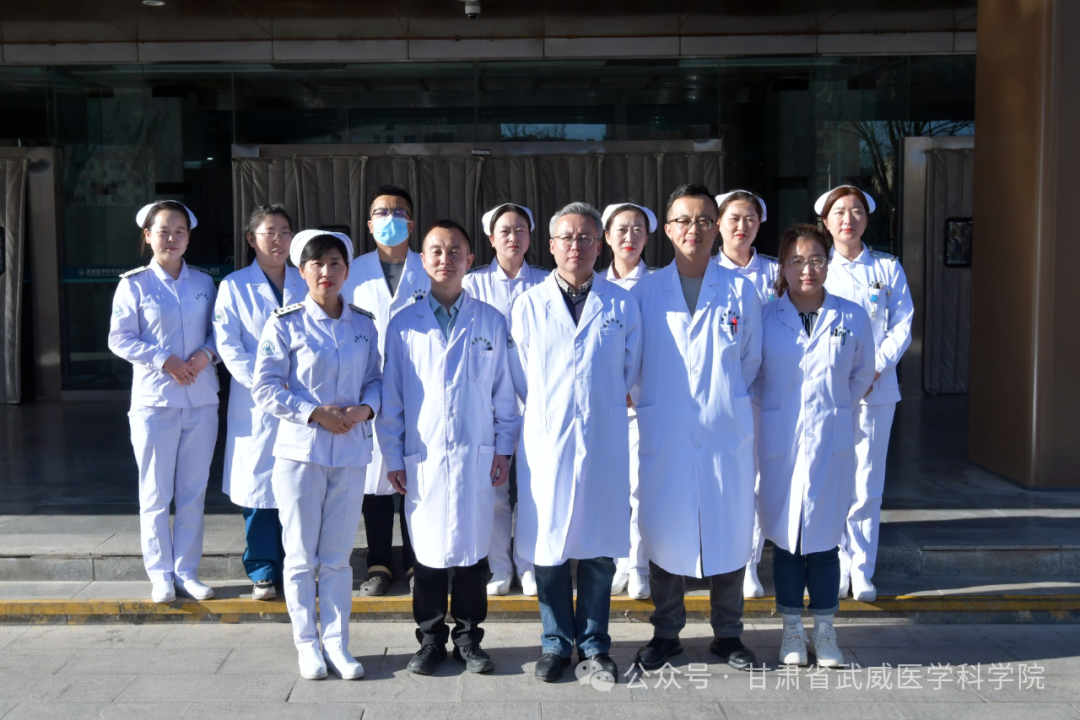
We adhere to the development concept of "combining humanistic medicine with neuroscience" and strive to build a warm medical center. Taking people as the foundation and patients as the center, we always practice the management concept of our hospital, which is "exquisite medical skills, noble medical ethics, meticulous service, and an established brand deeply rooted in people's hearts," and continuously explore and innovate, striding forward.