Drug-Coated Balloon Therapy for Intracranial Stenosis Performed at Our Neuro-Medicine Center
Drug-Coated Balloon Therapy for Intracranial Stenosis Performed at Our Neuro-Medicine Center
01 Technical Background
Intracranial artery stenosis is a common cerebrovascular condition in middle‑aged and elderly populations. It is a major cause of cerebral infarction and transient ischemic attacks (TIAs), posing a serious threat to patients' health and quality of life. Traditional endovascular treatment has primarily relied on stent implantation; however, challenges such as intimal hyperplasia, in‑stent restenosis, the need for long‑term dual antiplatelet therapy, and anatomical limitations of the vessels have remained persistent clinical concerns.
Drug‑coated balloons (DCBs) deliver antiproliferative agents locally during balloon angioplasty. While dilating the stenotic vessel, the drug is precisely released into the vessel wall to inhibit intimal hyperplasia. Unlike conventional stent implantation, DCB treatment leaves no metallic foreign body in the vessel, earning it the designation of a "no‑implant" technique. This approach has been successfully applied in coronary and peripheral vascular interventions and offers a promising new strategy for treating intracranial artery stenosis.
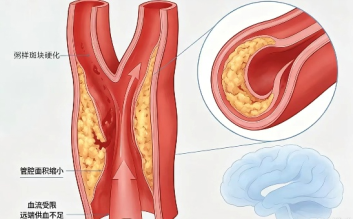
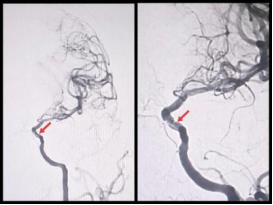
Internal Carotid Artery Stenosis
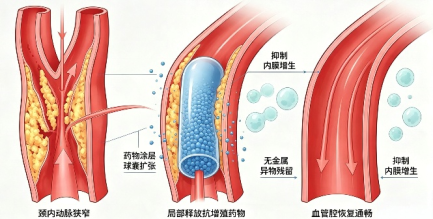
Mechanism of Drug‑Coated Balloon (DCB) Therapy for Internal Carotid Artery Stenosis
02 Surgical Procedure Overview
Guided by the physician's original commitment to solving clinical challenges, our Neuro‑Medicine Center's cerebrovascular interventional team successfully completed three drug‑coated balloon (DCB) procedures for internal carotid artery stenosis. The introduction of this technique expands the interventional treatment options for carotid artery stenosis, offering a more diverse therapeutic choice for patients who are not suitable for stent implantation or who prefer to avoid a permanent implant.
01 Preoperative Precise Assessment: Comprehensive evaluation of the degree of stenosis, lesion length, and surrounding anatomy was performed through relevant examinations, enabling the development of an individualized treatment plan.
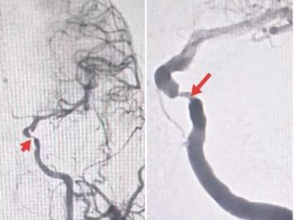
02 Access and Pre‑dilation: A catheter is used to establish the treatment access. If necessary, a conventional balloon is used for pre‑dilation to prepare the lesion for subsequent DCB therapy.
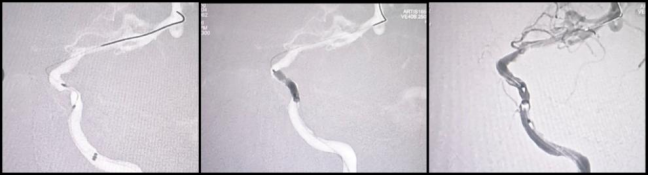
03 Precise DCB Delivery and Dilation: The drug‑coated balloon is advanced to the stenotic site, where it is precisely inflated to dilate the vessel and release the drug directly onto the vessel wall, ensuring adequate drug delivery to the target area.
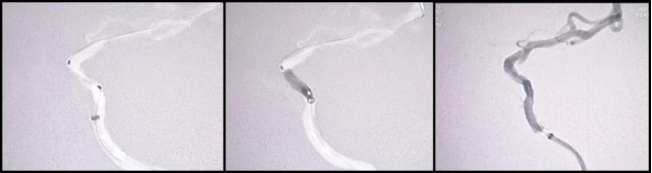
04 Final Assessment: After balloon removal, angiography is performed to evaluate vessel patency and confirm the treatment outcome.
03 Potential Advantages
1. No Permanent Implant: No metallic foreign body is left in the vessel, which may reduce the risk of complications associated with stent‑related thrombosis, foreign body stimulation, and long‑term inflammatory responses.
2. Inhibition of Intimal Hyperplasia: The antiproliferative drug carried on the balloon acts locally on the vessel wall, helping to inhibit excessive intimal hyperplasia. Compared with plain balloon angioplasty, DCB therapy may offer a lower risk of restenosis.
3. Less Invasive, Faster Recovery: DCB therapy is relatively less invasive. It may offer a favorable safety profile for elderly patients, those with multiple comorbidities, or those with poor vascular conditions.
4. Potentially Reduced Post‑Procedure Medication Burden: In some patients, the duration of antiplatelet therapy may be shortened, potentially reducing the long‑term bleeding risk and hepatic/renal burden associated with prolonged medication use.
04 Individual Assessment
DCB therapy is not suitable for all patients with intracranial artery stenosis. Its indications must be carefully evaluated by a specialist based on the patient's individual condition. In general, the following situations may be considered suitable:
- Focal stenosis of intracranial arteries
- Patients with concerns about stent implantation
- Patients whose vascular anatomy is unsuitable for stenting
- Elderly patients or those with multiple comorbidities and poor surgical tolerance
Drug‑coated balloon therapy for internal carotid artery stenosis represents an emerging direction in cerebrovascular intervention. Through its "no‑implant" approach, it offers an alternative treatment option for patients with carotid artery stenosis beyond stent implantation. It is important to emphasize that every medical technology has its own indications and limitations — DCB therapy is no exception. Patients should work with their physicians to choose the most appropriate treatment plan based on their specific condition.
This article is for general health education purposes only and does not constitute medical advice. If you have any relevant symptoms, please seek timely medical attention and follow your doctor's recommendations.
Writer: Wang Daohe
First Review: Ma Shuqian
Second Review: Guo Yishan
Third Review: Cai Qinghua
Gansu Wuwei Cancer Hospital (Wuwei Academy of Medical Sciences)
(甘)医广【2025】第11-14-387号