
When Cancer Invades the Brain’s “Protective Shield”: Understanding Intrathecal Injection for Precise
When Cancer Invades the Brain’s “Protective Shield”: Understanding Intrathecal Injection for Precise Treatment of Leptomeningeal Metastasis
I. When the Brain’s “Protective Layer” Becomes Ill: What Is Leptomeningeal Metastasis?
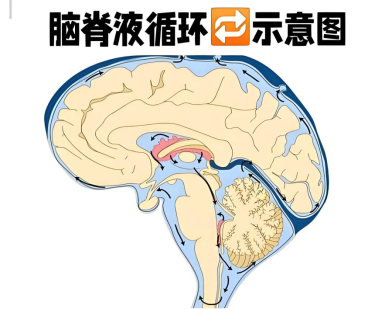
Think of our brain and spinal cord as the body’s vital “command center.” This command center is wrapped and protected by a soft, thin membrane called the meninges, within which clear cerebrospinal fluid flows, much like a shock absorber. When cancer cells from other parts of the body (such as lung, breast, or stomach cancer) travel through the bloodstream and “take root” in the meninges, leptomeningeal metastasis occurs. It is like weeds growing in the most crucial water protection zone of a field.
What Are the Possible Warning Signs?
• Persistent headaches, nausea, and vomiting
• Blurred or double vision
• Unsteady gait, weakness in the arms or legs
• Memory decline, personality changes
• Seizures
Important: If you experience any of these symptoms, seek medical attention promptly to determine the cause.
II. The Limitations of Traditional “Blanket Irrigation” Therapy
For cancer cells in the meninges, traditional intravenous chemotherapy is like “flooding a dry field.” The medication travels through the bloodstream but struggles to cross the tightly sealed “blood-brain barrier.” As a result, very little of the drug reaches the cerebrospinal fluid, making the treatment largely ineffective.
This leads to:
• Insufficient drug potency: Inability to effectively eliminate cancer cells in the meninges.
• Significant side effects: Other healthy organs in the body are also exposed to chemotherapy drugs.

III. Precise “Targeted Irrigation”: What Is Intrathecal Injection?
To address this challenge, a smarter and more direct approach—intrathecal injection—has been adopted in medicine.
Simply put, it means “delivering medication exactly where it is needed.”
Using a lumbar puncture (a procedure similar to an epidural for pain relief or spinal anesthesia), a very thin needle is carefully inserted into the subarachnoid space surrounding the spinal cord—the “central canal” of cerebrospinal fluid circulation. A small dose of high-concentration chemotherapy drugs (such as pemetrexed or methotrexate) is then injected directly into this space.
The advantages are clear:
• Precision targeting: The medication enters the “affected zone” directly, like a special forces unit striking cancer cells in the meninges with accuracy.
• High potency: Drug concentration in the cerebrospinal fluid can be dozens of times higher than with intravenous chemotherapy, significantly enhancing its effectiveness.
• Reduced systemic side effects: Due to the small, localized dose, the impact on other organs is minimal.
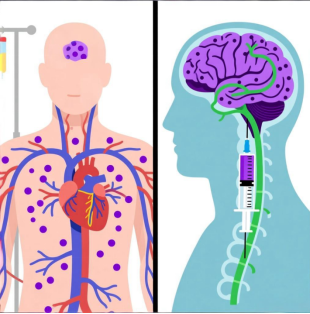
[Illustration comparison]
Left: Traditional intravenous chemotherapy—medication spreads throughout the body, but little reaches the brain.
Right: Intrathecal injection—medication is delivered precisely into the cerebrospinal fluid pathway of the brain and spinal cord, targeting the disease site directly.
IV. What Does the Treatment Process Involve?
There is no need to be overly anxious—intrathecal injection is a well-established procedure.
1.Evaluation: Diagnosis is confirmed through MRI and cerebrospinal fluid tests.
2.Preparation: Before the procedure, you will be positioned on your side, assisted by a nurse, similar to preparing for a minor surgery.
3.Procedure: Under local anesthesia, the doctor performs the injection. You will typically remain awake during the process and may feel some mild pressure or discomfort.
4.Aftercare: You will need to lie flat for 4–6 hours without a pillow to prevent a post-procedure headache. Treatment is usually administered in cycles (e.g., once a week), with a specific plan tailored by your doctor based on your condition.
V. A Message from the Doctor
A diagnosis of leptomeningeal metastasis is a significant challenge for both patients and their families. However, advances in medicine have provided us with new tools.
Intrathecal injection, as a “precision instrument” for treating leptomeningeal metastasis, can:
• Effectively control the disease and curb the growth of cancer cells in the meninges.
• Significantly alleviate symptoms such as headaches and vomiting, improving quality of life.
• Buy valuable time for further comprehensive treatment.
If you or a loved one is facing leptomeningeal metastasis, do not lose hope. We encourage you to consult an oncologist or neurologist at a major hospital to determine if intrathecal injection is a suitable treatment option.
Department of Oncology/Hematology
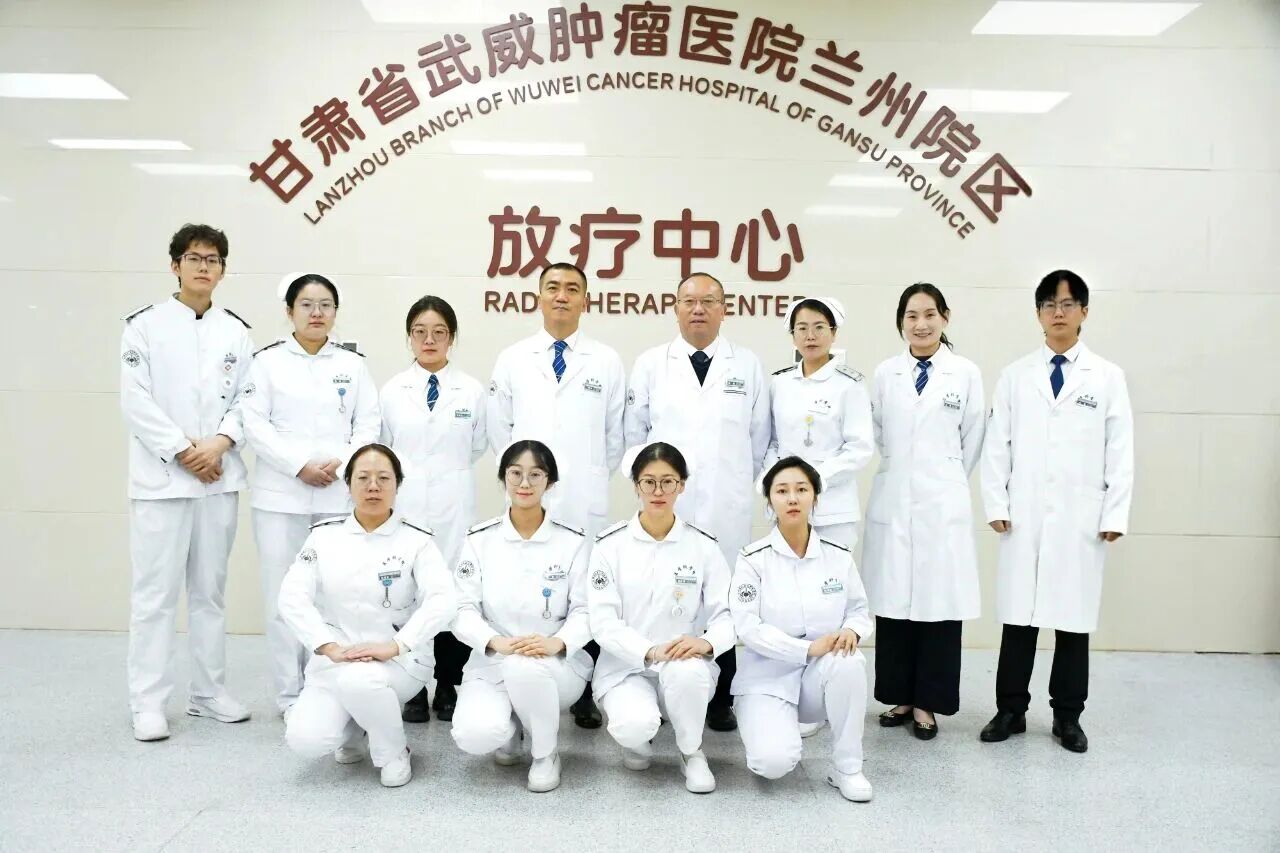
Our department is staffed by a dedicated team of specialized medical professionals. Our medical team includes renowned Distinguished Professors Bai Hai and Pan Ming, both recognized as Chief Physicians of the First Class. They are highly respected in the field for their profound expertise and extensive clinical experience, providing a solid foundation for the department’s diagnostic and treatment standards. Furthermore, the department has established a well-structured talent echelon and continuously refines its training and development mechanisms to ensure high‑quality, multi‑level medical care for our patients. Our nursing team delivers comprehensive, meticulous, and patient‑centered care with a strong sense of responsibility and professional skill, ensuring comfort and safety throughout the treatment journey.
Scope of Care
The department specializes in the precise diagnosis and treatment of a wide range of benign and malignant hematologic diseases and solid tumors. We have particular strength in managing refractory or relapsed hematologic malignancies and advanced solid tumors. Our key areas include hematologic disorders such as leukemia, lymphoma, multiple myeloma, and various types of anemia, as well as medical oncology for common solid tumors including lung cancer, gastric cancer, colorectal cancer, and breast cancer. Whether treating common conditions or complex cases, our department leverages specialized medical technology and extensive clinical experience to provide accurate diagnosis and effective treatment plans tailored to each patient.
Diagnostic and Therapeutic Expertise
- Multimodal Treatment Approaches Guided by internationally advanced treatment concepts, we employ a full spectrum of therapies including chemotherapy, targeted therapy, immunotherapy, endocrine therapy, supportive care, cell‑based therapy, and integrated Chinese‑Western medicine. Based on each patient’s condition and overall health, we develop individualized comprehensive treatment plans to achieve optimal outcomes.
- Precision Diagnostic Technologies Supported by the advanced hematology laboratory, we utilize MICM typing—integrating morphology, immunology, cytogenetics, and molecular genetics—along with bone marrow pathology, flow cytometry, and genetic testing. This allows for precise diagnosis and classification of hematologic diseases, providing a scientific basis for personalized treatment planning. Through these advanced technologies, we gain deeper insight into each patient’s condition, enabling precise interventions and improved therapeutic results.
- Laminar‑Flow Isolation Units The department is equipped with laminar‑flow isolation rooms that provide a safe and comfortable treatment environment for patients undergoing high‑dose chemotherapy, hematopoietic stem cell transplantation, and other therapies requiring stringent infection control. These units use advanced air‑purification technology to effectively minimize infection risks, offering strong protection throughout the treatment course.