
Heavy Ion Radiotherapy: Core Principles & Clinical Edge
The "Power Player" in Cancer Treatment: Understanding the Core Principles and Clinical Edge of Heavy Ion Radiotherapy
When diagnosed with cancer, many patients face the dilemma of choosing between the risks of traditional surgery and the side effects of conventional radiotherapy (photon-based). At this point, a high-tech-sounding option—heavy ion radiotherapy—often emerges as an "advanced," "costly," but "effective" solution.
What exactly is it? Why is it hailed as the ideal radiotherapy beam of the 21st century? Today, we’ll break down the science behind heavy ion cancer treatment in simple terms, backed by solid physics.
01 What Are Heavy Ions? Why Are They Called a "Cancer-Fighting Weapon"?
Simply put, heavy ions refer to atomic nuclei with an atomic number greater than 2 (carbon ions are the most commonly used clinically). They are accelerated to nearly the speed of light (about 70%) by advanced equipment and then directed into the body to target tumors.
If conventional radiotherapy (X-rays) is like throwing a "grenade" at a tumor—with limited precision and collateral damage—then heavy ion radiotherapy is like launching a precision-guided missile. It not only pinpoints the tumor but also releases tremendous energy upon impact, destroying cancer cells completely.
Key data: The killing power of heavy ions (measured as Relative Biological Effectiveness, RBE) is about 3 times that of conventional photons. They are also highly effective against tumors resistant to standard radiotherapy, like melanoma and osteosarcoma.

Figure 1: Model of a heavy ion accelerator at the Lanzhou Branch of Gansu Wuwei Cancer Hospital
02 The Science: Two Core Principles Behind the "Perfect" Treatment
Heavy ions stand out as a powerful cancer-fighting tool thanks to their unique physical and biological advantages.
1. Physical Edge: The Marvelous "Bragg Peak"
This is the core physical property of heavy ions.
- Conventional photons (X-rays): Act like a flashlight beam—strongest at the skin surface, then gradually weakening as they pass through the body. This means normal tissues before and around the tumor are unavoidably harmed.
- Heavy ion beams: Enter the body with very low energy, causing minimal damage along the way. Their energy peaks sharply at a specific depth—the Bragg Peak—right at the tumor site, then drops to almost zero immediately after.
What does this mean?
By adjusting the energy, doctors can position this "energy peak" precisely within the tumor. Healthy tissues before and beyond the tumor are largely spared, achieving true pinpoint accuracy.
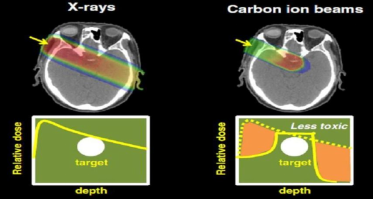
Figure 2: Comparison of dose distribution between conventional photons and heavy ions
2. Biological Advantage: Striking at the Core of Cancer Cells
Heavy ions are not only precise but also more destructive.
- DNA double-strand breaks: Conventional photons typically cause single-strand DNA breaks, which cancer cells can often repair. Heavy ions, however, induce double-strand breaks, making repair almost impossible and leading to complete cell death.
- Oxygen-independent action: Tumors often contain hypoxic (oxygen-deprived) areas where conventional radiotherapy loses effectiveness. Heavy ions work regardless of oxygen levels, effectively tackling even the most stubborn hypoxic cells.
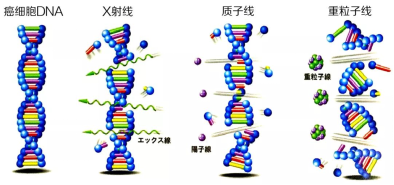
Figure 3: Schematic diagram of the damaging effects of different types of radiation on DNA
03 Clinical Benefits: Why Do Patients Choose It?
Based on these principles, heavy ion radiotherapy shows remarkable clinical advantages, especially in the following scenarios:
01. Extremely Short Treatment Cycle
Thanks to its high potency per dose, heavy ion therapy often requires fewer sessions than conventional radiotherapy.
02. Minimal Side Effects
Owing to the precision of the Bragg Peak, damage to surrounding healthy tissue is significantly reduced. Patients typically experience little to no nausea, vomiting, or severe skin reactions, maintaining a high quality of life during treatment.
03. Broad Applicability, Especially for "Tough" Tumors
Heavy ions are particularly effective for tumors that are resistant to conventional radiation, located in sensitive areas, or difficult to remove surgically:
- Radiation-resistant tumors: e.g., melanoma, adenoid cystic carcinoma, bone and soft tissue sarcomas, pancreatic cancer.
- Tumors in sensitive areas: e.g., near the brainstem, spinal cord, or optic nerves, where heavy ions can accurately avoid these "no-go zones."
- Recurrent tumors: An excellent option for patients whose cancer has returned after previous radiotherapy.
Conclusion
Heavy ion radiotherapy marks a major milestone in the fight against tumors. By harnessing solid physical principles, it offers cancer patients a new hope for high efficacy with low toxicity.