Hospital Pathology Named Provincial Key Specialty, Elevating Precision Cancer Care
【Good News】Hospital Pathology Named Provincial Key Specialty, Elevating Precision Cancer Care
On the medical development map of the Hexi Corridor, Gansu Wuwei Cancer Hospital has added another significant achievement to its discipline development. Recently, the Gansu Provincial Health Commission issued the "Notice on Announcing the List of Provincial-Level Clinical Key Specialties for 2025 in Gansu Province," in which our hospital's Pathology Department was successfully selected. This makes it the fifth clinical department in our hospital to receive this honor, following Gastroenterology, Radiation Oncology, Gastrointestinal Surgery, and Respiratory and Critical Care Medicine. This accomplishment marks a new and important breakthrough in the hospital's comprehensive cancer diagnosis and treatment system, laying a solid foundation in microscopic diagnosis for the advancement of precision cancer treatment in the region.

Today, Gansu Wuwei Cancer Hospital has established a new pattern of discipline development characterized by clear stratification, complementary strengths, and collaborative advancement: Gastroenterology and Radiation Oncology have advanced to the ranks of two national-level key specialties. Gastrointestinal Surgery, Respiratory and Critical Care Medicine, Oncology, and Pathology have been recognized as provincial-level key specialties, while 14 departments—including Cardiovascular Medicine, Hematology, Neurology, Thoracic Surgery, Oncology Clusters, and General Surgery—have been designated as municipal-level key disciplines. This tiered and well-defined disciplinary matrix functions like a powerful engine, providing core support for the continuous enhancement of regional medical service standards.
Technology Empowerment
Building Hardware Support for Modern Pathological Diagnosis
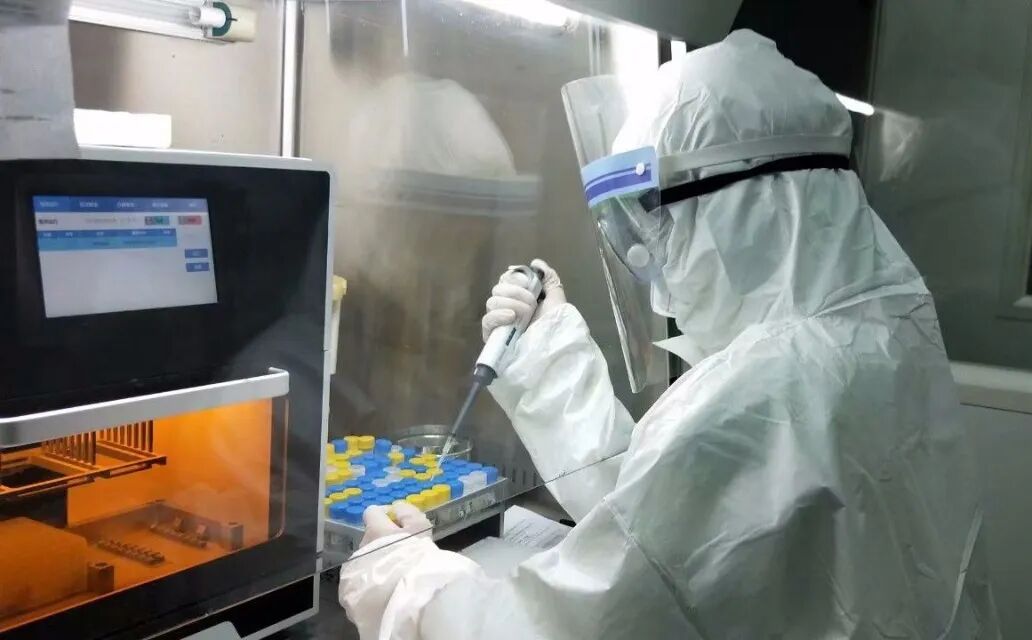
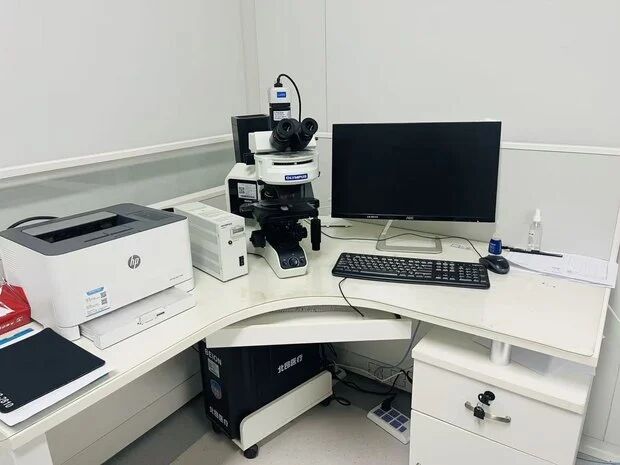
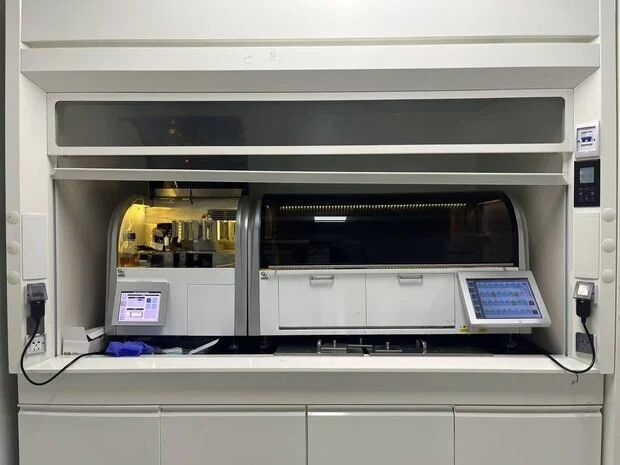
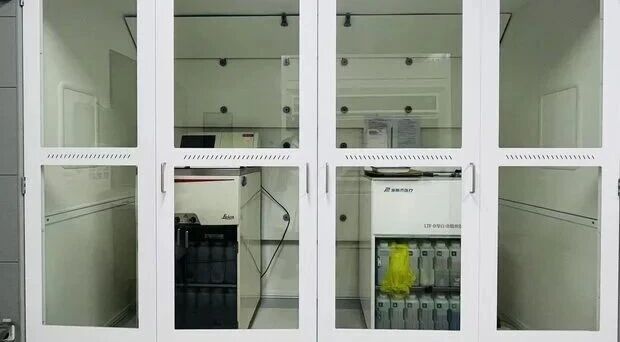
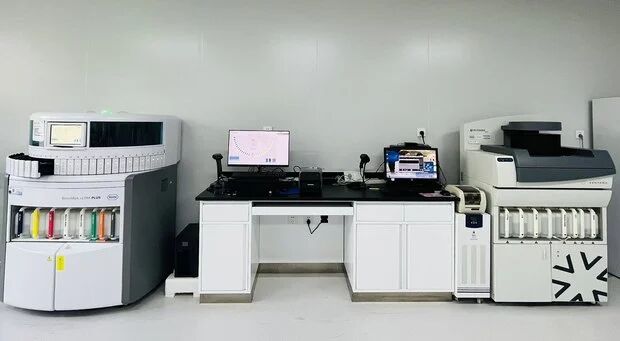
To do good work, one must first sharpen one's tools. Top-tier hardware platforms and a comprehensive technical system are crucial guarantees for precise pathological diagnosis. The hospital's Pathology Department has established a 2,000-square-meter modern workspace, with a strong focus on building two core platforms: the Pathological Diagnosis Center and the Molecular Pathology Center. Its hardware configuration ranks among the top in the region, featuring internationally advanced equipment such as the Olympus series of high-end microscopes from Japan, Leica automated tissue processors and freezing microtome systems from Germany, and Roche automated immunohistochemistry staining platforms. This setup has created a full-chain, integrated technical system covering everything from routine pathological examinations to molecular pathological analysis, providing robust hardware support for precise diagnosis.
The enhancement of technical capabilities is ultimately reflected in clinical diagnostic services. The department routinely conducts various histopathological examinations, intraoperative rapid frozen section diagnoses, and liquid-based thin-layer cytology tests. It has also made significant inroads into the field of precision medicine, skillfully carrying out molecular pathology techniques such as immunohistochemistry, special staining, in situ hybridization, FISH, PCR, and first- and second-generation sequencing. This marks a leap from morphological diagnosis to molecular-level diagnosis. Substantive diagnostic data best illustrate the department's technical strength: it handles over 18,000 external examination cases, more than 1,200 intraoperative frozen sections, over 7,000 cytology cases, and over 6,000 molecular pathology tests annually. Its comprehensive diagnostic capabilities consistently lead the region, providing critical pathological evidence for the precise classification of clinical diseases and personalized treatment.
Quality Control and Regulation Establishment
Establish a quality system for standardized pathological diagnosis
Precision is the lifeline of pathological diagnosis, while a standardized quality control system serves as the fundamental safeguard for ensuring accurate diagnosis. As a core department of the national demonstration base for the early diagnosis and treatment of upper gastrointestinal cancers, our hospital's Pathology Department has been responsible for the pathological diagnosis work of this project and the "two cancers" screening program for rural women for over a decade. By providing precise diagnoses, the department has established a critical defense line for advancing regional early cancer detection and treatment efforts, achieving significant public health outcomes.
While maintaining stringent diagnostic quality control within the hospital, the department has also proactively taken on the responsibility of regional medical support. Over the past five years, it has undertaken the pathological training tasks of the "Gansu Provincial Chronic Disease Health Management—Cancer Screening and Early Diagnosis and Treatment Training Program." Through this initiative, the department has systematically trained more than a hundred pathological professionals for primary-level hospitals across the province. By sharing techniques, exchanging experiences, and providing standardized guidance, it has comprehensively elevated the overall level of regional pathological diagnosis, extending high-quality pathological diagnostic expertise to benefit more grassroots populations.
The department has established a rigorous internal quality control system and has consistently participated in external quality assessment activities organized by the National Pathology Quality Control Center (PQCC) and provincial pathology quality control centers. It has achieved excellent results in multiple evaluation categories, including HE staining, immunohistochemical staining, and molecular pathology testing. A series of core quality control indicators consistently rank at the industry's advanced level: the timely diagnosis rate for small biopsy and surgical resection specimens reaches 99.6%, the timely diagnosis rate for cytology stands at 99.4%, and the consistency rate between intraoperative rapid frozen section diagnosis and paraffin diagnosis reaches 99.8%. By adhering to nearly stringent quality control standards, the department provides reliable pathological diagnostic support for clinical treatment.
Talent as the Foundation
Building an Intellectual Highland for Regional Pathological Diagnosis
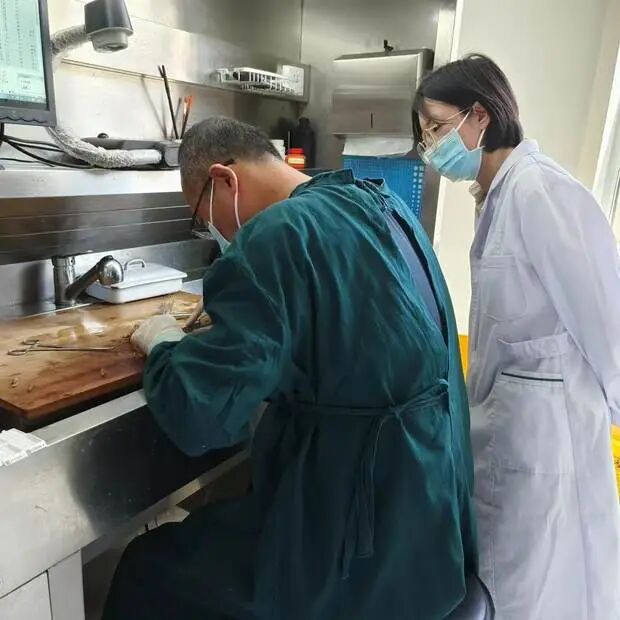
Pathological diagnosis serves as the "gold standard" in disease diagnosis, and within the microscopic world of medical diagnostics, professional talent is the cornerstone of accurate judgment. Our hospital's Pathology Department has always regarded talent development as the foundation of disciplinary advancement, meticulously building a professional diagnostic team with a rational structure, superb technical skills, and a well-established team. The core team consists of 18 members, including 3 with senior professional titles, 4 with intermediate titles, and 8 with master's degrees. Leveraging their strengths in high qualifications, extensive experience, and exceptional expertise, this team has become a backbone force in the field of regional pathological diagnosis.
The development of a discipline is inseparable from the guidance of its leaders. The discipline leader, Director Fan Ping, holds multiple provincial academic positions such as Vice Chair of the Pathology Professional Committee of the Gansu Medical Association. With over two decades of dedication to the field of pathological diagnosis, she has accumulated profound theoretical knowledge and rich clinical experience. Proficient in the pathological diagnosis of diseases across various systems, she has developed unique expertise particularly in tumor pathology and the pathological diagnosis of gastrointestinal diseases. Through her precise diagnostic approach and professional technical capabilities, she leads the team in navigating the microscopic world to clarify clinical diagnoses and identify the right direction for treatment.
Innovation leads
Promote the sustainable development of regional pathology disciplines
Innovation is the inexhaustible driving force behind disciplinary development. The Pathology Department of Gansu Wuwei Cancer Hospital consistently emphasizes the integration of clinical practice and scientific research, as well as the fusion of innovation and practical application. It advances the continuous upgrading of diagnostic technologies through research innovation and addresses core clinical diagnostic needs through technological advancements. In recent years, the department has achieved fruitful research outcomes, undertaking two provincial-level and four municipal-level research projects. It has published over ten papers in SCI-indexed and core domestic and international professional journals, effectively translating research achievements into clinical diagnostic applications.
Aligned with the trends in precision medicine, the department closely addresses the cutting-edge needs of clinical oncology diagnosis and treatment. Over the past three years, it has pioneered a series of high-value molecular testing projects, such as the human 10-gene panel, BRCA1/2, CLDN18.2, and Trop2. These initiatives continue to enrich diagnostic techniques and facilitate the transition of pathological diagnosis from mere "disease identification" to a comprehensive service chain encompassing "precise classification, treatment guidance, and prognosis evaluation." On professional competitive platforms, the team’s capabilities have shone brightly: in 2025, it won the team third prize and an individual first prize in the Gansu Provincial Pathology Image Recognition Competition. That same year, in the national competition for the Early Diagnosis and Treatment of Upper Gastrointestinal Cancers project, it secured prestigious national honors such as the "Excellence in Pathology Quality Control Award" and the first prize in the "Endoscopy-Pathology Joint Competition," fully demonstrating the department's professional strength in the field of pathological diagnosis nationwide.
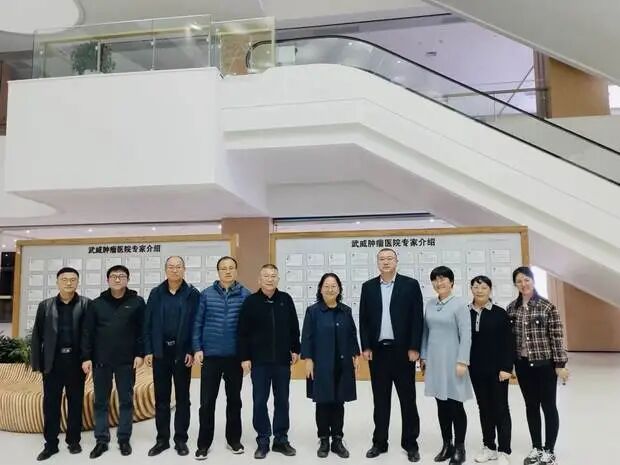
The successful designation of the Pathology Department as a provincial-level clinical key specialty is not only a full affirmation of the department's years of disciplinary development but also marks a new starting point for its pursuit of higher-quality growth. Standing at this new developmental milestone, Gansu Wuwei Cancer Hospital will continue to uphold the people-centered healthcare philosophy, with disciplinary development as the core focus. We will persistently optimize the layout of specialized departments, strengthen the exemplary and leading role of provincial-level key specialties, promote the quality enhancement and upgrading of municipal-level key disciplines, and continuously improve medical service quality and technological innovation capabilities. In the future, Gansu Wuwei Cancer Hospital will leverage stronger disciplinary capabilities, more refined diagnostic and treatment technologies, and superior medical services to make new and greater contributions to safeguarding the health and well-being of the people in the Hexi Corridor and advancing the high-quality development of regional healthcare services.