Frequently Asked Questions (FAQs) for Radiotherapy Patients
Frequently Asked Questions (FAQs) for Radiotherapy Patients
01 Why is radiotherapy positioning required before starting radiotherapy?
Radiotherapy simulation, simply put, is like drawing a precise "map" for each treatment session. Ensuring that the treatment is delivered to exactly the same spot every time, down to the millimeter, is key to the success of radiotherapy.
Specifically, simulation serves three core purposes:
1. Immobilization to Ensure Reproducibility
Each treatment requires you to maintain exactly the same position (e.g., lying flat with arms raised). During simulation, the care team creates a custom immobilization device based on your body shape. This device locks your position, allowing you to reproduce it precisely for every session and preventing the radiation from missing the target.
2. Marking the "Coordinates" and Target
Once you are positioned and immobilized, a CT scan is performed. The doctor then draws clear alignment marks on your skin or on the immobilization device. These marks act as the "sights" for treatment. The laser lights in the treatment room must align perfectly with these marks before irradiation can begin.
3. Image Acquisition
The CT images obtained during simulation serve as the foundation for developing your treatment plan. The doctor uses these images to outline the tumor, and the medical physicist designs the plan. Without a simulation scan, none of the subsequent complex planning can be done.
What happens without simulation?
If you rely on "feeling" your way into position each time, the tumor might be under‑dosed, while normal organs such as the stomach or spinal cord could be repeatedly exposed to unintended radiation, leading to treatment failure or severe side effects.
In short, radiotherapy simulation may seem like an extra preparatory step, but it is essential for ensuring that every session delivers precise, reproducible, and safe treatment throughout the course.
02 Why is there a long waiting period before radiotherapy? Could this delay disease treatment?
During this waiting period, the care team is actually custom‑designing a "precision strike" plan for you. This careful planning process typically takes 3–5 working days, but for complex cases it may take 1–2 weeks. Here is what happens during these key steps:
1. Image Fusion and Target Delineation (1–3 days)
The physician precisely fuses multiple images (simulation CT, MRI, PET‑CT, etc.) and, layer by layer, outlines the tumor and the normal organs that need to be protected. For a head and neck tumor, the outlining alone may involve more than 200 image layers.
2. Treatment Planning and Dose Calculation (1–2 days)
Based on the physician's requirements, the medical physicist decides on beam angles, energy, and other parameters – similar to designing a lighting layout – and uses a supercomputer to simulate and calculate doses. The goal is to tightly wrap the high‑dose region around the tumor while keeping doses to normal tissues well below safety thresholds.
3. Plan Verification (1–2 days)
This is a safety‑testing step. Instead of delivering radiation directly to you, the physicist tests the "virtual plan" on a special water tank or phantom to confirm that the delivered dose matches the calculated dose. The plan can be used clinically only after it passes this verification.
4. Machine Setup and Dry Run (1 day)
Before treatment begins, the radiation therapists take you to the actual treatment machine for a dry run, precisely aligning all the reference marks. Additionally, the hospital must coordinate machine and physicist schedules because many patients are treated each day.
In short, this time investment trades time for safety. Although the wait may feel long, a carefully designed plan can improve tumor control while significantly reducing the risk of long‑term side effects. If the physician determines that the patient cannot wait (e.g., tumor compression of the spinal cord), an "emergency radiotherapy" fast track is activated, and planning is completed within 24–48 hours. Please trust that this "sharpening the axe" time will not compromise the work of "chopping wood."
03 Why do some patients need both CT localization and MRI localization before radiotherapy?
Before radiotherapy, physicians often order both a CT and an MRI. This is because the two scans provide different but complementary types of critical information.
CT – for dose calculation and positioning:
CT directly provides electron density data, which are essential for the treatment planning system to accurately calculate radiation doses. In addition, CT scans are fast and serve as the standard images for daily treatment positioning and setup.
MRI – for visualizing tumor boundaries:
MRI has extremely high soft‑tissue resolution. It acts like a magnifying glass, clearly showing the true boundaries of the tumor, its depth of invasion, and nearby critical structures. This helps avoid the potential inaccuracies in target volume delineation that may occur when using CT alone.
What happens next:
The physician precisely fuses the CT and MRI images. The precise tumor shape seen on the MRI is used to delineate the target, and then that target is applied to the CT images – which provide coordinate and density data – for dose calculation. This approach ensures both accuracy in targeting and correctness in dose calculation.
In short, ordering both scans is not about increasing costs; it is a core guarantee of "seeing clearly and hitting accurately" in modern precision radiotherapy. Only by combining the two can the treatment achieve the goal of maximal tumor control with minimal damage to normal tissues.
04 Will the patient carry radiation?
Patients receiving external beam radiotherapy do not become radioactive. A helpful analogy is "when the light goes off, the darkness returns." The radiation beam is like a flashlight: when the light is turned off, the illumination vanishes instantly. The body does not store any "light" and does not glow on its own.
05 Why do some patients need a longer course of treatment while others require a shorter one?
The duration of a radiotherapy session is influenced by multiple factors. A shorter session does not mean the doctor is less attentive, and a longer session does not necessarily indicate advanced disease. Treatment time depends on the tumor site, treatment technique, technical complexity, patient cooperation, and the time required for positioning and verification. Please be assured: regardless of the duration, you are receiving the most appropriate and optimized treatment plan for your specific condition. There is no need to feel anxious because someone else finishes faster, or to worry because your own session takes longer – this is all part of "personalized care."
Free Clinical Study Recruitment
Our department is conducting a Phase II clinical study on "Heavy Ion Radiotherapy Combined with Concurrent Gemcitabine Chemotherapy for Locally Advanced Pancreatic Cancer." This study uses internationally advanced heavy ion radiotherapy technology in combination with gemcitabine chemotherapy, with the goal of improving the local control rate and long‑term survival of locally advanced pancreatic cancer.
Why choose our clinical trials?
1. Internationally Advanced Heavy Ion Radiotherapy Technology
Heavy ion radiotherapy offers a higher relative biological effectiveness (RBE), enabling precise destruction of tumor cells while maximizing protection of surrounding healthy tissues. Studies have shown that heavy ion radiotherapy achieves better outcomes than conventional photon radiotherapy in the treatment of pancreatic cancer.
2. Combined with Gemcitabine Chemotherapy
Gemcitabine is a standard chemotherapy drug for pancreatic cancer. When combined with heavy ion radiotherapy, it can produce a synergistic effect, further enhancing treatment efficacy.
3. A Professional Team to Ensure Safety and Efficacy
Our research team consists of experienced oncology specialists and is supported by the Wuwei Heavy Ion Therapy System, a dedicated cancer treatment facility, ensuring both safety and effectiveness throughout the treatment process.
4. Comprehensive Patient Care
We will provide you with a detailed assessment of your condition, a personalized treatment plan, and full‑course follow‑up services, ensuring that you receive the best possible medical care during your treatment journey.
Recruitment Requirements
- Age between 18 and 75 years old
- Pathologically confirmed diagnosis of pancreatic cancer
- Meet criteria for locally advanced pancreatic cancer, with no distant metastasis and maximum tumor diameter ≤ 6 cm
- No prior local treatments such as surgery or seed implantation
- Generally good performance status, with no organ dysfunction, and able to tolerate the treatment
- Willing to participate voluntarily and able to comply with the treatment and follow‑up schedule
Participate in benefits
- Free access to curative heavy ion radiotherapy (valued at 198,000 RMB per treatment field) and subsequent treatment planning
- Comprehensive care and continuous follow‑up by a dedicated medical team
How to sign up
If you meet the above criteria and are interested in participating in this study, please contact us using the information below:
- Hotline: 13519351968
- Contact person: Director Chen Weizuo
- Address: Third Department of Radiotherapy, 1st Floor, Building 5, Heavy Ion Center, Gansu Wuwei Cancer Hospital
Recruitment Period
Enrollment will close once 30 participants have been recruited.
Background of Clinical Trials
Pancreatic cancer is an extremely lethal disease with a silent onset. Approximately one‑third of patients are already diagnosed with locally advanced pancreatic cancer (LAPC) by the time the disease is detected. The role of photon radiotherapy in unresectable locally advanced pancreatic cancer has yielded suboptimal outcomes. Compared with protons, heavy ions offer a higher relative biological effectiveness (RBE) and have demonstrated improved overall survival.
Through this study, we aim to leverage the physical and biological advantages of heavy ions to improve local control and long‑term survival for patients with LAPC.
Join us and embark on a journey of hope.
Do not give up hope. Take part in our clinical trial, and let us work together to fight pancreatic cancer.
Introduction to the Third Department of Radiotherapy
- Department Overview
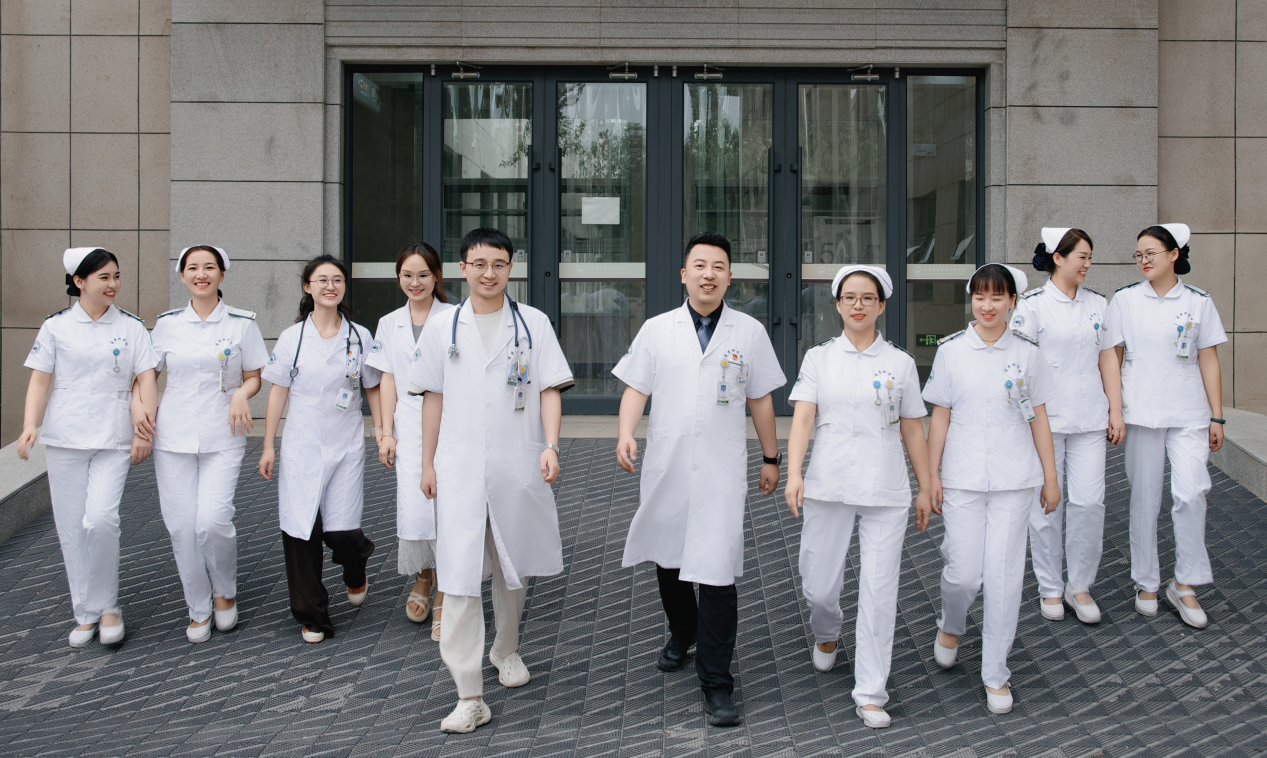
The Third Department of Radiotherapy specializes in heavy ion therapy for pancreatic cancer and abdominal‑pelvic tumors. The department focuses on heavy ion treatment for pancreatic cancer, as well as heavy ion and photon radiotherapy for liver cancer, colorectal cancer, prostate cancer, and other abdominal‑pelvic malignancies. Since opening, the department has attracted patients with pancreatic cancer from across China. It delivers precise destruction of pancreatic cancer cells without pain, surgery, or trauma. To date, dozens of pancreatic cancer patients from various regions have been treated. The one‑year local control rate exceeds 90%, and median survival has improved from the traditional 11 months to 19 months. These outcomes have been highly recognized by both renowned experts and patients. - Professional Team
Team members graduated from prestigious medical schools in China and possess solid theoretical knowledge and extensive clinical experience. The department has specially invited international experts – including Professor Hauf (Germany), Professor Hirohiko Tsujii (Japan), Professor Yee-Min Jen (Taiwan), and Professor Wu Jiaming (Taiwan) – to provide guidance, participate in complex case discussions, deliver academic lectures, and conduct ward rounds. Department staff have also completed advanced training and research at several well‑known heavy ion and photon therapy centers in China, giving them extensive experience in heavy ion therapy and enabling them to develop scientifically sound, individualized treatment plans for patients.
- Treatment Scope
The department specializes in heavy ion therapy for pancreatic cancer, while also providing heavy ion and photon radiotherapy for abdominal‑pelvic tumors including liver cancer, colorectal cancer, and prostate cancer. It offers patients professional radiotherapy services and personalized comprehensive cancer care. - Department Experts
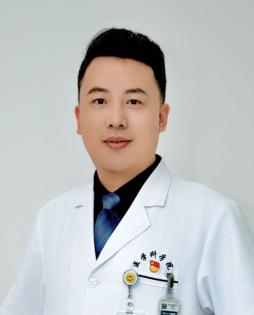
Chen Weizuo
Director of the Sixth Department of Radiotherapy, Heavy Ion Center, Gansu Wuwei Cancer Hospital
Associate Chief Physician
- Longyuan Young Talent of Gansu Province
- Board Member, Brachytherapy and Smart Radiotherapy Branch, Chinese Nuclear Society
- Member, Youth Branch of the Western Radiation Therapy Association
- Member, Ion Radiotherapy Branch, China Association of Medical Equipment
- Member, Youth Committee of Radioimmunology, CRTOG
- Member, Youth Committee of Gastric Cancer/Colorectal Cancer Professional Committee, Gansu Anti‑Cancer Association
- Member, Radiotherapy Professional Committee, Wuwei Medical Association
Research Projects:
- Principal Investigator of a CAS "Western Light" Talent Training Program project
- Principal Investigator of two "Longyuan Youth Innovation and Entrepreneurship" Talent Program projects funded by the Organization Department of Gansu Provincial Committee
Publications and Patents:
- Published 11 SCI papers and 5 papers in Chinese core journals
- Holds 2 national invention patents and 3 utility model patents
- One invention patent received a Gold Award at the National Invention Exhibition
Writer: Xiong Xiangzhi
First Reviewer: Yang Yang
Second Reviewer: Guo Yishan
Third Reviewer: Cai Qinghua
Gansu Wuwei Cancer Hospital (Wuwei Institute of Medical Sciences)
(甘)医广【2025】第11-14-387号