Zero Out-of-Pocket Clinical Trial for Heavy Ion Therapy in High-Grade Glioma Now Fully Launched
Zero Out-of-Pocket Clinical Trial for Heavy Ion Therapy in High-Grade Glioma Now Fully Launched
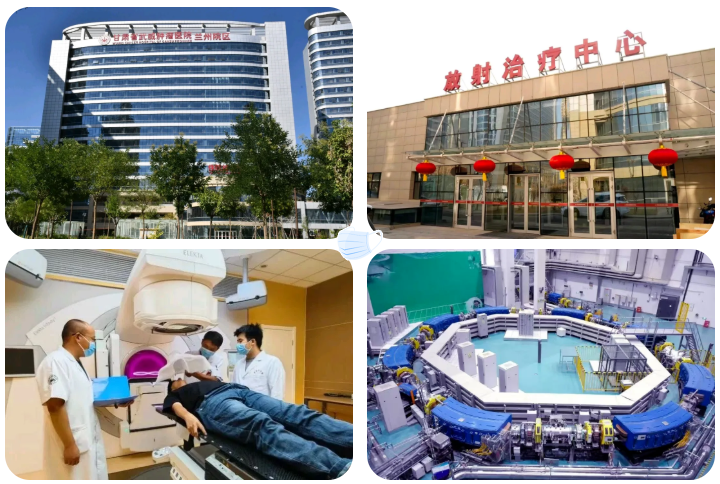
The Lanzhou Branch of Gansu Wuwei Cancer Hospital is the second clinical center for heavy ion therapy built with China's independent intellectual property rights, operated by Gansu Wuwei Cancer Hospital. Alongside the first Chinese heavy ion treatment system, the second Chinese heavy ion tumor treatment system was put into clinical operation at the Lanzhou Branch on November 15, 2024. To date, our hospital has completed heavy ion and photon treatments for over 530 patients, covering diseases such as lung cancer, pancreatic cancer, liver cancer, and brain glioma.
To further support the high-quality development of China's heavy ion therapy, and building on previous efforts, we are deepening clinical application research and fully promoting the iterative upgrading of heavy ion treatment technology. The Phase II Clinical Trial of Carbon Ion Combined with Photon Radiotherapy for High-Grade Glioma has now been launched. This trial aims to establish clinical treatment standards aligned with international benchmarks, develop China's heavy ion system-based clinical standards for treating high-grade glioma, and achieve better patient outcomes.
Phase II Clinical Study of Carbon Ion Combined with Photon Radiotherapy for High-Grade Glioma
Research Purpose
The Lanzhou Branch of Gansu Wuwei Cancer Hospital, in collaboration with the Wuwei Heavy Ion Center, plans to conduct a Phase II clinical trial titled "Carbon Ion Combined with Photon Radiotherapy for High-Grade Glioma" from January 2025 to December 2027. The trial is designed as a single-center, single-arm, prospective Phase II clinical study. High-grade glioma (HGG) is one of the most refractory human tumors. The application of carbon ions, a new radiotherapy technology, has improved local control rates, progression-free survival, and overall survival. According to the National Institute of Radiological Sciences (NIRS) in Japan, the median survival time for glioblastoma (GBM) patients receiving photon radiotherapy combined with carbon ion therapy reached 26 months, demonstrating superior outcomes compared to conventional radiotherapy. Our center plans to conduct a single-center, single-arm, prospective Phase II clinical trial, referencing the prescription doses and fractionation regimens of the NIRS high-grade glioma clinical treatment protocol, to evaluate the safety and efficacy of this treatment regimen. The goal is to leverage the physical dosimetry and biological advantages of carbon ions to improve tumor control rates and long-term survival in high-grade glioma patients, reduce radiation-induced brain tissue damage caused by increased prescription doses, provide new treatment recommendations for glioma radiotherapy, and bring benefits to patients.
The trial plans to enroll a total of 23 patients, regardless of gender. Screening and examinations will be conducted at the Lanzhou Branch of Gansu Wuwei Cancer Hospital and the Wuwei Heavy Ion Center. Eligible patients will be hospitalized to receive carbon ion combined with photon radiotherapy (participants will receive radiotherapy according to the specified treatment modality, dose, and fractionation regimen). This trial is an investigator-initiated clinical trial. All diagnostic, examination, and photon radiotherapy costs (intensity-modulated radiotherapy/volumetric-modulated arc therapy) will be covered by the patients' own medical insurance. Carbon ion therapy costs will be borne by the trial sponsor, Wuwei Cancer Hospital, at an estimated ¥156,000 per patient. The brain tumor-specific imaging examination, 11C-MET PET, will be offered at a discounted price. The original price is ¥8,919 per session, with a discounted price of ¥5,946 per session, with no limit on the number of sessions. To ensure your health and treatment safety during the trial, we will conduct comprehensive monitoring throughout the trial and follow-up period and provide a comprehensive treatment plan. You are welcome to participate.
Selection Criteria
(1) Age ≥14 and ≤80 years;
(2) Indications: According to the 5th edition of the WHO Classification of Tumors of the Central Nervous System published in 2021, integrating histological features and molecular phenotypes, including IDH-wildtype gliomas and IDH-mutant WHO grade III and IV gliomas. These mainly include: IDH-wildtype low-grade gliomas (defined as grade 4 astrocytomas in the 2021 WHO classification); anaplastic astrocytoma (AA); anaplastic oligodendroglioma (AOG); anaplastic oligoastrocytoma (AOA); and glioblastoma multiforme (GBM). Regardless of the extent of surgical resection (gross total resection, subtotal resection, or partial resection) or after stereotactic or open biopsy.
(3) No distant or intraspinal dissemination or metastasis; a single intracranial lesion, or two lesions that can be covered by the same radiotherapy plan.
(4) Prior treatment status before this course of radiotherapy: This is the first course of radiotherapy; no interventional therapy, photodynamic therapy, or other tumor ablation treatments within 4 weeks before this radiotherapy; surgical wounds must be fully healed.
(5) Able to undergo MRI and contrast-enhanced CT examinations, with no metal artifacts within the clinical target volume (CTV);
(6) No history of other malignancies (except cured skin cancer and stage 0 cervical cancer);
(7) Liver, kidney, and bone marrow functions are essentially normal (ALT and AST < 1.5 × upper limit of normal (ULN), bilirubin < 1.5 × ULN; adult endogenous creatinine clearance rate ≥ 60 ml/min or serum creatinine ≤ 140 μmol/L, BUN ≤ 6.8 mmol/L; hemoglobin level > 9 g/dL; white blood cell count ≥ 3.0 × 10⁹/L; platelet count ≥ 100 × 10⁹/L);
(8) Good performance status, i.e., ECOG 0–2; no severe pulmonary hypertension, cardiovascular disease, peripheral vascular disease, severe chronic heart disease, or other comorbidities that may affect radiotherapy. Cardiac function grade 1 (according to the New York Heart Association (NYHA) functional classification);
(9) Sufficient major organ function;
(10) Expected survival (after treatment) ≥ 6 months;
(11) Written informed consent has been signed by the patient or their legally authorized representative before radiotherapy.
The above criteria are the main eligibility requirements. Whether a patient is enrolled will be determined by the investigator according to the trial protocol.
Patient Rights
- The hospital will provide research funding to the expert team and cover the cost of heavy ion therapy for the patients.
- A personalized treatment plan will be developed by the multidisciplinary expert team (MDT) of the brain glioma trial project.
- After treatment, we will closely follow up with you and provide subsequent treatment plans.
Contact Information
Contact Person:
Lanzhou Campus of Gansu Wuwei Cancer Hospital
Zhang Yingdong: +86 186 1119 7317
Gansu Wuwei Cancer Hospital, Lanzhou Campus
The Lanzhou Campus of Gansu Wuwei Cancer Hospital is the second heavy-ion clinical center in China operating with domestically developed proprietary intellectual property rights, managed by Gansu Wuwei Cancer Hospital. Together with the first Chinese heavy-ion treatment system, the second Chinese heavy-ion tumor treatment system commenced clinical operation at the Lanzhou Campus of Gansu Wuwei Cancer Hospital on November 15, 2024. To date, our hospital has completed heavy-ion and photon therapy for over 530 patients, covering diseases such as lung cancer, pancreatic cancer, liver cancer, and glioblastoma.
Our hospital has established an outstanding talent system, bringing together an expert workstation led by 50 top-tier authorities, including Professor Shen Wenjiang, Emeritus Professor of the Department of Radiation Oncology at Peking University Health Science Center, and Professor Xu Bo, Standing Committee Member of the Chinese Society of Radiation Oncology. Professor Wang Junjie, Chairman of the Chinese Society of Radiation Oncology, serves as the hospital director, providing strong technical support for heavy-ion therapy.
In addition, our hospital is equipped with a series of cutting-edge radiotherapy devices, including the Varian VitalBeam medical linear accelerator, the Elekta Infinity four-dimensional image-guided radiotherapy linear accelerator, a 3.0T simulation and positioning MRI, a GE 256-slice high-end CT, and a Varian Iridium-192 imported afterloader. These hardware facilities lay a solid foundation for heavy-ion therapy, ensuring high efficiency and precision throughout the treatment process.
With the goal of building a comprehensive, full-life-cycle tumor treatment system, our hospital has established departments including the Department of Radiation Oncology, Department of Medical Oncology/Hematology, Department of Surgical Oncology, Department of Integrated Traditional Chinese and Western Medicine for Cancer Rehabilitation, Minimally Invasive Interventional Center, Department of Critical Care Medicine, and Digestive Endoscopy Center. We provide heavy-ion radiotherapy, photon radiotherapy, chemotherapy, minimally invasive interventional therapy, and comprehensive medical and surgical treatments for cancer.
Our hospital is equipped with advanced diagnostic technologies and facilities. We have medical technology departments such as the Department of Medical Imaging, Department of Laboratory Medicine, Department of Ultrasound Medicine, Blood Bank, and Hematology Center Laboratory, offering CT/MRI diagnostic imaging, medical laboratory testing, ultrasound diagnosis and interventional procedures, and bone marrow morphology examinations to meet patients' diagnostic needs.
The Minimally Invasive Interventional Center is equipped with an Iodine-125 brachytherapy system for tumors, a body implant navigation and positioning system, a GE digital subtraction angiography (DSA) unit, a microwave thermocoagulation therapy device, and an argon-helium cryoablation system. These enable precise treatment for cancer patients through embolization, ablation, and brachytherapy.