Precision Anti-Cancer New Choice: Carbon Ion Clinical Cases (Part 2)
Precision Anti-Cancer New Choice: Carbon Ion Clinical Cases (Part 2)
I. Core Advantages and Characteristics of Carbon Ion Therapy
Pancreatic cancer, known as the "king of cancers" due to its strong concealment, rapid progression, and extremely poor prognosis, poses a significant challenge. For patients with locally advanced pancreatic cancer, especially those with inoperable cases, traditional treatments like conventional radiotherapy and chemotherapy often have limited effects, making it difficult to significantly improve patient survival and quality of life. However, with the continuous development of heavy ion therapy technology, this dilemma is being overcome. Heavy ion radiotherapy, leveraging its unique physical and biological advantages, brings new hope for treatment to patients with locally advanced pancreatic cancer.
Heavy ion therapy possesses the Bragg Peak effect, allowing it to precisely deliver high doses of radiation to the tumor tissue while minimizing damage to the surrounding normal tissues. This characteristic makes it particularly suitable for tumors located in complex anatomical structures, such as the pancreas. Furthermore, the effect of heavy ions on hypoxic tumor cells is significantly superior to traditional photon radiotherapy, and a hypoxic environment is a common feature of pancreatic cancer. When combined with synchronous chemotherapy, carbon ion therapy can further synergistically enhance the anti-tumor effect, significantly reduce tumor marker levels, improve imaging findings, and even create surgical opportunities for some patients.
Below are several classic cases demonstrating the significant efficacy of heavy ion therapy in locally advanced pancreatic cancer, offering new possibilities for survival and treatment direction for patients who cannot undergo surgical resection.
II. Clinical Case Sharing
Case 1:
• Patient: Male, 63 years old.
• Presenting History: On May 18, 2024, presented to the First Affiliated Hospital of Zhejiang University due to "fatigue, poor appetite, and upper abdominal discomfort for over 20 days."
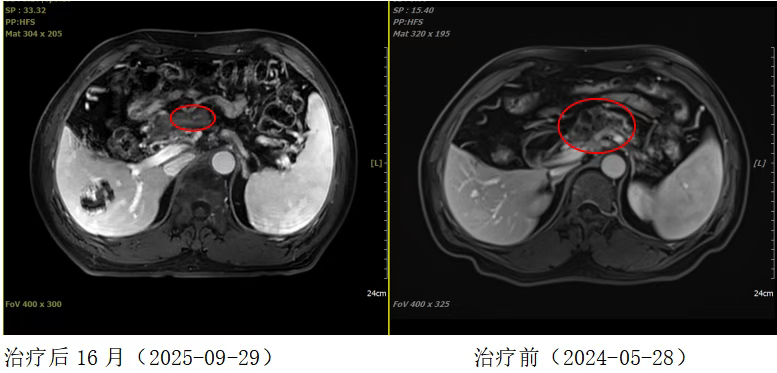
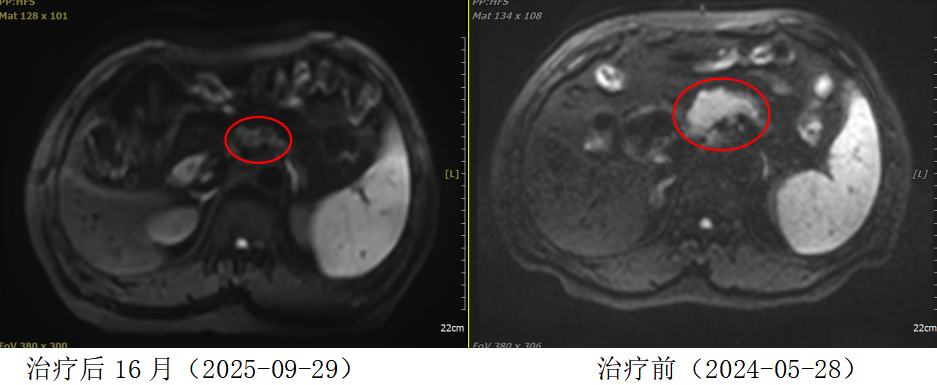
• Examination: Tumor marker CA-199 was 1290.3 U/mL. Abdominal MRI suggested a malignant tumor at the pancreatic head/neck (approx. 6.7×3.5 cm), partially enveloping the splenic artery/vein, portal vein, and superior mesenteric artery, with multiple enlarged retroperitoneal lymph nodes.
• Treatment: After diagnosis, received carbon ion therapy for pancreatic cancer starting May 30, 2024. Dose: PTV: 36Gy(RBE)/9Fx. After the first course, a local boost was given to PTVboost: 22.5Gy(RBE)/5Fx. Synchronous chemotherapy with "Albumin-bound Paclitaxel (125mg/m²) 250mg IV on d1, d8 + Gemcitabine (1000mg/m²) 1.5g IV on d1, d8 Q3W" was administered for one cycle starting May 28, 2024.
• Outcome: MRI re-examination 16 months after carbon ion radiotherapy indicated the lesion had basically disappeared.
Case 2:
• Patient: Female, 65 years old.
• Presenting History: In May 2025, experienced upper abdominal pain after eating greasy food.
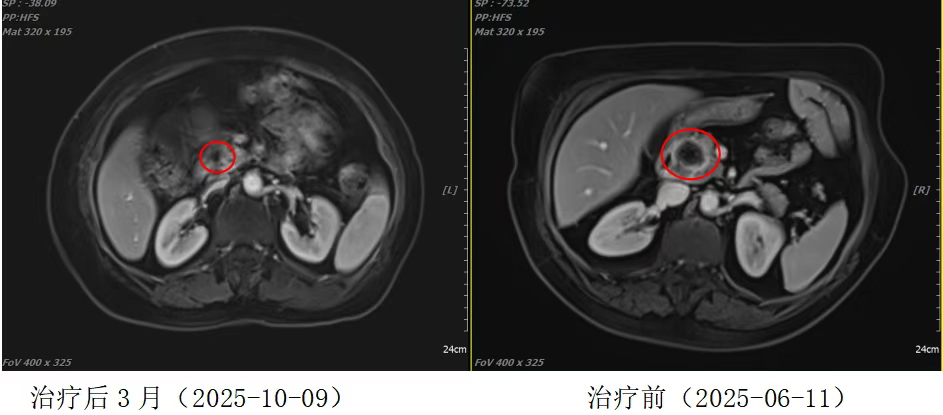
• Examination: Abdominal contrast-enhanced CT showed a cystic-solid mass in the pancreatic head, with several surrounding lymph nodes, and unclear boundaries with the adjacent bile duct and duodenum, suggestive of a neoplastic lesion. CA19-9 was 2124.0 U/mL; CEA was 20.4 ng/mL. On June 4, 2025, underwent EUS-FNA biopsy under general anesthesia.
• Pathology: (Pancreatic head mass puncture tissue) A small number of atypical cells were found in blood clot-like material and necrotic material, some cells showing signet-ring features, favoring adenocarcinoma based on immunohistochemistry.
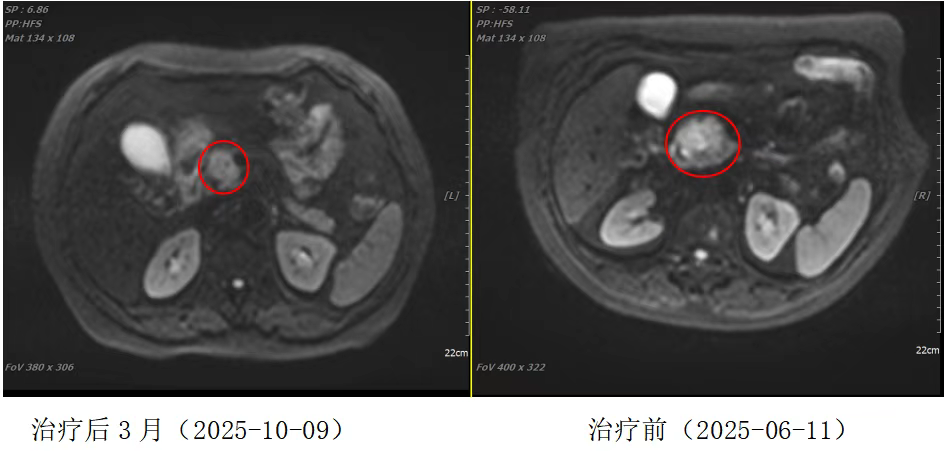
• Treatment: Carbon ion therapy for pancreatic cancer began on June 13, 2025. Total dose: PTV 39.6Gy (RBE)/9Fx, PTVboost 17.6Gy (RBE)/4Fx. Synchronous systemic intravenous chemotherapy with "Gemcitabine Injection 1.8g on d1, d8, d15" was administered.
• Outcome: After chemoradiotherapy, tumor markers returned to normal, and the tumor significantly shrank compared to before.
III. Summary
Thanks to its advantages of precision, high efficiency, and low damage, carbon ion therapy has become an important breakthrough direction in treating refractory abdominal and pelvic tumors, such as pancreatic cancer and duodenal lymphoma. Relying on a professional team, advanced equipment, and rich clinical experience, the Sixth Department of Radiotherapy at Gansu Wuwei Cancer Hospital has accumulated significant efficacy in the field of carbon ion therapy, not only bringing hope for survival to treated patients but also opening new treatment paths for more patients with locally advanced pancreatic cancer through clinical research. If you or someone you know meets the recruitment criteria for clinical studies, you can consult and register through the methods mentioned in the text, joining hands with the professional team to fight against tumors and embark on a journey of hope for recovery.
Why Choose Our Clinical Trial?
1. Internationally Advanced Heavy Ion Radiotherapy Technology
Heavy ion radiotherapy boasts a higher biological effectiveness (RBE value), enabling precise targeting and destruction of tumor cells while maximally protecting the surrounding healthy tissues. Research indicates that heavy ion radiotherapy offers superior outcomes compared to traditional photon radiotherapy in treating pancreatic cancer.
2. Combined Gemcitabine Chemotherapy
Gemcitabine is a standard chemotherapeutic drug for pancreatic cancer. Its combination with heavy ion radiotherapy can produce a synergistic effect, further enhancing the treatment efficacy.
3. Escorted by a Professional Team
Our research team consists of experienced oncology experts. Leveraging the dedicated Wuwei Heavy Ion Treatment System, we ensure the safety and effectiveness of the treatment.
4. Comprehensive Patient Care
We provide detailed disease assessment, personalized treatment plans, and full-course follow-up services to ensure you receive optimal medical care throughout your treatment journey.
Recruitment Criteria
• Aged between 18 and 70 years.
• Pathologically diagnosed with pancreatic cancer.
• Meets the criteria for locally advanced pancreatic cancer, with no distant metastasis and a maximum tumor diameter ≤6cm.
• No prior local treatments such as surgery or particle implantation.
• Good general condition, no organ function limitations, and able to tolerate this treatment.
• Voluntary participation in the study and ability to cooperate to complete the treatment and follow-up.
Participation Benefits
• Receive free radical heavy ion radiotherapy (valued at 198,000 RMB for one treatment field) and subsequent treatment plan formulation.
• Receive continuous monitoring and treatment from a professional medical team.
How to Apply?
If you meet the above criteria and are interested in participating in this study, please inquire or register through the following means:
• Contact: Director Chen Weizuo
• Address: Department of Radiotherapy VI, 1st Floor, Building 5, Heavy Ion Center, Wuwei Cancer Hospital, Gansu Province.
Recruitment Deadline
Recruitment will close once 30 participants are enrolled.
Clinical Trial Background
Pancreatic cancer has an extremely high mortality rate and is often insidious in onset. Approximately one-third of patients are diagnosed at the locally advanced pancreatic cancer (LAPC) stage. The results of photon radiotherapy for locally unresectable pancreatic cancer are still not ideal. Heavy ions possess a higher RBE value compared to protons, showing improved overall survival rates. Through this study, we aim to utilize the physical and biological advantages of heavy ions to enhance the control rate and long-term survival rate for LAPC.
Join Us and Embark on a Journey of Hope!
Do not give up hope.
Join our clinical trial.
Let's work together to fight pancreatic cancer!
Introduction to Department of Radiotherapy VI
Department OverviewDepartment of Radiotherapy VI specializes in heavy ion therapy for pancreatic cancer and other abdominopelvic tumors (e.g., liver cancer, colorectal cancer, prostate cancer), focusing on precision treatment using heavy ion and photon radiotherapy. Since its establishment, pancreatic cancer patients from across China have sought treatment here. The department enables precise destruction of pancreatic cancer cells without pain, surgery, or significant damage. Dozens of pancreatic cancer patients have been treated, achieving a one-year local control rate of over 90% and a median survival time extended from 11 months (conventional therapy) to 19 months. These outcomes, coupled with positive patient experiences, have been widely recognized by domestic and international experts and patients alike.
Expert TeamTeam
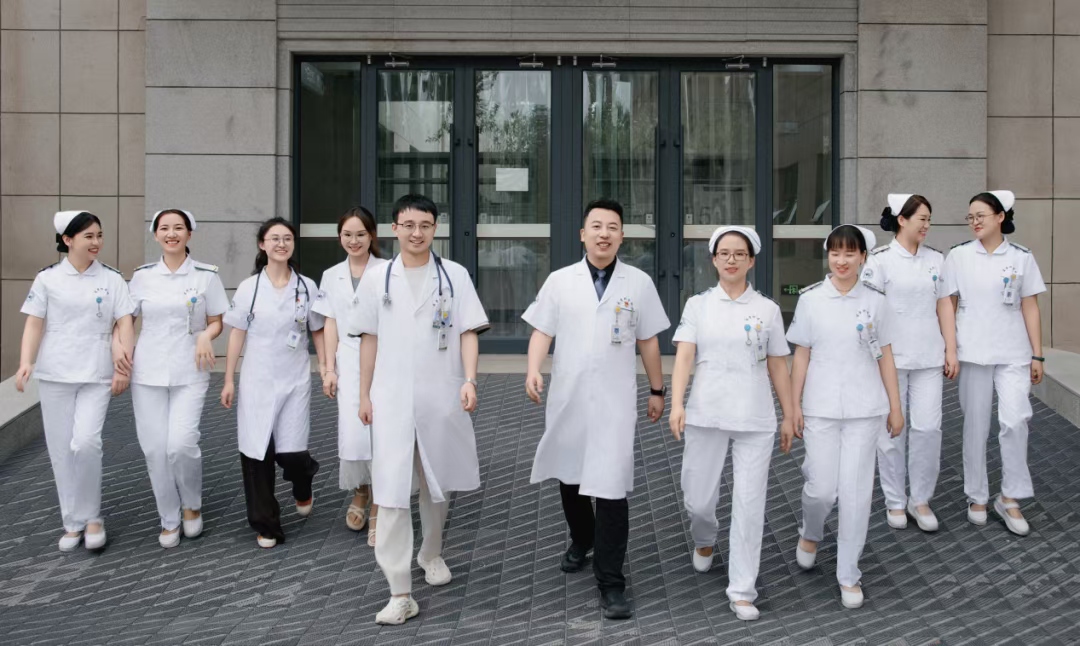
members graduate from renowned medical schools in China, possessing solid theoretical knowledge and extensive clinical experience. The department collaborates with distinguished experts such as Professor Jörg Hauffe (Germany), Professor Hiroyoshi Tsujii (Japan), and Professor Ren Yimin (Taiwan) for complex case consultations, academic lectures, and clinical rounds. Staff have completed training at leading heavy ion and photon therapy centers in China, ensuring expert design of personalized treatment plans.
Treatment Scope
The department primarily focuses on heavy ion therapy for pancreatic cancer, while also providing heavy ion and photon radiotherapy for other abdominopelvic tumors, including liver cancer, colorectal cancer, and prostate cancer. It offers specialized radiotherapy and comprehensive, individualized cancer treatment plans.
Introduction to Department Expert
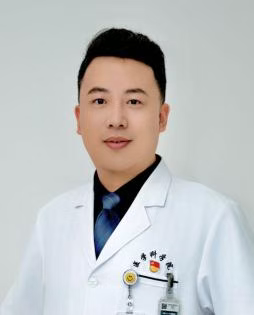
Chen Weizuo
Associate Chief Physician, Director of Department of Radiotherapy VI, Wuwei Heavy Ion Center, Gansu Wuwei Cancer Hospital
• Honors: "Longyuan Youth Talent" of Gansu Province
Professional Affiliations:
• Council Member, Branch of Brachytherapy and Intelligent Radiotherapy, Chinese Nuclear Society•Youth Committee Member, Western China Radiotherapy Association
• Committee Member, Ion Radiotherapy Branch, China Association of Medical Equipment
• Youth Committee Member, CRTOG Radioimmunology IR Committee
• Youth Committee Member, Gastric Cancer/Colorectal Cancer Professional Committee, Gansu Anti-Cancer Association
• Committee Member, Radiotherapy Branch, Wuwei Medical Association
• Research Leadership:•Principal Investigator of 1 project under the Chinese Academy of Sciences "Western Light" Talent Program
• Lead of 2 "Longyuan Youth Innovation and Entrepreneurship" Talent Projects (Gansu Provincial Committee of the Communist Party of China)
Publications & Patents:
• 11 SCI papers, 5 core Chinese journal articles•2 national invention patents, 3 utility model patents•Gold Award at the "National Invention Exhibition" for patented inventions.