
【Q&A】What You Must Know About PET-CT
In recent years, PET-CT scans have entered the public consciousness. Looking it up online yields explanations filled with highly professional terminology.For example: PET-CT is positron emission tomography-computed tomography, composed of two parts, PET and CT...
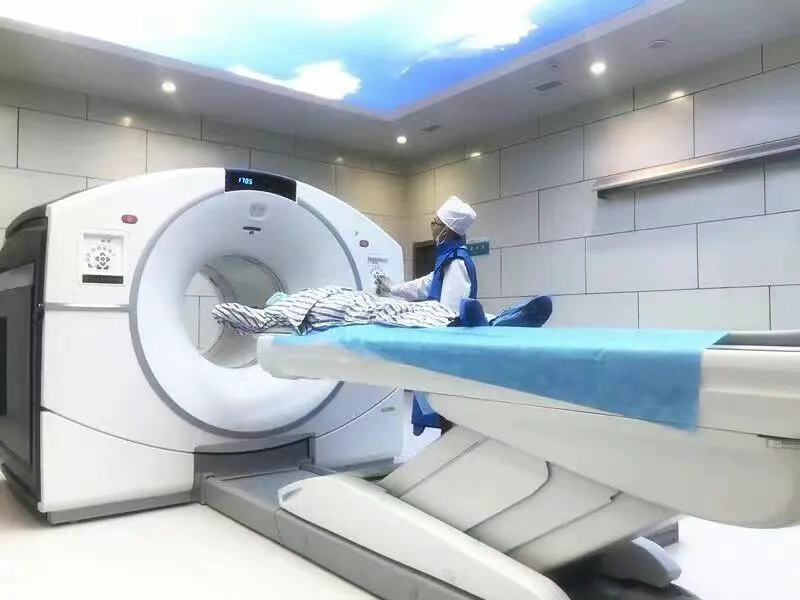
These explanations are very professional but leave those of us without medical training confused. So what exactly is PET-CT?What are its advantages? And under what circumstances might one choose a PET-CT? Let's take a look.
01 What is PET/CT?
Putting aside precise medical terms, a simple explanation is that PET-CT is used to take "pictures" of the inside of the body. Similar to the well-known CT or MRI, its purpose is to provide data to facilitate diagnosis and treatment by doctors.
So, if the purpose is similar, what advantages does PET-CT offer?
PET/CT uses positron-emitting nuclides to label drugs like glucose as tracers. It utilizes the uptake of these imaging agents by lesions to reflect their metabolic changes, clearly revealing the location, shape, size, and metabolic function of abnormalities. Therefore, its emergence actually represents a significant advancement in medical imaging.
02 Its advantages mainly include the following:
A single examination can provide a systematic evaluation of the body's overall condition;
Can detect early, hidden malignant lesions within the body;
Can differentiate between benign and malignant tumors, avoiding the surgical trauma associated with some traditional checks;
Is currently recognized as the best method for clinical staging of tumors;
Is an important method for evaluating heart and brain function;
Can check treatment efficacy and optimize treatment plans.
Who typically needs a PET/CT scan?
High-Risk Groups for Tumors
Individuals with a family history of tumors and those frequently exposed to high-risk factors (such as long-term smoking/alcohol abuse, or frequent exposure to radioactive or toxic substances).

People with Precancerous Lesions
Benign lesions with malignant potential are called precancerous lesions, such as hepatitis, cirrhosis, gastric ulcers, intestinal polyps, cervicitis, etc., which can unknowingly transform into malignant tumors.
When symptoms gradually worsen, early detection of precancerous lesions and appropriate treatment can help reduce the incidence of malignant tumors.
People with Elevated Tumor Markers
When routine tests reveal elevated tumor markers, further imaging examination should be done promptly. PET/CT is a comprehensive and accurate examination method that can help confirm whether a tumor is present and identify its possible location.
People with a Confirmed Tumor Diagnosis
PET/CT can be used to stage the tumor. Furthermore, it can confirm whether there are metastatic lesions in malignant tumors, aiding in the rational selection of treatment methods.
Additionally, PET/CT can be used for re-examination after surgery, radiotherapy, or chemotherapy to check for residual tumor tissue and differentiate between tumor recurrence and necrosis.

People with Cardiovascular Diseases
PET/CT metabolic imaging is a gold standard for assessing myocardial cell viability. It is a necessary examination before treatments like revascularization for myocardial infarction and provides a basis for evaluating radiotherapy efficacy. PET/CT also holds significant value in diagnosing early-stage coronary heart disease.
People with Neurological Disorders
PET/CT can accurately locate epileptic foci and is also a unique examination method for diagnosing diseases like depression, Alzheimer's disease, and Parkinson's disease.
Although PET/CT is the preferred imaging choice for most cancers, in different situations, other imaging examinations such as CT, MRI, and gastrointestinal endoscopy have their own characteristics and irreplaceable advantages for certain diseases. Therefore, for patients, besides advantages, cost-effectiveness is also important. Please be sure to choose the method most suitable for you based on your physical and financial condition and after consulting with your primary doctor.
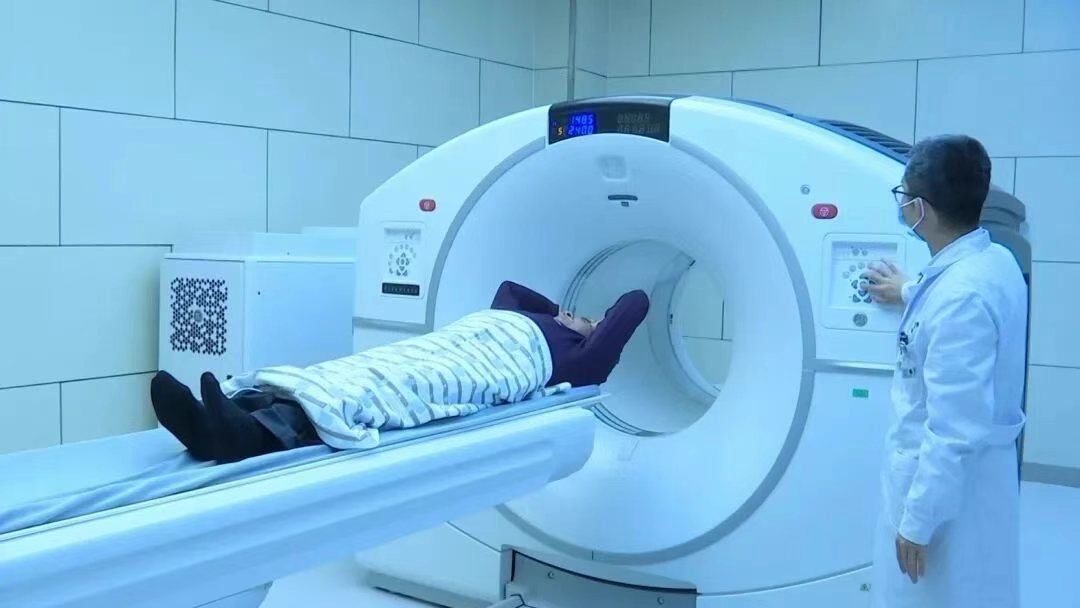
The PET-CT Center of Gansu Wuwei Medical Science Academy Tumor Hospital has introduced the US GE Discovery 710 Clarity super iterative PET-CT, the most advanced 256-ring LBS crystal PET/128-slice spiral CT in China. This equipment is the fourth in Gansu Province and the only PET-CT in prefecture-level city hospitals within the province. It is a super iterative device launched by GE leading current world trends, offering higher sensitivity and specificity compared to ordinary PET/CT. Its unique 1.8mm high spatial resolution can greatly enhance the detection capability for minute lesions, while significantly reducing the scan time for whole-body examinations, lowering the radiation dose for the examinee, and yielding ideal diagnostic results. It is hailed as the crown of modern high-tech medicine. The center boasts first-class radiopharmaceutical laboratories and is equipped with a medical cyclotron system capable of producing various dedicated tracers (11C, 13N, 18F) required for diagnosing different diseases. The purity of the produced pharmaceuticals exceeds national standards, reaching world-class levels, ensuring precise diagnosis for our patients. Our hospital's PET-CT center has also become a PET-CT center in Gansu Province that simultaneously conducts 11C and 18F imaging.
Contact Us
Consultation Phone: Director Li Ke (13689357660)
Hospital Address: PET-CT Center, Heavy Ion Campus, Wuwei Medical Science Academy