
Still Struggling to "Go"? This Constipation Guide Explains It All!
Still Struggling to "Go"? This Constipation Guide Explains It All!
"You feel unbearably bloated, squat in the bathroom for over ten minutes, yet don't even have the urge to go." "Every bowel movement feels like an ordeal; the stool is as dry as little pebbles, and wiping might even bring blood."… If you've had similar experiences, you've likely been "targeted" by constipation. As a common "invisible nuisance" in daily life, constipation might seem insignificant, yet it quietly affects countless people – some misuse laxatives repeatedly for relief, while others neglect proper management and develop more serious health issues. Today, using professional medical knowledge, we will comprehensively explain constipation, teaching you how to respond scientifically and break free from "bowel movement anxiety".
I. First, Understand: What Actually Counts as Constipation?
Many people think "not pooping for one day means constipation," but this judgment isn't accurate. Medicine has a clear definition for constipation, focusing on two core manifestations:
- Difficulty Defecating: For example, needing to strain during bowel movements, long time squatting in the toilet (over 10 minutes), persistent feeling of incomplete evacuation, sensation of anal blockage, or even needing manual assistance to pass stool.
- Infrequent Bowel Movements: Fewer than 3 bowel movements per week, with dry, hard, lumpy stool. If these symptoms last for more than 6 months, it falls under "chronic constipation," requiring focused attention and timely adjustment or medical consultation.
II. How Common is Constipation? These Figures Might Surprise You
With modern diets becoming more refined, faster-paced lives, increased sedentary time, and greater mental stress, the prevalence of chronic constipation is rising year by year. Currently, the prevalence of chronic constipation among adults in China is between 4.0% and 10.0%, meaning 1 in 10 to 25 adults is troubled by long-term constipation. More notably, there are significant differences in prevalence:
- Higher Age, Higher Risk: Elderly people have slower intestinal peristalsis, leading to a much higher prevalence of chronic constipation compared to younger adults.
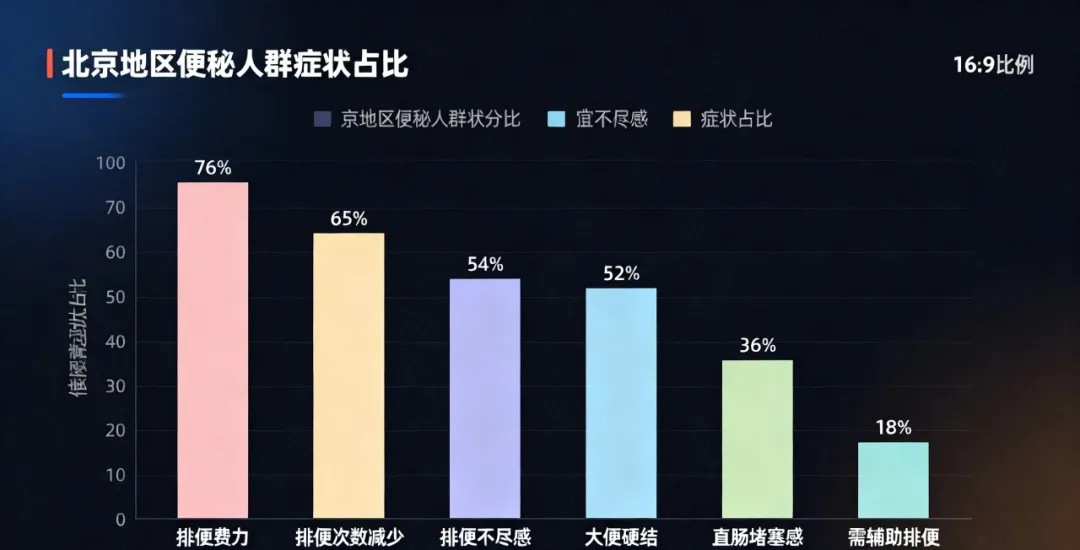
- More Common in Women than Men: Influenced by factors like physiological structure and hormonal changes, women have a higher probability of experiencing constipation. A survey conducted in Beijing showed that among constipated individuals, "straining during defecation" was the most common symptom (76%), followed by "reduced defecation frequency" (65%) and "sensation of incomplete defecation" (54%), illustrating how widespread the physical discomfort from constipation is.
III. Two Types of Constipation – First, Figure Out Which One You Have
Many people habitually buy laxatives as soon as they encounter constipation, only to end up making the situation worse. In fact, constipation is divided into two types: "functional" and "organic". The causes are different, and the coping methods are completely different. Blindly dealing with it may delay treatment.
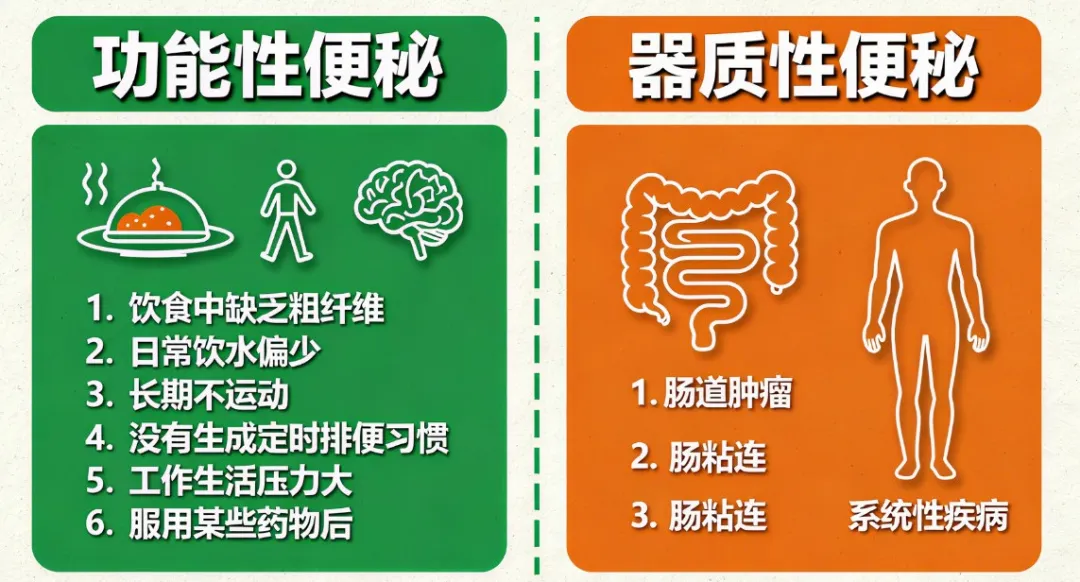
Functional Constipation: The gut isn't "damaged", it's mostly a habit problem. This type of constipation is the most common, accounting for the majority of all cases. Simply put, it means "there is no organic disease in the intestinal tract, but the bowel function is not smooth." It is mainly related to six lifestyle factors:
Poor dietary habits: Eating refined rice and white flour at every meal, rarely consuming whole grains or vegetables, leads to insufficient dietary fiber intake; coupled with low water intake, this causes food residue to stay in the intestines for too long, where water is excessively absorbed, resulting in dry, hard, and lumpy stool.
Poor lifestyle habits: Long-term sedentary behavior, lack of exercise, slow intestinal motility, just like "a machine that has lost power"; irregular lifestyle, failure to develop a regular bowel habit, so the intestines "can't remember" when to defecate.
Colonic motility disorders: Common in patients with irritable bowel syndrome. Due to spasms in the colon and sigmoid colon, some people experience "alternating constipation and diarrhea."
Insufficient muscle strength: Weak abdominal and pelvic muscles mean there isn't enough "pushing force" during defecation, making it difficult to expel stool.
High mental stress: Anxiety, depression, insomnia, and other mental issues can disrupt the normal bowel rhythm, making defecation difficult.
Medication effects: Some medications may cause constipation, such as antacids, antihypertensive drugs, antitumor drugs, anti-asthma drugs, antidepressants, etc. Among these, antitumor drugs and opioid painkillers are the most common.
Organic Constipation: An organ has a problem, the "root cause disease" needs treatment first. This type of constipation occurs because a bodily organ has a pathological change that blocks the passage of stool. The primary disease needs to be treated first to relieve the constipation. Common causes are mainly divided into three categories:
Primary colonic diseases: Such as benign or malignant tumors of the colon, Hirschsprung's disease, or intestinal inflammation, volvulus, intussusception, etc. These problems can cause narrowing or obstruction of the intestinal lumen, affecting stool passage.
Extraintestinal lesions: Conditions like compression from tumors in the abdominal or pelvic cavity, perianal abscesses, hemorrhoids, etc., can obstruct the passage of stool, causing pain or a feeling of blockage during defecation.
Systemic diseases: For example, hypothyroidism, diabetes, uremia, hypercalcemia, hypokalemia, etc., can relax the intestinal muscles and weaken defecation force. Additionally, diseases such as cerebrovascular accidents, paraplegia, multiple sclerosis, and dermatomyositis may also lead to constipation.
IV. Stop "Tolerating It"! The Harms of Long-Term Constipation Are More Serious Than You Think
Many think "constipation isn't an illness, just endure it and it will pass," but long-term constipation can cause a chain of harm to the body, even endangering life:
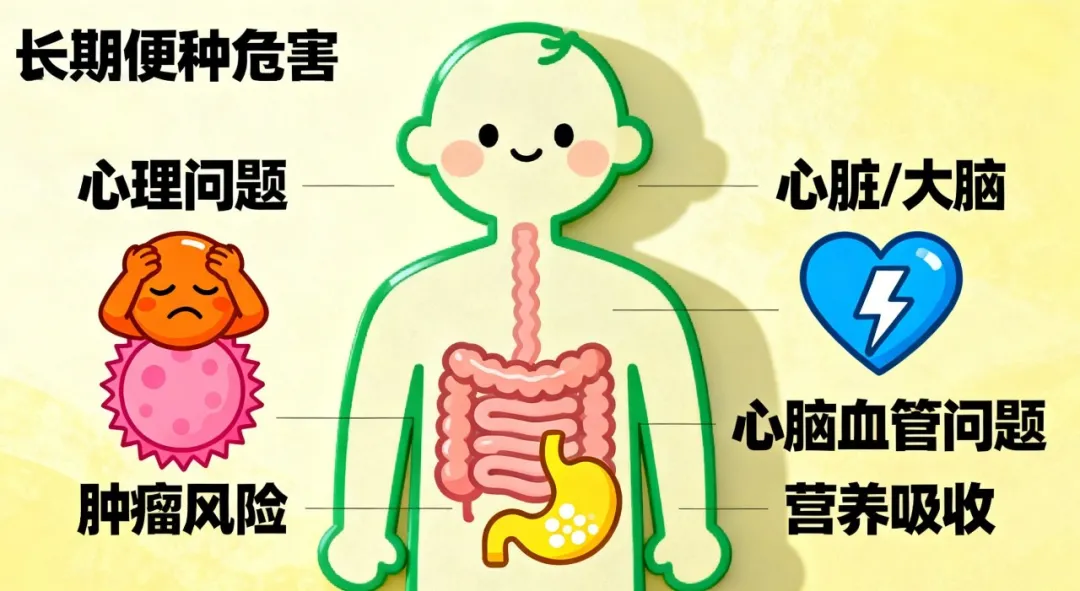
Induces Psychological Disorders: Long-term difficulty with defecation can easily lead to insomnia, irritability, depression, anxiety, and other emotional issues, severely affecting work, study, and daily life.
Increases Cancer Risk: Hard, dry stool stay in the intestines for too long continuously stimulates the epithelial cells of the intestinal mucosa, potentially leading to abnormal cell changes and increasing the risk of colorectal cancer.
Induces Cardiovascular and Cerebrovascular Diseases: Constipated individuals often need to strain and hold their breath during defecation, which increases abdominal pressure for prolonged periods, reduces venous return to the heart, and simultaneously raises intracranial pressure, easily triggering malignant arrhythmias or cerebrovascular accidents (like stroke). This can be life-threatening, especially for the elderly.
Causes Rectal Prolapse and Perianal Diseases: Prolonged defecation time and excessive straining can lead to varying degrees of rectal prolapse and easily trigger perianal diseases like hemorrhoids and anal fissures, resulting in symptoms like bloody stool, anal pain, and perianal inflammation.
Affects Nutrient Absorption: Constipation can cause abdominal fullness, leading to feelings of nausea and anorexia. Long-term constipation can result in malnutrition and affect bodily functions.
V. Scientific Response to Constipation: Avoid Pitfalls, Do This for Better Results
If experiencing long-term constipation, or sudden constipation without an obvious reason, it's advised to first go to the hospital for abdominal examinations to rule out organic lesions (like tumors, intestinal obstruction). If issues are found, they need timely treatment. For the more prevalent functional constipation, adjustments through the following methods can mostly lead to effective improvement:
Adjust Dietary Habits: Add 'Power' to the Gut
Stop eating only refined rice and white flour: Appropriately increase intake of coarse grains (like oats, corn, brown rice) and vegetables rich in cellulose (celery, spinach, broccoli), and fruits (apples with skin, kiwi, dragon fruit) to help intestinal peristalsis.
Drink enough water daily: Drink at least 1500-2000 ml of warm water. Don't wait until thirsty. Adequate hydration makes stool softer and easier to pass.
Develop Good Bowel Habits: Let the Gut 'Be Regular'
Based on your own life rhythm, fix a bowel movement time period (e.g., after waking up in the morning, half an hour after meals). Even without the urge, squat for 5-10 minutes to gradually form a conditioned reflex.
When the urge comes, don't hold it in. Go to the toilet promptly to avoid disrupting the bowel's rhythm.
Increase Exercise: Help the Gut 'Speed Up'
Avoid prolonged bed rest or sitting. Take 30 minutes daily for mild exercise like brisk walking, jogging, yoga, or Tai Chi. Even a 10-minute walk after meals can promote intestinal peristalsis and improve constipation.
Regulate Mental State: Don't Let Stress 'Block' the Gut
Learn to relieve stress from work and life, maintain a positive and optimistic attitude, and avoid letting emotions like anxiety and depression affect bowel function. Relax by listening to music, meditating, or chatting with friends.
Medication Pitfalls to Avoid: Don't Use These Methods Long-Term
Don't rely on "colon cleansing" or "detox" health products: Many such products on the market contain anthraquinone components like aloe or rhubarb. Long-term use can lead to melanosis coli, actually making defecation more difficult.
Don't use enemas long-term: Enemas should only be used occasionally for emergencies. Long-term use can make the intestines dependent, reducing their natural defecation reflex and worsening constipation.
Choose medication based on 'level': If medication is needed, prioritize "Grade A drugs" recommended by evidence-based medicine (Grade A being the highest recommendation). Specific medication use must follow doctor's advice; don't buy laxatives randomly.
If constipation still shows no significant improvement after the above adjustments, be sure to promptly return to the hospital for follow-up, to rule out other hidden diseases and avoid delaying treatment.

Constipation is not a "minor issue" but a "health reminder" from your body. Instead of relying on laxatives for temporary relief, it's better to start with lifestyle habits and gradually regulate intestinal function. We hope today's guide helps you break free from the troubles of constipation, have smooth bowel movements, and feel physically lighter.