One Scan, Whole Body! Exploring the Essentials of ECT
One Scan, Whole Body! Exploring the Essentials of ECT
Most people are familiar with conventional CT scans, but many are unfamiliar with ECT. In this issue, let us introduce you to what ECT is in the field of nuclear medicine.
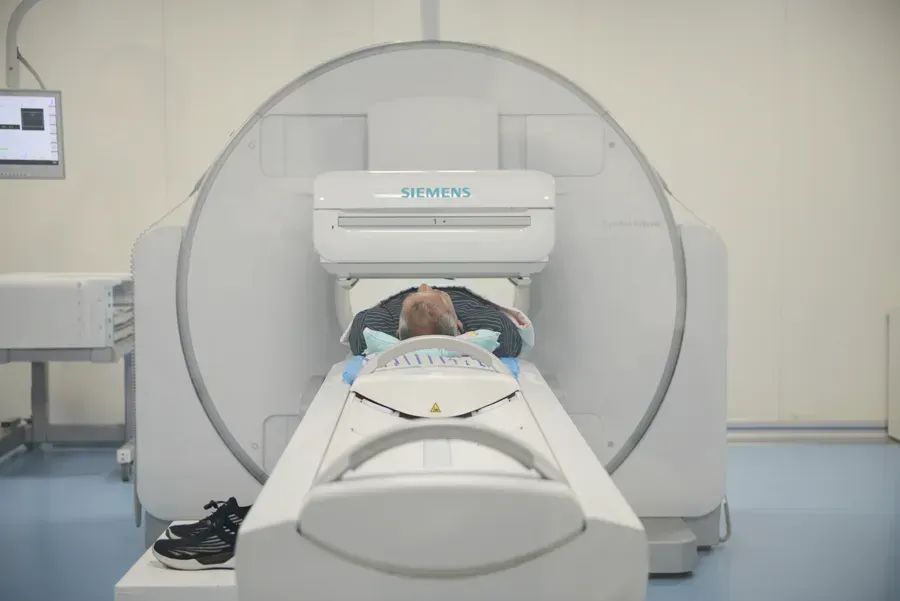
ECT, or Single-Photon Emission Computed Tomography (SPECT), is an imaging technique that utilizes radiopharmaceuticals—medications tagged with radioactive tracers. These compounds exhibit specific physiological and biochemical properties, enabling the assessment of organ function as well as metabolic, biochemical, and pathological changes within the body.
According to Tao Xuemei, Director of the Department of Nuclear Medicine, whole-body bone scintigraphy enables the evaluation of bone lesions through dual perspectives: functional/metabolic activity and morphological structure. This modality can detect bone metastases 3–6 months (or even earlier) before conventional morphological imaging methods such as X-ray or CT scans, earning it the apt description of having "eyes like a fiery phoenix" (exceptional diagnostic acuity). Consequently, for cancers prone to bone metastasis—including breast cancer, lung cancer, prostate cancer, and esophageal cancer—bone scintigraphy is recommended as a preoperative or postoperative screening tool even in asymptomatic patients. This approach facilitates early detection of metastatic lesions, thereby guiding optimal clinical management.
What ECT Examinations Are Available?
1. Whole-body bone scintigraphy (bone scan): Enables early diagnosis of skeletal metastases; for patients with known bone metastases, it can determine the extent and range of skeletal involvement and identify clinically occult metastatic lesions; in patients with unexplained bone pain, it helps rule out bone metastasis from cancer; for patients with malignant tumors (such as lung cancer, breast cancer, prostate cancer, etc.), it serves as a preoperative assessment tool or post-treatment efficacy evaluation; assesses the viability of transplanted bone and detects loosening or infection after artificial joint replacement.
2. Renal dynamic scintigraphy (including renal scan and glomerular filtration rate measurement): Evaluates early renal function impairment caused by various diseases. For instance, it can detect the impact of diabetes, hypertension, and gout on renal function at an early stage; monitors renal damage in patients undergoing chemotherapy or radiotherapy, guiding clinical medication and treatment planning; assesses preoperative renal function; aids in the diagnosis and differential diagnosis of urinary tract obstruction; monitors blood perfusion and functional status of transplanted kidneys.
3. Myocardial perfusion imaging: Early diagnosis of myocardial ischemia; determination of the location, extent, and severity of myocardial ischemia and myocardial infarction; assessment of prognosis and therapeutic efficacy for cardiac diseases.
4. Thyroid and parathyroid imaging: Evaluation of thyroid and parathyroid function; assistance in diagnosing thyroiditis or hyperthyroidism; localization of ectopic thyroid (preoperative assessment); differentiation between benign and malignant thyroid tumors.
5. Salivary gland imaging: Assessment of salivary gland secretion function; diagnosis and monitoring of Sjögren's syndrome.
6. Iodine-131 whole-body imaging: Detection of residual, recurrent, or metastatic lesions after surgery for differentiated thyroid cancer.
7. Thyroid function test (thyroid iodine uptake test): Evaluation of thyroid function; assistance in diagnosing hyperthyroidism or thyroiditis.
What are the advantages of ECT?
ECT is a seamless integration of SPECT functional and metabolic imaging with CT anatomical imaging. A single examination can simultaneously perform both nuclear medicine SPECT imaging and radiological CT imaging on the same machine, with the capability to fuse the two types of images. This fully leverages the advantages of functional and anatomical imaging, complementing diagnostic information from both modalities. It not only enables the assessment of pathological functional status but also precisely localizes lesions, offering the benefits of early detection and accurate positioning.
For example, bone scans can observe lesions from both the functional, metabolic, and morphological structural aspects of bones. Typically, they can detect bone metastases 3 to 6 months or even earlier than morphological examinations such as X-rays and CT scans. Moreover, a single imaging session provides a comprehensive view of the entire skeletal system, enabling the identification of lesions beyond the detection range of X-rays and CT scans. This plays an irreplaceable role in clinical diagnosis, treatment efficacy evaluation, and the formulation of auxiliary therapeutic plans.
ECT examination precautions
1. The injected radiopharmaceutical contains a small amount of radioactivity with low radiation dose, and when used correctly, it will not cause harm to the human body.
2. After the examination, the drug will be completely excreted within three half-lives (one half-life equals 6 hours).
3. Before the examination, all metallic objects on the body surface, such as keys, mobile phones, necklaces, earrings, coins, and pendants, must be removed to avoid artifacts that may affect image quality.
4. After the injection, there is a certain level of radiation exposure to accompanying persons, but the dose is minimal. A distance of more than 3 meters is considered safe.
5. If the patient does not require special assistance, family members should avoid entering the examination room to reduce unnecessary radiation exposure.
Introduction to the Department of Nuclear Medicine
Our hospital's Department of Nuclear Medicine was established in 1998, making it the first of its kind in Wuwei. It has since grown into a fully developed clinical discipline that meets the scale and operational requirements of a tertiary Class-A hospital. Currently, the department has evolved into a comprehensive unit in our province, offering a wide range of services, including nuclear medicine imaging diagnostics (SPECT, PET/CT), radionuclide therapy, in vitro testing and analysis, and a specialized thyroid clinic. The department currently provides the following diagnostic and therapeutic services:
1. Radionuclide Therapy
The main treatment methods involve internal or external radiation therapy using radioactive isotopes, including:
- 131I (iodine-131) therapy for hyperthyroidism, thyroid cancer, and hyperfunctioning adenomas;
- strontium chloride (89Sr) therapy for bone metastases;
- 90Sr-90Y (strontium-90/yttrium-90) therapy for cutaneous hemangiomas and keloids;
- 90Sr-90Y therapy for benign prostatic hyperplasia;
- 125I (iodine-125) seed implantation therapy for solid tumors.
2. In Vivo Imaging Diagnosis
SPECT-CT imaging (also known as ECT), primarily used to assess organ function, currently offers over 11 diagnostic procedures, including: Whole-body bone scintigraphy, Three-phase bone scan, Thyroid scintigraphy, Renal dynamic imaging, Myocardial perfusion imaging, Parathyroid scintigraphy, Whole-body ¹³¹I imaging, Salivary gland scintigraphy, Localized tomographic imaging.
3. In Vitro Diagnostics
Currently, we offer over 60 testing items, primarily focusing on tumor markers and thyroid hormone assays. All tests are performed using state-of-the-art analytical platforms, including Germany's Roche electrochemiluminescence systems and fully automated immunoassay analyzers. Our testing features: unique assay menu, highly precise methodologies, rapid and convenient reporting.
4. Thyroid Clinic
The department has a specialized thyroid clinic with extensive clinical experience in diagnosing and treating common and frequently occurring thyroid disorders, as well as various radionuclide diagnostic and therapeutic procedures.
Department Head: Tao Xuemei
Title: Associate Chief Physician
Specialties: Thyroid diseases and various radionuclide diagnostic and therapeutic procedures
Clinic Locations: Room 223, 2nd Floor, Outpatient Building, Main Campus; Room 212, Outpatient Building, Heavy Ion Center
Contact Numbers: 6989036, 6989078