Heavy Ion Therapy for Advanced Massive HCC with IVC and Portal Vein Tumor Thrombus
Heavy (Carbon) Ion Therapy for Advanced Massive Hepatocellular Carcinoma with Inferior Vena Cava and Portal Vein Tumor Thrombus
For massive hepatocellular carcinoma complicated by inferior vena cava (IVC) and portal vein tumor thrombus, targeted therapy combined with immunotherapy generally serves as the systemic foundation, actively combined with local therapy. Common systemic regimens include atezolizumab plus bevacizumab, sintilimab plus bevacizumab biosimilar, and other targeted-immunotherapy combinations. On this basis, hepatic arterial infusion chemotherapy (HAIC) combined with targeted-immunotherapy forms "triple" or even "quadruple" regimens. For IVC tumor thrombus, radiotherapy (especially when combined with targeted or immunotherapy) can serve as an effective local intensification approach, helping to shrink the thrombus and control symptoms. Before the introduction of effective combination therapy, the average survival of advanced liver cancer with IVC and portal vein tumor thrombus was typically measured in months (approximately 3–6 months), with occasional cases reaching 12 months or longer. With heavy ion therapy, however, outcomes can be excellent.
1. Case Report
Mr. L, male, 51 years old, diagnosed with hepatocellular carcinoma, cT4N1M1 stage IVB (AJCC 8th edition) — massive type, with IVC and portal vein tumor thrombus, multiple bilateral pulmonary metastases, and possible retroperitoneal lymph node and bilateral adrenal metastases. Karnofsky Performance Status: 90. Past history: chronic hepatitis B for over 40 years, receiving entecavir. Family history: his younger sister died of liver cancer; his grandmother had esophageal cancer.
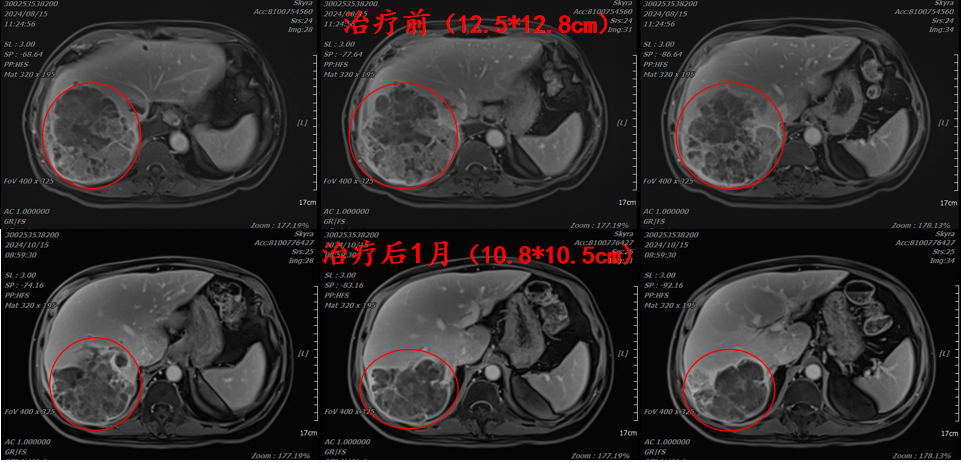
Pre‑treatment status: A massive tumor in the right hepatic lobe measuring approximately 12.5 × 12.8 cm, tumor thrombus in the IVC and portal vein, multiple metastatic nodules in both lungs, and AFP as high as 11,923 ng/mL. He had previously received transcatheter arterial chemoembolization (TACE), bronchial arterial infusion chemotherapy plus hepatic HAIC, but the tumor continued to progress.
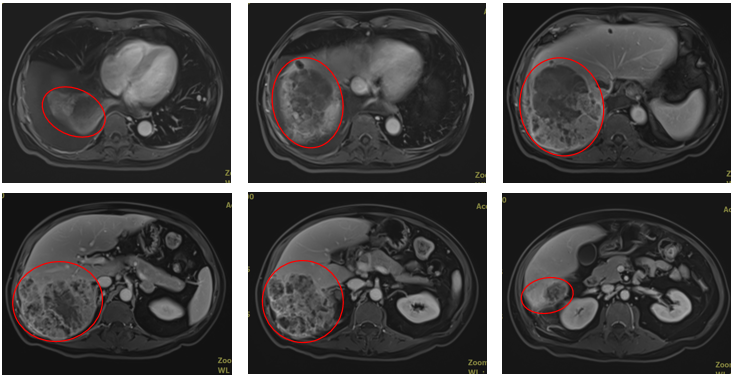
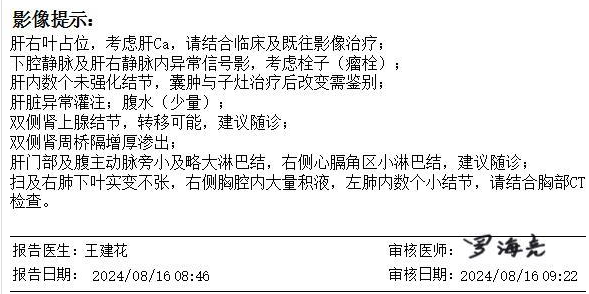
The above images show a massive tumor in the right hepatic lobe measuring approximately 12.5 × 12.8 cm, with tumor thrombus in the IVC and portal vein.
Diagnosis and treatment at the Wuwei Heavy Ion Center: On August 14, 2024, the patient presented to our hospital. PET‑CT showed: (1) a mass in the right hepatic lobe, considered hepatic malignancy, with IVC tumor thrombus; (2) multiple nodules in both lungs with increased metabolism, considered metastases; (3) peritoneal metastasis to be ruled out; (4) multiple lymph nodes around the abdominal aorta and in the retroperitoneum with increased metabolism, metastases versus inflammation to be differentiated; (5) a soft tissue mass in the left adrenal gland with increased metabolism, metastasis versus primary adrenal lesion to be differentiated. On August 23, 2024, liver mass biopsy was performed before heavy (carbon) ion therapy; pathology: hepatocellular carcinoma. Genetic testing: no gene mutations of clear clinical significance were detected. Treatment plan: heavy (carbon) ion therapy targeting the massive liver tumor, IVC tumor thrombus, and portal vein tumor thrombus, with concurrent lenvatinib targeted therapy, followed by sequential immunotherapy.
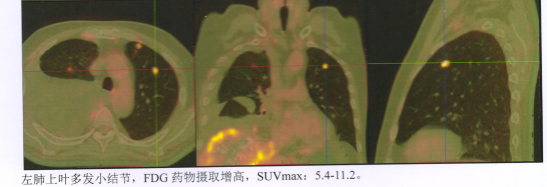
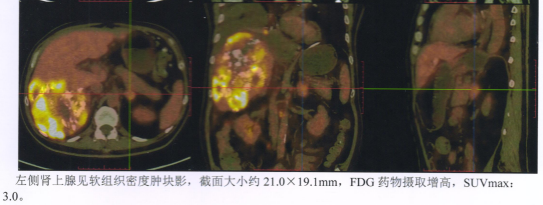
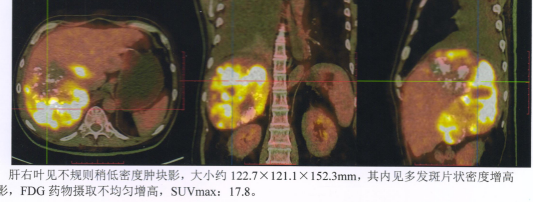
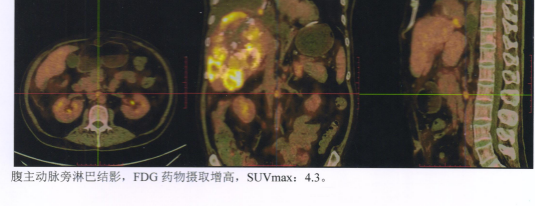
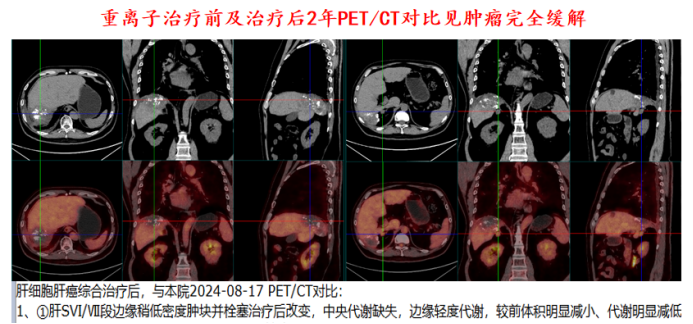
The above images show the pre‑treatment PET‑CT (August 14, 2024).
During heavy ion therapy, the patient's physical and mental condition continued to improve, and body weight increased. The treatment course proceeded smoothly, and the patient was discharged after completion. On October 14, 2024, the patient returned to our hospital. Follow‑up MRI showed: the right hepatic lobe lesion had shrunk compared with before; the IVC and right hepatic vein tumor thrombi were approximately unchanged; bilateral adrenal nodules were approximately unchanged. CT showed: multiple metastatic nodules in both lungs and subpleural regions, with some enlarged and some reduced compared with before. Immunotherapy was continued. On December 19, 2024, the patient returned again. Follow‑up chest CT: multiple metastatic nodules in both lungs and subpleural regions had shrunk compared with before. Abdominal MRI: the right hepatic lobe lesion had shrunk compared with before, with reduced diffusion signal; bilateral adrenal nodules were approximately unchanged.
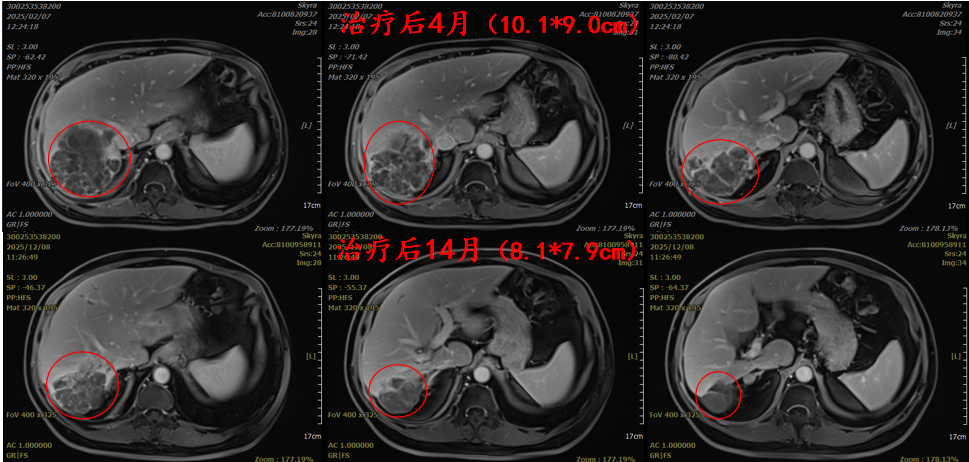
Treatment outcome evaluation: The tumor continued to shrink after treatment — the massive right hepatic lobe tumor measured approximately 12.5 × 12.8 cm before treatment, shrank to 10.8 × 10.5 cm at 1 month after treatment, to 10.1 × 9.0 cm at 4 months, and was completely inactivated at 14 months, with enlargement of the left hepatic lobe and part of the right hepatic lobe. Some bilateral pulmonary metastatic nodules shrank. During treatment, no liver function impairment occurred, and no toxic side effects were observed.
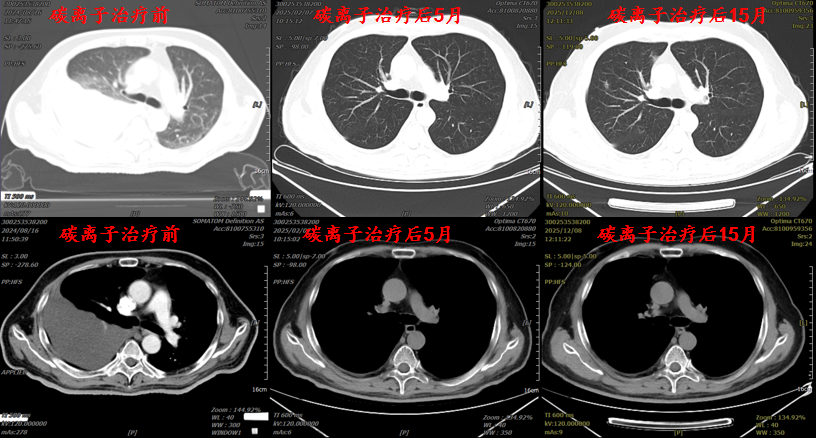
The above images show that after heavy (carbon) ion therapy, the right pleural effusion disappeared, and no radiation pneumonitis occurred
Thereafter, the patient continued cyclic immunotherapy until May 2026, when severe rash developed and was diagnosed as "plaque psoriasis," considered related to immunotherapy. Treatment with "vunakizumab" and symptomatic management led to improvement.
Summary: This case involved a patient with massive, extremely advanced liver cancer accompanied by IVC tumor thrombus and multiple pulmonary and adrenal metastases. After failure of prior TACE and HAIC, the patient received comprehensive treatment combining heavy (carbon) ion therapy with targeted therapy and immunotherapy and achieved remarkable results: the primary giant tumor measuring 12.5 × 12.8 cm was completely inactivated within 14 months, the tumor thrombus remained stable, and bilateral pulmonary metastatic nodules shrank synchronously. Throughout the course, no liver function impairment or radiation pneumonitis occurred. This fully demonstrates the physical advantage of heavy ion therapy in protecting normal organs through precise "Bragg peak" blasting, as well as the potential "abscopal effect" that may be triggered by combination with immunotherapy. The patient has now achieved high‑quality survival exceeding 2 years, strongly demonstrating the breakthrough clinical value of this combination regimen in refractory advanced liver cancer: "potent local tumor control, maximal liver protection, and synergistic systemic benefit."
Case provided by: Zhang Yanshan, Chief Physician
2. Advantages of Heavy Ion Therapy for Liver Cancer
The core advantage of heavy ion therapy for liver cancer lies in precise, targeted blasting via the "Bragg peak," which efficiently inactivates massive and refractory tumors while maximally protecting normal liver tissue, significantly reducing liver function impairment and radiation‑related complications. It can also synergize with targeted/immunotherapy to trigger the abscopal effect, improving overall control rates and long‑term high‑quality survival.
3. Liver Cancer Treatment Data at the Wuwei Heavy Ion Center
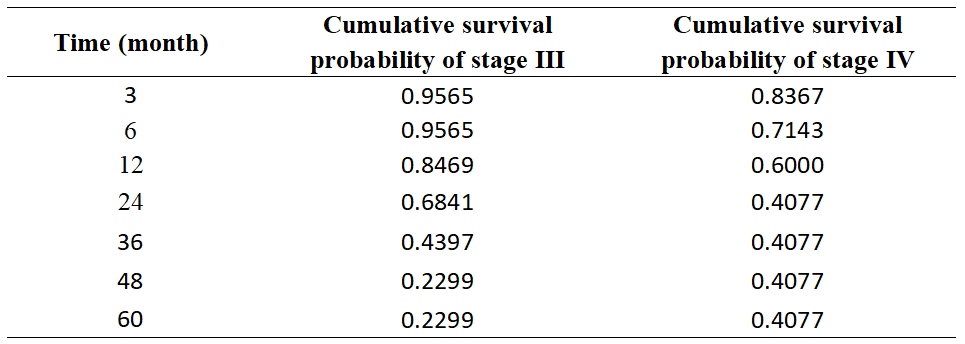
As of October 15, 2026, the Wuwei Heavy Ion Center has treated a total of 210 patients with liver cancer, with the longest follow‑up to date being 73 months. For stage I and II liver cancer, survival analysis was not performed due to limited sample size; follow‑up results show a 6‑month local control rate of up to 100%. For stage III patients, the mean survival time was 34 ± 5.73 months, with a median survival time of 34 months (95% CI: 22–45 months). The cumulative survival probabilities at 3, 6, 12, 24, 36, 48, and 60 months after treatment were 0.9565, 0.9565, 0.8469, 0.6841, 0.4397, 0.2299, and 0.2299, respectively. For stage IV patients, the mean survival time was 34 ± 4.98 months, with a median survival time of 13 months (95% CI: 3–22 months). The cumulative survival probabilities at 3, 6, 12, 24, 36, 48, and 60 months after treatment were 0.8367, 0.7143, 0.6000, 0.4077, 0.4077, 0.4077, and 0.4077, respectively.
Cumulative survival probability of stage III and IV liver cancer patients
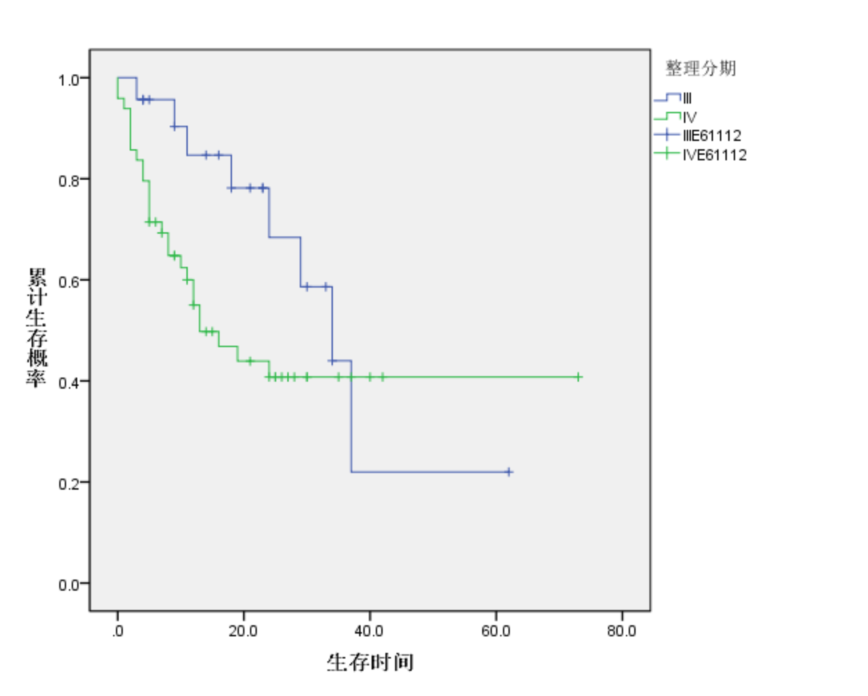
Survival curves of stage III and IV liver cancer patients (0–60 months)
4. Introduction to the Attending Physician
The provider and attending physician for this case is Professor Zhang Yanshan, Chief Physician. Zhang Yanshan, PhD, is a Visiting Researcher and Graduate Supervisor at the University of Chinese Academy of Sciences, Professor and Master's Supervisor at Gansu University of Chinese Medicine, and Professor and Master's Supervisor at Northwest Normal University. He is a Leading Talent of Gansu Province, an Outstanding Expert of Gansu Province, a First‑Tier Leading Talent of Wuwei City, and the lead for the creation of a national key discipline. The team he leads has received honors including Outstanding Team from the Provincial Department of Human Resources and Social Security, the Provincial Health Commission, and the Provincial Trade Union. As first/corresponding author, he has published 25 SCI papers and 20 papers in domestic core journals, and is proficient in English listening, speaking, reading, writing, and translation. Zhang Yanshan served as Director of Surgical Oncology from 2004 to 2014 and has been professionally engaged in heavy ion therapy since 2011. He served as Director of China's first heavy ion therapy center and has cultivated a group of professional talents in heavy ion therapy for China. Joerg Hauffe, CEO of the German RPTC Proton Center, called Dr. Zhang Yanshan "Mr. Carbon." Dr. Zhang Yanshan is the heavy ion expert in China who personally treats the largest number of heavy ion patients each year and handles the most complex cases. He has accumulated rich experience in heavy ion therapy for solid tumors at all body sites, including primary and metastatic brain tumors, bone metastases, liver cancer, lung cancer, pancreatic cancer, chordoma, and sarcoma. He has extensive experience in re‑irradiation for recurrent esophageal cancer and lung cancer after radiotherapy, and has summarized a set of Wuwei protocols in the field of heavy ion therapy, benefiting numerous patients with complex and critical tumors.
Professor Zhang Yanshan is fully responsible for the clinical application of China's first heavy ion therapy system with independent intellectual property rights, overseeing indication determination, target volume delineation, fractionation scheme design, dose and risk control, efficacy evaluation, and management of adverse events and toxic reactions — driving the development of China's heavy ion cause. Each year, he personally delineates target volumes and fully treats more than 500 patients receiving heavy ion therapy, insisting on being present on the frontline and personally involved in diagnosis and treatment.
Professor Zhang Yanshan pioneered the "galloping scheme" for bladder cancer treatment internationally, pioneered the use of high‑frequency oscillatory ventilation (HFOV) to control respiratory motion, pioneered the surgical "spacer technique," and proposed the concept of "heavy ion surgery." Using the original HFOV technique, he has successfully treated multiple liver and bilateral pulmonary metastases. He has promoted the application of heavy ion therapy to liver tumors at all stages; in terms of radicality and treatment comfort, it offers certain advantages over hepatectomy, TAE, TACE, PEI, and RFA. He has refined heavy ion treatment strategies for esophageal cancer, bladder cancer, breast cancer, and other diseases, and accumulated experience in treating gliomas and various sarcomas. He has innovatively applied bladder capacity and pressure control devices and breast immobilization devices to strictly control organ motion, increasing the local heavy ion treatment dose to tumors while better protecting normal organs — thereby improving efficacy, reducing adverse reactions, and achieving precise heavy ion radiotherapy.
Professor Zhang Yanshan has a background encompassing basic tumor research, pharmacotherapy, surgical oncology, and radiotherapy. He possesses proficient imaging interpretation skills and excellent English listening, speaking, reading, writing, and translation abilities, enabling him to stay abreast of first‑line international oncology advances. He is a leader in composite tumor treatment, capable of radiotherapy and tumor treatment quality control, process optimization, team building, AI tool evaluation, and medical safety management. He excels in clinical decision‑making for complex and advanced tumors, emphasizing multidisciplinary integration, whole‑course management, and humanistic communication.
Introduction to the Wuwei Heavy Ion Center
The Wuwei Heavy (Carbon) Ion Center is the clinical application base for China's first heavy (carbon) ion therapy system with complete independent intellectual property rights. It is technically supported by the Institute of Modern Physics, Chinese Academy of Sciences, and clinically operated by Gansu Wuwei Cancer Hospital. Since the first patient was treated in November 2018, as of October 15, 2026, the center has treated more than 3,300 patients, covering more than 100 tumor types, including lung cancer, pancreatic cancer, liver cancer, glioblastoma, nasopharyngeal carcinoma, rectal cancer, and various sarcomas. Heavy (carbon) ions have a strong tumor cell‑killing effect; the relative biological effectiveness of heavy (carbon) ions can reach 2 to 5 times that of conventional radiotherapy and proton therapy, with minimal impact on surrounding normal tissues [1‑2].
As the only medical institution in the world operating two heavy (carbon) ion therapy systems simultaneously, Wuwei Cancer Hospital continues to advance technological innovation and has achieved nine "world‑first" accomplishments, including precision treatment under ventilator control, bladder cancer treatment under precise bladder capacity control, single‑session treatment with surgical implantation of spacers between organs and tumors, and dual Bragg peak heavy (carbon) ion lattice radiotherapy. It has also developed China's first 360° rotatable and height‑adjustable ion radiotherapy chair and completed the world's first batch of multiple cases of cardiac tumor heavy (carbon) ion treatment.
Leveraging 30 research platforms including the CAS Key Laboratory of Heavy (Carbon) Ion Beam Radiation Biology and the Sydney University Biomedical Data Analysis and Visualization Laboratory, the center has conducted more than 30 clinical studies on key tumor types and published nine monographs including the Standard Operating Procedure for Heavy (Carbon) Ion Radiotherapy, gradually building a knowledge system covering physical technology, clinical diagnosis and treatment, and health management. On February 23, 2026, CCTV‑13's Morning News broadcast a special report on the operation of China's first medical heavy (carbon) ion accelerator with independent intellectual property rights; Yang Jiancheng, Deputy Director of the Institute of Modern Physics, Chinese Academy of Sciences, provided an introduction in the program.
Writer: Sha Panfang (Master's degree candidate)
Supervising Professor: Zhang Yanshan (Attending Professor)
Data support: Tumor Registry and Follow‑up Office (Chen Xuelian, Li Pengqing)
Reviewed by: Zhang Yanshan (Vice President)
Date: October 26, 2026