Sharing Classic Clinical Cases of Carbon‑Ion Therapy
Sharing Classic Clinical Cases of Carbon‑Ion Therapy
Yu Rong, Department of Radiation Oncology III (Heavy Ion)
Case of Locally Advanced Pancreatic Malignancy
1. Medical History:
The patient, Zhang, female, 63 years old, presented 9 months after carbon‑ion radiotherapy for pancreatic body cancer.
In October 2025, she developed intermittent upper abdominal fullness. On November 15, 2025, she visited the First Affiliated Hospital of Xi'an Jiaotong University Medical College, where whole‑abdominal CT revealed: a weakly enhancing mass in the pancreatic body, suggestive of pancreatic cancer, with involvement of the splenic artery and vein.
Without further treatment, she visited our hospital on November 18, 2025, where endoscopic ultrasound‑guided pancreatic biopsy was performed. Pathology: pancreatic ductal adenocarcinoma, well‑differentiated. PET‑CT: an irregular soft tissue mass in the pancreatic body with ill‑defined margins, indistinct demarcation from the adjacent gastric wall, and increased metabolism — consistent with pancreatic cancer on PET/CT.
From December 3, 2025, she began curative carbon‑ion radiotherapy for pancreatic cancer at a dose of PTV 39.6 Gy(RBE)/9 fractions, with a boost of PTV 17.6 Gy(RBE)/4 fractions, combined with concurrent systemic intravenous gemcitabine chemotherapy. Gastrointestinal adverse reactions during treatment were mild.
From January 12, 2026, to June 26, 2026, she completed 12 cycles of systemic intravenous chemotherapy with the NALIRIFOX regimen. From July 2026, she continued maintenance chemotherapy with capecitabine tablets.
On September 20, 2026, the treatment response was assessed as PR (partial response), with tumor regression of 59%.
2. Imaging Comparison
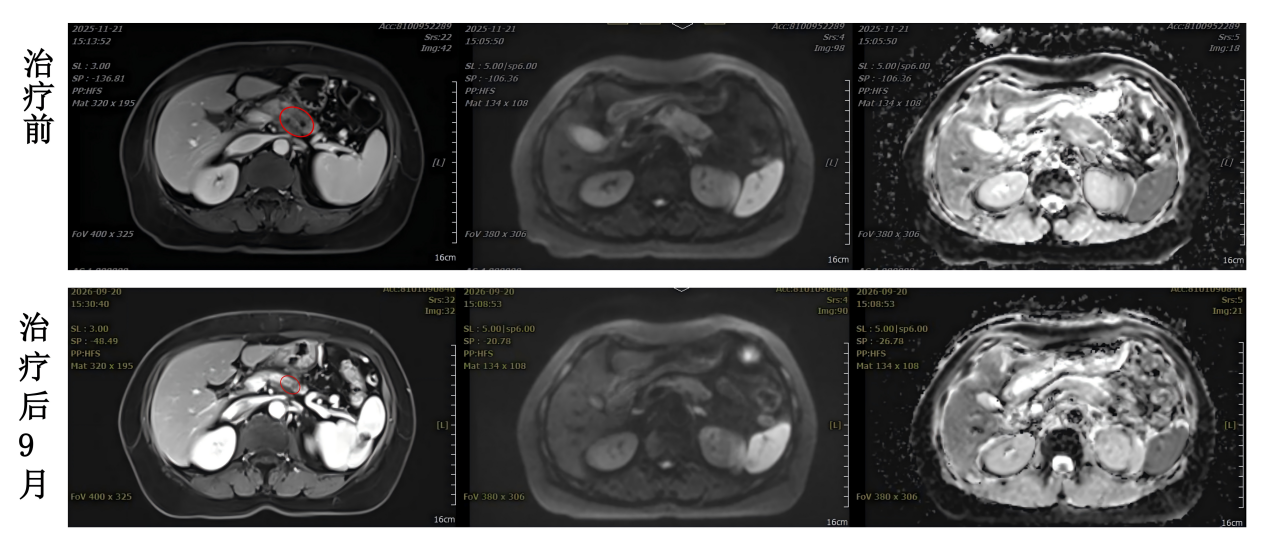
Comparison of Images Before Treatment and 9 Months After Treatment
3. Changes in Tumor Markers
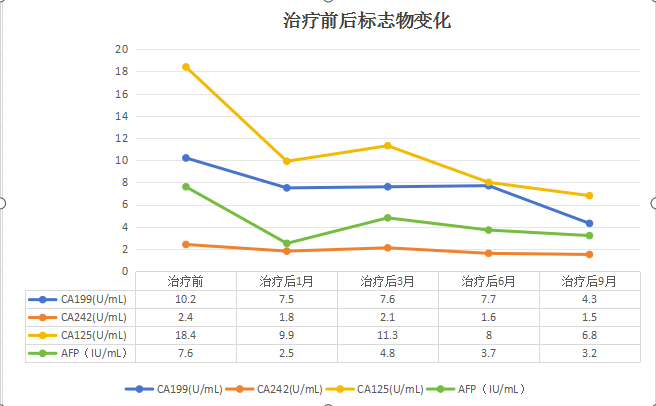
Changes in Tumor Markers Before and After Treatment
Case of Localized Prostate Malignancy
1. Medical History
The patient, Ni, male, 63 years old, presented more than 17 months after carbon‑ion radiotherapy for prostate cancer.
In February 2025, during a routine health check at a local hospital prompted by occasional urinary frequency and urgency, a space‑occupying lesion of the prostate was discovered. On March 18, 2025, he visited the First Affiliated Hospital of Xi'an Jiaotong University, where pelvic MRI revealed: (1) prostate cancer, with abnormal signal changes in the bilateral peripheral zones, more prominent on the right, PI‑RADS 5; (2) no obvious abnormalities in the bladder or rectum. TPSA: 1.550 ng/mL; FPSA: 0.552 ng/mL.
On March 21, 2025, prostate biopsy was performed. Postoperative pathology: prostatic acinar adenocarcinoma, Gleason score 3+3=6. Further ECT examination showed no definite bone metastases on whole‑body bone scan.
On April 7, 2025, he visited our hospital. PET‑CT showed: slightly enlarged prostate volume with increased metabolism in the central zone and right peripheral zone, highly suggestive of prostate cancer. The patient declined surgery. From April 15, 2025, he began carbon‑ion radiotherapy for the prostate lesion at a dose of PTV 44 Gy(RBE)/11 fractions, with a boost of PTV 8 Gy(RBE)/2 fractions, along with endocrine therapy consisting of apalutamide tablets and goserelin acetate sustained‑release implants. The treatment course proceeded smoothly.
On July 22, 2025, the disease was assessed as stable, and the above regimen was maintained. On December 28, 2025, the disease remained stable; apalutamide was discontinued, and goserelin endocrine therapy was continued. Pelvic MRI, PET‑CT, and whole‑body bone scans performed on February 2, 2026, April 23, 2026, and September 20, 2026 all showed stable disease, with treatment response assessed as PR (partial response).
2. Imaging Comparison
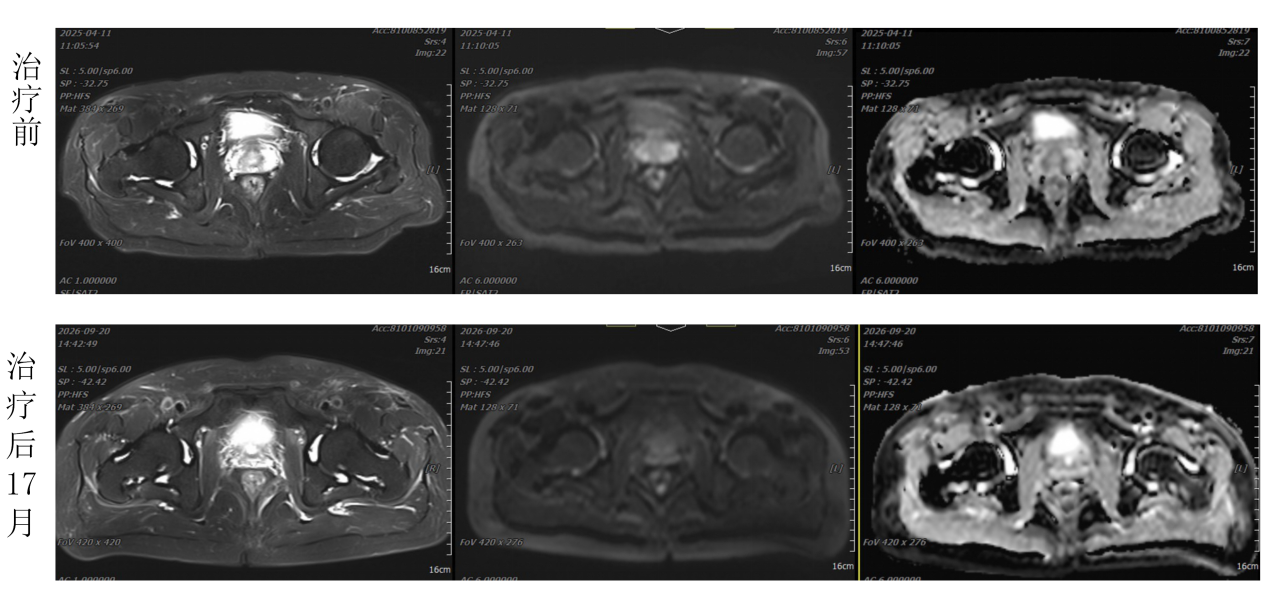
Comparison of Images Before Treatment and 17 Months After Treatment
3. Changes in Tumor Markers
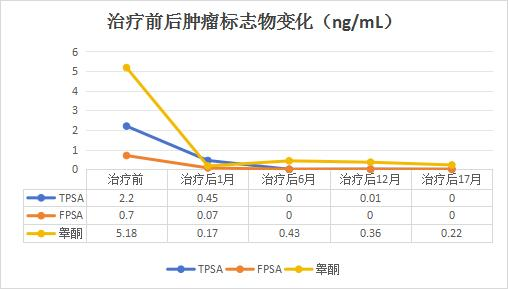
Changes in Tumor Markers Before and After Treatment
Summary
The efficacy of carbon‑ion therapy for localized solid tumors varies by cancer type. Its core value lies in precision targeting and potent tumor‑killing capability, demonstrating unique advantages particularly in radioresistant or anatomically challenging tumors such as pancreatic cancer and prostate cancer.
Free Clinical Trial Recruitment
Our department is currently conducting a Phase II clinical study titled "Heavy Ion Radiotherapy Combined with Concurrent Gemcitabine Chemotherapy for Locally Advanced Pancreatic Cancer." This study employs internationally advanced heavy ion radiotherapy technology in combination with gemcitabine chemotherapy, with the aim of improving the local control rate and long‑term survival of patients with locally advanced pancreatic cancer.
Why Choose Our Clinical Trial?
1. Internationally Advanced Heavy Ion Radiotherapy Technology
Heavy ion radiotherapy offers a higher relative biological effectiveness (RBE), enabling precise destruction of tumor cells while maximizing protection of surrounding healthy tissues. Studies have shown that heavy ion radiotherapy achieves better outcomes than conventional photon radiotherapy in the treatment of pancreatic cancer.
2. Combined with Gemcitabine Chemotherapy
Gemcitabine is a standard chemotherapy drug for pancreatic cancer. When combined with heavy ion radiotherapy, it produces a synergistic effect, further enhancing treatment efficacy.
3. A Professional Team to Ensure Safety and Efficacy
Our research team consists of experienced oncology specialists and is supported by the Wuwei Heavy Ion Therapy System, a dedicated cancer treatment facility, ensuring both safety and effectiveness throughout the treatment process.
4. Comprehensive Patient Care
We will provide you with a detailed assessment of your condition, a personalized treatment plan, and full‑course follow‑up services, ensuring that you receive the best possible medical care during your treatment journey.
Recruitment Criteria
- Aged between 18 and 75 years;
- Pathologically diagnosed with pancreatic cancer;
- Meets the criteria for locally advanced pancreatic cancer, with no distant metastasis, and maximum tumor diameter ≤ 6 cm;
- No prior local treatments such as surgery or seed implantation;
- Generally good performance status, with no organ dysfunction, and able to tolerate the treatment;
- Willing to participate voluntarily and able to comply with the treatment and follow‑up schedule.
Participation Benefits
- Free access to curative heavy ion radiotherapy (valued at 198,000 RMB per treatment field) and subsequent treatment planning;
- Comprehensive care and continuous follow‑up by a dedicated medical team.
How to Register?
If you meet the above criteria and are interested in participating in this study, please contact us through the following channels:
- Consultation Hotline: 177 9351 8656
- Contact Person: Director Chen Weizuo
- Address: Third Department of Radiotherapy, 1st Floor, Building 5, Heavy Ion Center, Gansu Wuwei Cancer Hospital
Recruitment Deadline
Enrollment will close once 30 participants have been recruited.
Clinical Trial Background
Pancreatic cancer is an extremely lethal disease with a silent onset. Approximately one‑third of patients are already diagnosed with locally advanced pancreatic cancer (LAPC) by the time the disease is detected. The role of photon radiotherapy in unresectable locally advanced pancreatic cancer has yielded suboptimal outcomes. Compared with protons, heavy ions offer a higher relative biological effectiveness (RBE) and have demonstrated improved overall survival. Through this study, we aim to leverage the physical and biological advantages of heavy ions to improve local control and long‑term survival for patients with LAPC.
Join us and embark on a journey of hope!
Do not give up hope. Join our clinical trial, and let us work together to fight pancreatic cancer!
Department of Radiation Oncology III Profile
●Department Overview
The Department of Radiotherapy III (Pancreatic Heavy Ion Specialty, Abdominopelvic Heavy Ion Specialty) focuses primarily on heavy ion therapy for pancreatic cancer, as well as heavy ion and photon radiotherapy for abdominopelvic tumors including liver cancer, colorectal cancer, and prostate cancer. Since its establishment, pancreatic cancer patients from across China have sought treatment here. The department enables precise destruction of pancreatic cancer cells without pain, surgery, or trauma. To date, dozens of pancreatic cancer patients from various regions across the country have been treated, with a 1‑year local control rate of 96% and median survival extended from the traditional 11 months to 22 months. The treatment efficacy is well‑established, patient experience is positive, and outcomes have been fully recognized by renowned experts both domestically and internationally as well as by a wide range of patients.
●Professional Team
Team members graduated from prestigious medical schools in China and possess solid theoretical knowledge and extensive clinical experience. The department has specially invited international experts — including Professor Hauf from Germany, Professor Hirohiko Tsujii from Japan, and Professor Yee‑Min Jen and Professor Wu Jiaming from Taiwan — to provide guidance, participate in complex case discussions, deliver academic lectures, and conduct ward rounds. Department staff have completed advanced training at several well‑known heavy ion and photon therapy centers in China, giving them extensive experience in heavy ion therapy and enabling them to develop scientifically sound, individualized treatment plans for patients.
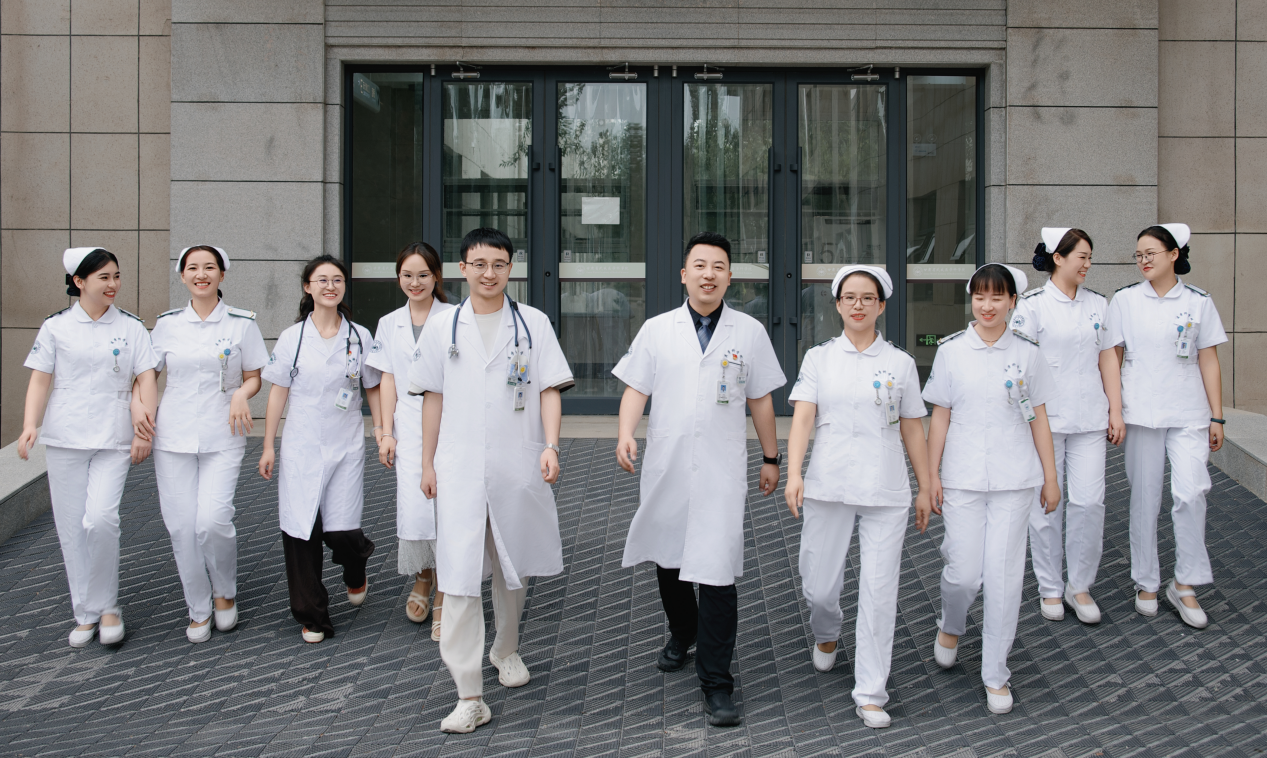
●Scope of Treatment
The department specializes in heavy ion therapy for pancreatic cancer, while also providing heavy ion and photon radiotherapy for abdominopelvic tumors including liver cancer, colorectal cancer, and prostate cancer. It offers patients professional radiotherapy services and personalized comprehensive cancer care.
● Department Expert Introduction
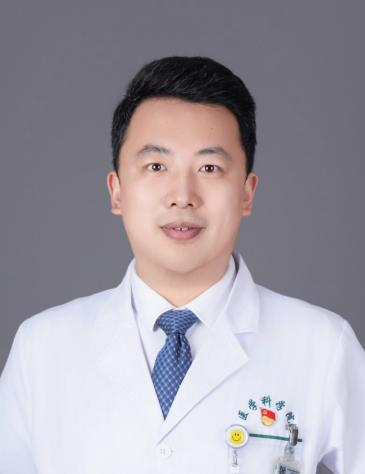
Chen Weizuo
Director of the Third Department of Radiotherapy, Heavy Ion Center, Gansu Wuwei Cancer Hospital
Associate Chief Physician
- Longyuan Young Talent of Gansu Province
- Board Member, Brachytherapy and Smart Radiotherapy Branch, Chinese Nuclear Society
- Member, Ion Radiotherapy Branch, China Association of Medical Equipment
- Member, Oncology Branch, National Health Industry Enterprise Management Association
- Member, Youth Branch of the Western Radiation Therapy Association
- Member, Youth Committee of Radioimmunology, CRTOG
- Member, Youth Committee of Gastric Cancer/Colorectal Cancer Professional Committee, Gansu Anti‑Cancer Association
- Member, Radiotherapy Professional Committee, Wuwei Medical Association
Research Projects:
- Principal Investigator of one CAS "Western Light" Talent Training Program project
- Principal Investigator of two "Longyuan Youth Innovation and Entrepreneurship" Talent Program projects funded by the Organization Department of the Gansu Provincial Party Committee
- Received one Third Prize of the Gansu Provincial Science and Technology Progress Award and one Third Prize of the Gansu Medical Science and Technology Award
Publications and Patents:
- Published 12 SCI papers and 6 papers in Chinese core journals
- Holds 2 national invention patents and 3 utility model patents
- One invention patent received a Gold Award at the National Invention Exhibition and a Second Prize in the National "Invention and Entrepreneurship Award" Project Category
Clinical Experience:
With 20 years of experience in clinical cancer treatment, Dr. Chen specializes in radiotherapy and comprehensive treatment for various tumors, particularly heavy ion therapy for abdominopelvic tumors. He has conducted in‑depth research on radiotherapy and personalized comprehensive treatment for pancreatic cancer, liver cancer, colorectal cancer, prostate cancer, and other abdominopelvic tumors. He has completed advanced training at Shanghai Proton and Heavy Ion Center, Peking University Third Hospital, Sichuan Cancer Hospital, and other institutions. He has been awarded the title of "Outstanding Worker" by our hospital multiple times.