One-Time Treatment: Breakthrough Respiratory Control for Precision Heavy Ion Therapy
One-Time Completion of Treatment! The World's First Respiratory Motion Management Technology Makes Heavy Ion Therapy More Precise and Safer.
Did you know? Breathing—something we do subconsciously every day—was once a major obstacle in the precise radiotherapy of tumors. For thoracic and abdominal tumors such as lung and liver cancer, each breath a patient takes causes slight shifts in the tumor's position. This subtle movement, when faced with the "high-precision weapon" of heavy ion therapy, could lead to radiation deviating from the lesion, compromising treatment effectiveness and potentially damaging surrounding healthy tissues. This has long been a core challenge plaguing the global radiotherapy field.
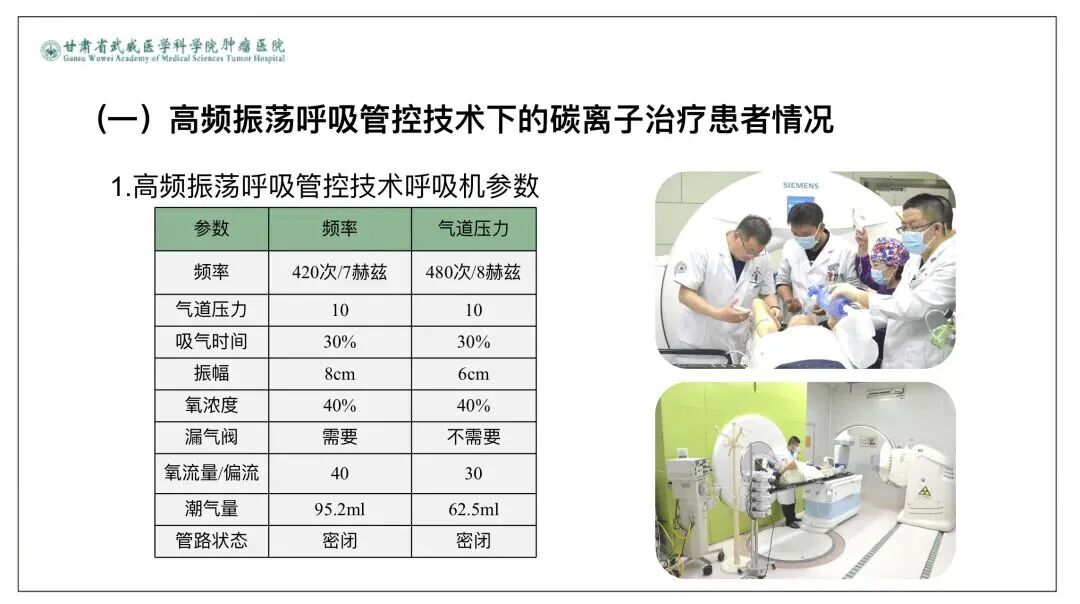
Target displacement caused by respiratory motion has long been a globally recognized core problem limiting the precision of tumor radiotherapy. Traditional solutions faced issues of limited accuracy and low patient tolerance, making them difficult to adapt to the technical characteristics of carbon ion radiotherapy, such as "high single dose and few treatment sessions." Although there have been preliminary explorations abroad into high-frequency oscillatory ventilation technology, they have yet to overcome the critical bottleneck of autonomous respiratory interference affecting efficacy after breath-holding. In the face of these technical barriers, the radiotherapy department at the Wuwei Heavy Ion Center collaborated deeply with the critical care medicine department to establish a dual respiratory management system combining "non-invasive high-frequency oscillatory ventilation" and "general anesthesia to suppress breathing."
The globally pioneering high-frequency oscillatory respiratory management technology for precise heavy ion therapy, developed by the Wuwei Heavy Ion Center at Gansu Wuwei Cancer Hospital, has achieved a clinical breakthrough! The related results have even been published in an authoritative SCI international journal, signifying international recognition for this independently innovative technology.
What makes this technology so groundbreaking? Simply put, it creatively integrates "non-invasive high-frequency oscillatory ventilation" and "general anesthesia to suppress breathing" into a dual respiratory management system. Ultimately, it achieves a remarkable outcome—precisely controlling respiratory displacement of thoracic and abdominal tumor targets to within 2 millimeters. This "Chinese solution" is tailor-made for treating mobile tumors like lung and liver cancer, offering a perfect integration of precision, safety, and efficiency.
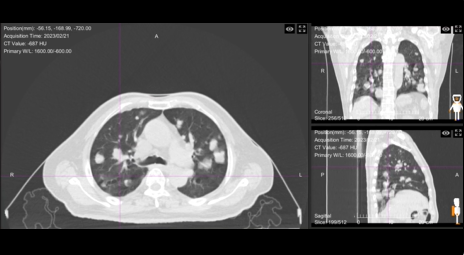
Normal breathing
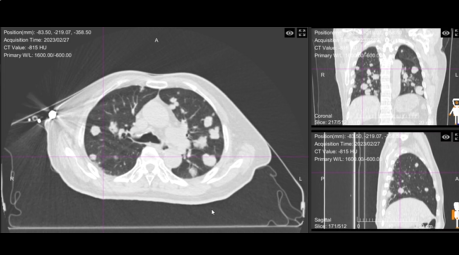
General anesthesia high-frequency oscillatory ventilator
Specifically, this technology has achieved three core breakthroughs:
01. Sub-millimeter Positioning, Precision "Sniper" Strike on Lesions
Like equipping heavy ion beams with a "navigation system," this technology completely eliminates organ motion interference caused by breathing, allowing the beams to precisely focus on the tumor and achieve "targeted elimination" of cancer cells.
02. Maximized Safety, Greater Patient Peace of Mind
This technology has been clinically validated by 23 healthcare volunteers. It is not only simple to operate and easy to master, but patients also show good tolerance, and the treatment effects are reproducible. More importantly, it significantly reduces the radiation dose to healthy tissues, lowering the risk of complications such as radiation pneumonia, making it safer for patients.
03. One-Time Treatment Completion, Efficient and Convenient
It supports the irradiation of multiple areas within the same organ in a single session, eliminating the need for patients to make multiple trips to the hospital. This significantly shortens the hospitalization cycle, reduces the burden on patients, and conserves valuable medical resources.
The core value of this technology lies in establishing a three-dimensional treatment system encompassing "precision targeting, safety protection, and high efficiency." It perfectly integrates the respiratory control advantages of high-frequency oscillatory ventilation with the physical properties of heavy ion radiotherapy, especially opening up a new treatment pathway for elderly patients, those with frail health, or those whose tumors are located in surgically restricted areas.
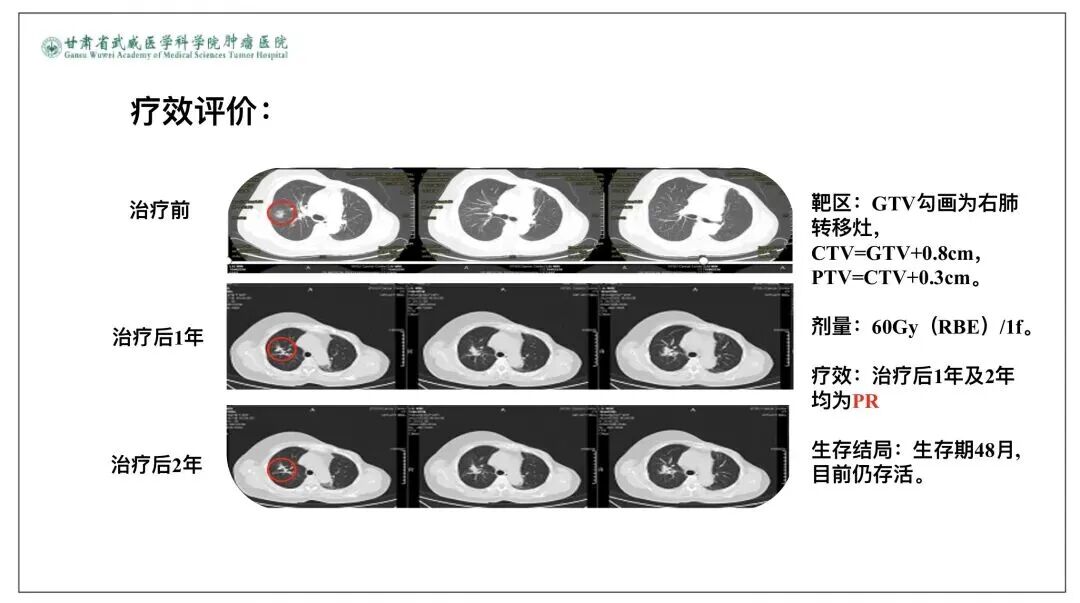
Ms. Liu, 62, is one of the beneficiaries of this technology. She was diagnosed with secondary malignant lung tumors (Stage IV pT0N0M1). PET/CT scans revealed mixed ground-glass opacity with increased density and elevated metabolism in the upper lobe of the right lung, suggestive of pulmonary metastasis. When traditional treatment options were limited, this innovative heavy ion therapy technology offered her new hope for recovery.
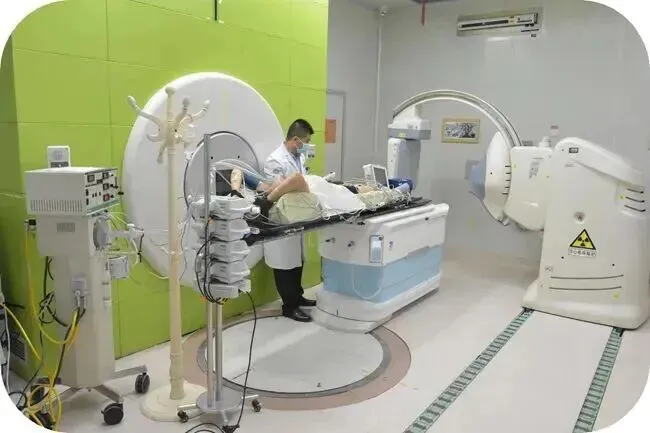
As the "Jinggangshan" of China's heavy ion technology, this innovation by the Wuwei Heavy Ion Center not only fills the international gap in the application of non-invasive high-frequency oscillatory ventilation technology in heavy ion therapy, but also, with the robust capabilities of "Made by China's Innovation," propels a revolutionary leap in global cancer treatment from "invasive radical cure" to "non-invasive precision."
In the future, as this technology is further promoted and refined, more cancer patients worldwide will benefit from it, experiencing firsthand the excellence of China's precision medical technology. This will also continue to highlight China's independent innovation capabilities and international leadership in the field of precision medicine.