First In-Human Single-Session Heavy Ion Therapy with Surgical Spacer Placement
First Nationwide Clinical Application of Heavy Ion Therapy with Surgical Placement of Spacer Between Organ and Tumor Completed in a Single Session
In recent years, the Wuwei Heavy Ion Center of Gansu Wuwei Cancer Hospital has been consistently advancing the independent innovation and clinical translation of heavy ion therapy technology. It has achieved a major breakthrough in the treatment of abdominal and pelvic tumors—the self-developed technique of "heavy ion therapy completed in a single session with surgically placed spacer" has successfully created a safe space for delivering radical radiation doses to tumors adjacent to critical organs such as the intestines and rectum. This provides a "Chinese approach" that integrates precision, safety, and radical efficacy for complex tumors like chordoma and recurrent liver cancer.
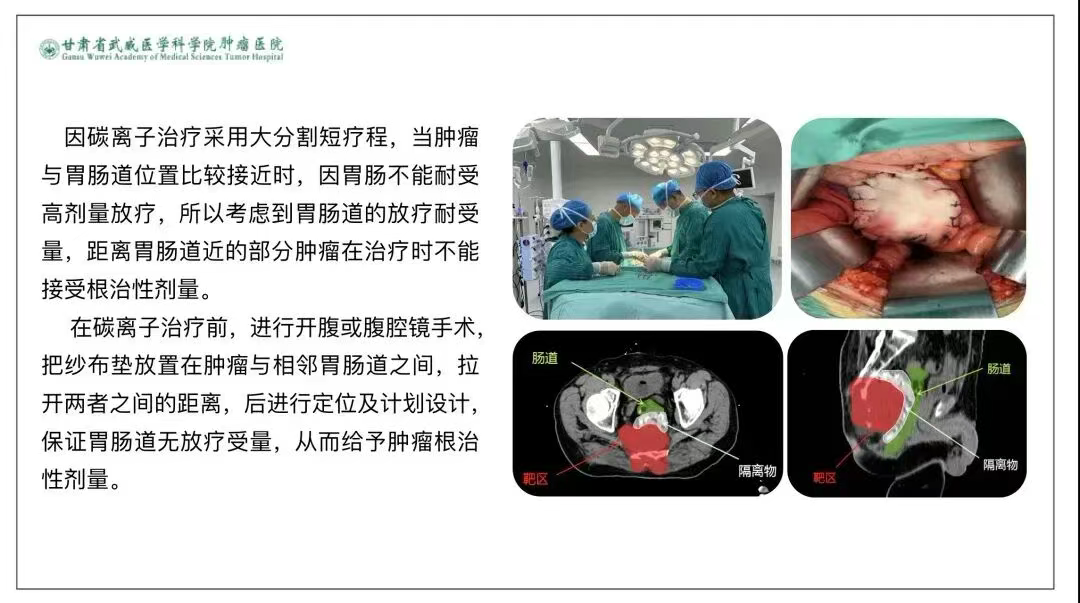
The dose-limiting challenge posed by tumors "adjacently growing" next to critical organs has long been a worldwide problem constraining radical radiotherapy for abdominal and pelvic tumors. Conventional radiotherapy is often forced to reduce the tumor irradiation dose due to the limited tolerance dose of organs like the intestines and rectum, leading to compromised efficacy. Although attempts such as intraoperative radiotherapy exist abroad, it has been difficult to balance precision, safety, and treatment efficiency. Facing this challenge, the Wuwei Heavy Ion Center innovatively integrated surgical techniques with heavy ion therapy. By intraoperatively placing a biocompatible spacer material, the safety margin for treatment is physically widened, directly overcoming the clinical bottleneck of being unable to deliver a radical dose due to anatomical constraints.
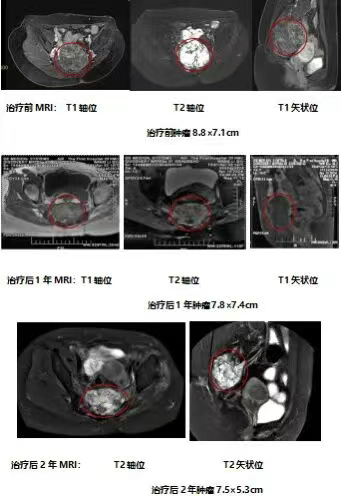
This technique achieves three core breakthroughs at once:
- Breakthrough in Radical Dose: By creating a safe space with the spacer material, the tumor can receive a radical dose of irradiation, completely reversing the treatment dilemma of being forced to reduce the dose due to proximity to critical organs.
- Excellent Safety Performance: While pursuing a high dose for the tumor, the radiation dose to critical organs such as the intestines and rectum is controlled within a safe range, significantly reducing the risk of radiation injury.
- Efficient Multidisciplinary Collaboration: It achieves precise closed-loop collaboration between surgical spatial intervention and radiotherapy dose planning in terms of time and space, providing a new, deterministic treatment pathway for complex tumors.
The core of this technological breakthrough lies in constructing a three-dimensional treatment system of "Dose Liberation + Organ Protection + Disciplinary Integration." This technique perfectly combines the spatial isolation advantage of surgery with the physical characteristics of heavy ion radiotherapy, opening a new path for radical treatment of complex abdominal and pelvic tumors previously considered "no-go zones for radiotherapy."
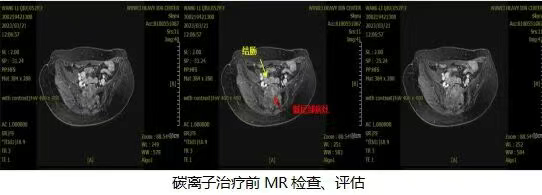
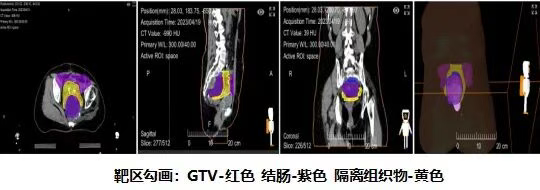
Patient Case: Mr. Zhou, 44 years old, was diagnosed with a giant sacrococcygeal chordoma (approximately 12.5cm × 8.9cm × 8.1cm), with an unclear boundary between the tumor and the rectum. Through "Radical Heavy Ion Therapy with Surgical Spacer," after the surgical placement of the spacer material, a radical dose was safely delivered to the lesion紧贴直肠紧贴直肠 (closely attached to the rectum). The total tumor dose finally reached 70.4 Gy(RBE), achieving significant tumor control without severe rectal radiation injury.
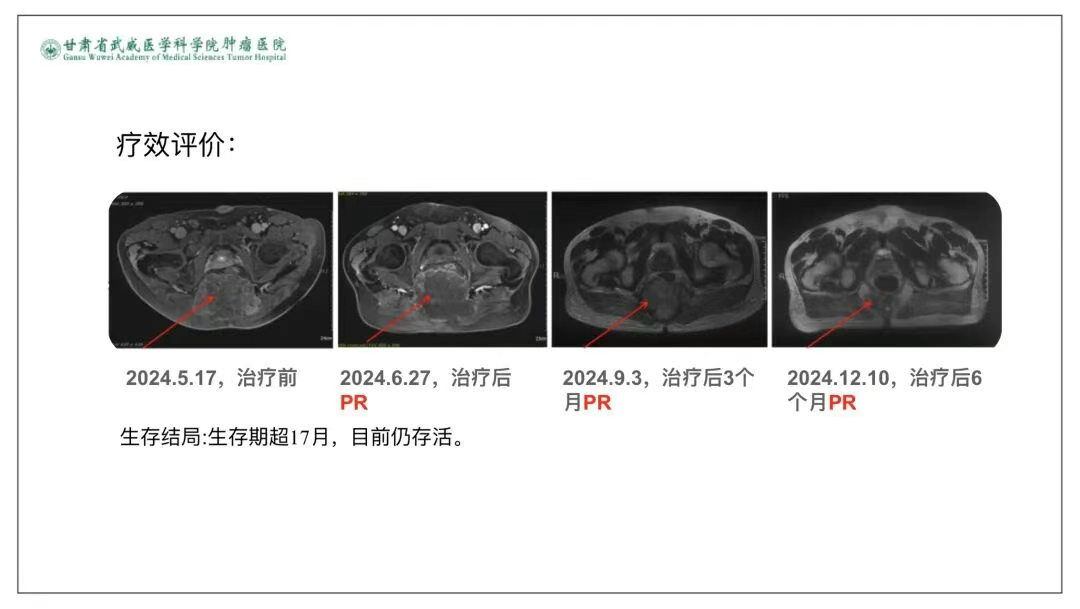
As a pioneer of heavy ion therapy technology in China, this technique not only fills an international gap in the radical radiotherapy of complex abdominal and pelvic tumors but also, with the "Chinese expertise" of deep multidisciplinary integration, promotes a revolutionary leap in cancer treatment from "dose compromise" to "organ-preserving radical cure." In the future, the optimization and promotion of this technique will bring hope for a cure to more patients worldwide with complex tumors, demonstrating China's independent innovation capability and international leadership in high-end medical equipment and precision therapy.