
Characteristic Treatment Technologies of the Pain Management and Multidisciplinary Diagnosis Center
Characteristic Treatment Technologies of the Pain Management and Multidisciplinary Diagnosis Center
Intrathecal Morphine Analgesia Pump Implantation
Intrathecal morphine analgesia pump implantation, also known as an "implantable intrathecal drug delivery system," is an advanced minimally invasive interventional pain management technique. It involves directly delivering medication into the cerebrospinal fluid surrounding the spinal cord, creating a "precise drug delivery pathway that reaches the pain center directly." This allows for highly effective control of intractable pain. It truly achieves the precision medicine goal of "using the smallest drug dose to achieve the strongest effect with the fewest side effects." For many patients suffering from intractable pain, it offers hope of returning to a high-quality life and represents an outstanding embodiment of the "comfort-oriented medical care" philosophy. It is currently a core technology internationally for treating intractable pain and cancer-related pain.
Advantages of Intrathecal Morphine Analgesia Pump Implantation:
1. Minimally Invasive Procedure:
The skin incision is minimal, resulting in minor trauma.
2. Precise Targeting:
Intrathecal administration requires only a minimal dose of analgesic medication (equivalent to 1/300 of oral medication) to achieve significant pain relief.
3. Long-Term Analgesia, No Fear of Breakthrough Pain:
Continuous low-flow infusion effectively reduces or even eliminates breakthrough pain.
4. Fewer Side Effects:
The significant reduction in medication dosage effectively addresses issues of drug dependence and tolerance, while minimizing systemic side effects such as nausea, vomiting, constipation, and dizziness.
5. Long-Term Cost-Effectiveness:
Although the initial implantation cost is relatively high, the extremely low long-term medication requirement significantly reduces subsequent expenses on expensive opioid drugs. From a long-term perspective, overall medical costs may actually decrease.
6. Self-Management of Pain:
Allows for self-regulation of breakthrough pain through a flexible and personalized dosing model. Equipped with robust data storage capabilities, it facilitates easy follow-up.
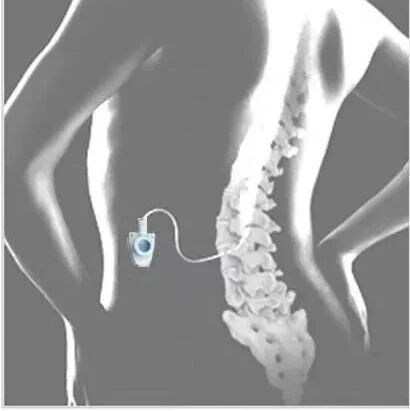
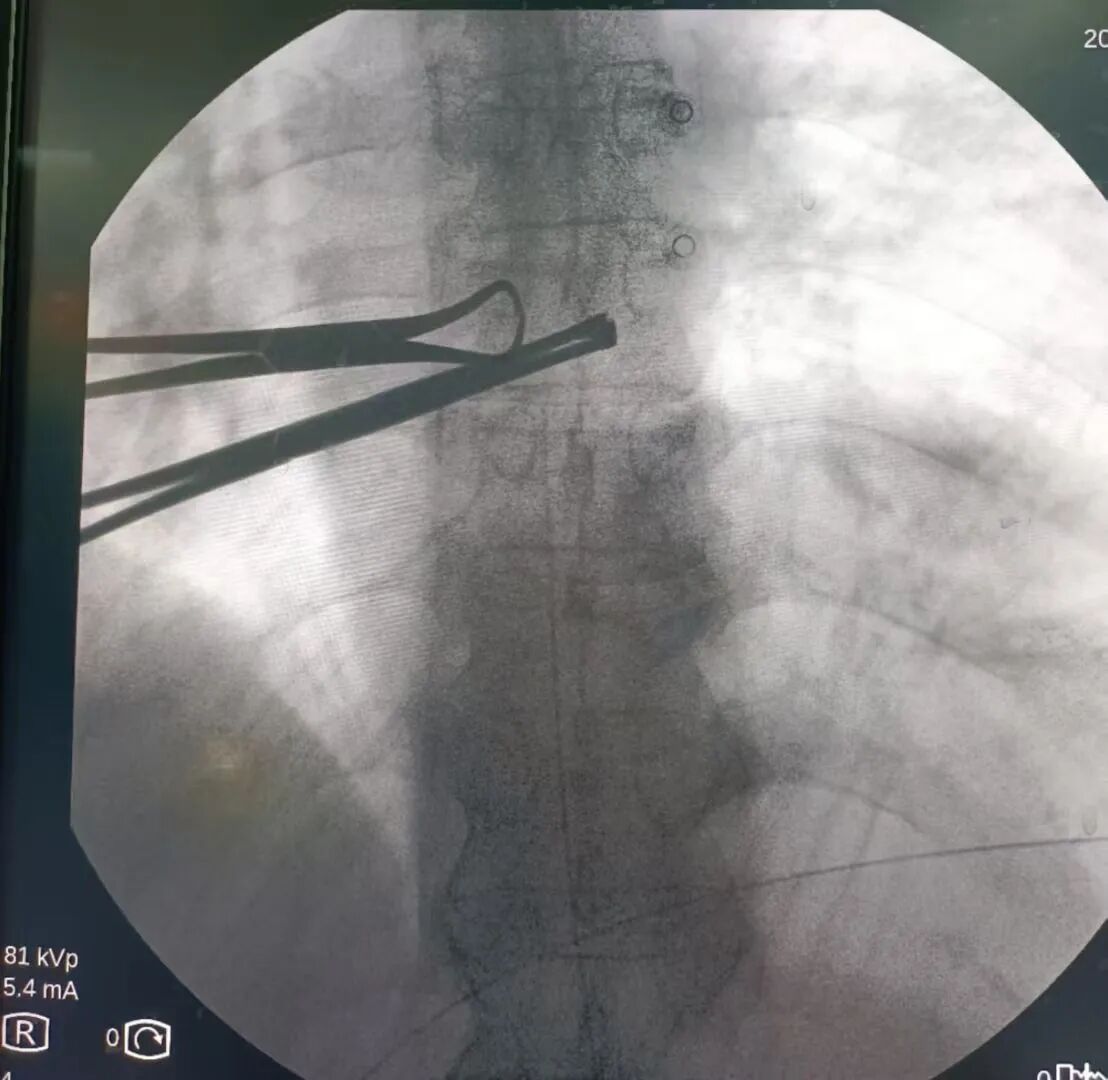
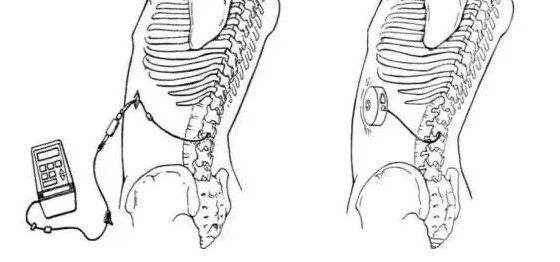
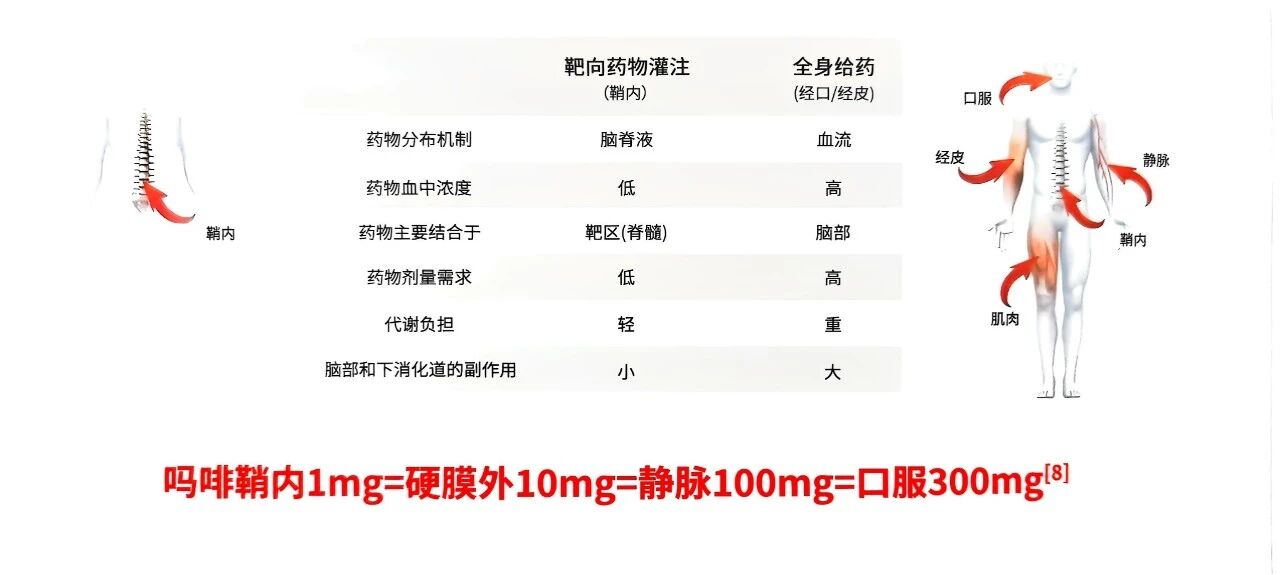
Illustration of Intrathecal Morphine Therapy Dosage Comparison: Intrathecal Pump vs. Traditional Methods
Case sharing
Case 1: Male, 86 years old, Diagnosis:
1. Malignant Liver Tumor
2. Secondary Malignant Peritoneal Tumor
3. Metastasis at Lumbar Vertebrae L2-L3. Pain Score (NRS): 7-9, with nighttime sleep disturbance. Today's ward round shows significant pain relief, high-quality sleep, normal bowel and urinary function, and pain score (NRS) of 0-1.
Case 2: Male, 71 years old, Diagnosis:
1. Malignant Tumor of the Prostate
2. Secondary Malignancy of the Entire Vertebral Body
3. Pathological Rib Fracture Due to Tumor
4. Systemic Bone Metastatic Pain
5. Incomplete Intestinal Obstruction. Intravenous Hydromorphone Analgesia. Pain Score (NRS): 8–10. Today's ward round shows significant pain relief, ability to sleep for over 6 hours, notable improvement in bowel and gas movement, alleviation of abdominal distension, and a current pain score (NRS) of 3–4.
The successful implementation of intrathecal analgesia pump technology by the Pain Department of the Lanzhou Heavy Ion Center has filled a gap in this field at the Lanzhou Heavy Ion Center. The department plans to gradually expand the application scope of this technology to benefit more patients with refractory pain. It will also strengthen collaboration and exchange with leading pain centers both within the province and across the country, continuously improving the level of diagnosis and treatment. This will enable pain patients in Gansu and even the entire northwest region to access top-tier analgesic treatments right at their doorstep.
Pain Department of Lanzhou Heavy Ion Center
The Pain Department of our hospital specializes in cancer-related pain, joint and spinal pain, and chronic neuropathic pain, adopting a multidisciplinary collaborative approach as its core model. It employs minimally invasive techniques such as neurointervention, radiofrequency ablation, collagenase chemonucleolysis for intervertebral discs, CT-guided neurolysis, intrathecal analgesia pumps, and spinal cord stimulation implantation. Combined with a "medication-psychology-rehabilitation" tri-modal therapy, the department has established a "stepwise analgesia + personalized treatment plan" diagnostic and therapeutic system. The department houses a standardized demonstration ward for cancer pain management and provides palliative care services. Guided by the philosophy of "alleviating pain and restoring quality of life," it achieves a pain relief rate of over 95%. Through precise minimally invasive techniques and comprehensive full-course management, the department is dedicated to building a benchmark brand for regional pain diagnosis and treatment.
Academic Leader
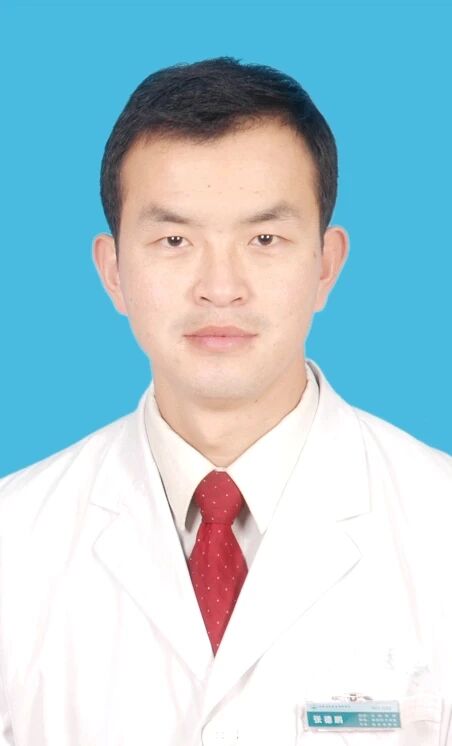
Zhang Depeng
Associate Chief Physician of Pain Medicine
Director of the Pain Department, Gansu Wuwei Cancer Hospital;
Vice Chairman of the Pain Professional Committee, Wuwei Medical Association;
Member of the Pain Professional Committee, Wuwei Association of Integrated Traditional Chinese and Western Medicine;
Member of the Oncology Professional Committee, Wuwei Association of Traditional Chinese Medicine;
Member of the Pain Rehabilitation Professional Committee, Gansu Provincial Association for Rehabilitation of Persons with Disabilities;
Member of the Second Integrated Cancer Pain Treatment Professional Committee, Gansu Anti-Cancer Association.