
World's First: Single-Session High-Frequency Oscillation Breath-Controlled Heavy Ion Therapy
World's First: Single-Session High-Frequency Oscillation Breath-Controlled Heavy Ion Therapy
In recent years, Gansu Wuwei Cancer Hospital has been dedicated to the independent innovation and clinical translation of heavy ion therapy technology. The hospital's self-developed, world-first non-invasive ventilator breathing control technology for heavy ion therapy has been published in an authoritative international SCI journal.
This technology integrates non-invasive high-frequency oscillatory ventilation with general anesthesia to suppress respiratory motion, achieving precise control of respiratory displacement in thoracic and abdominal tumor target areas within 2mm. It provides a "Chinese solution" that combines precision, safety, and efficiency for the treatment of mobile tumors such as lung cancer and liver cancer.
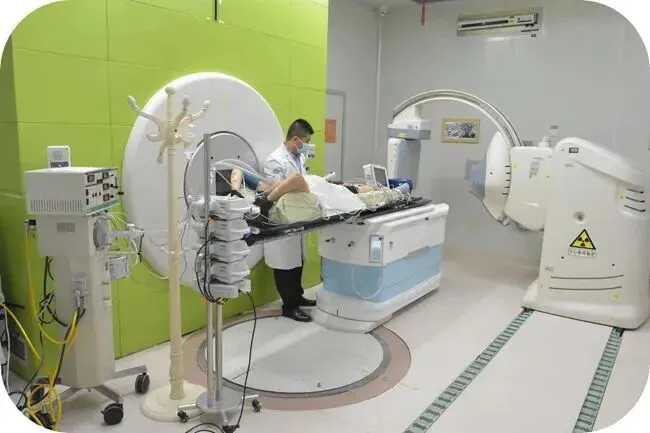
The displacement of target areas caused by respiratory motion has long been a global core challenge constraining the precision of tumor radiotherapy. Traditional solutions offer limited accuracy and poor patient tolerance, making them difficult to adapt to the technical characteristics of carbon ion radiotherapy, such as "high single doses and fewer fractions." While there has been preliminary international exploration of high-frequency oscillatory ventilation technology, the critical bottleneck of autonomous breathing interference affecting treatment efficacy after breath-holding has yet to be overcome. Faced with these technical barriers, the Radiation Oncology and Critical Care Medicine departments at the Wuwei Heavy Ion Center collaborated deeply to establish a dual respiratory control system combining "non-invasive high-frequency oscillatory ventilation and general anesthesia."
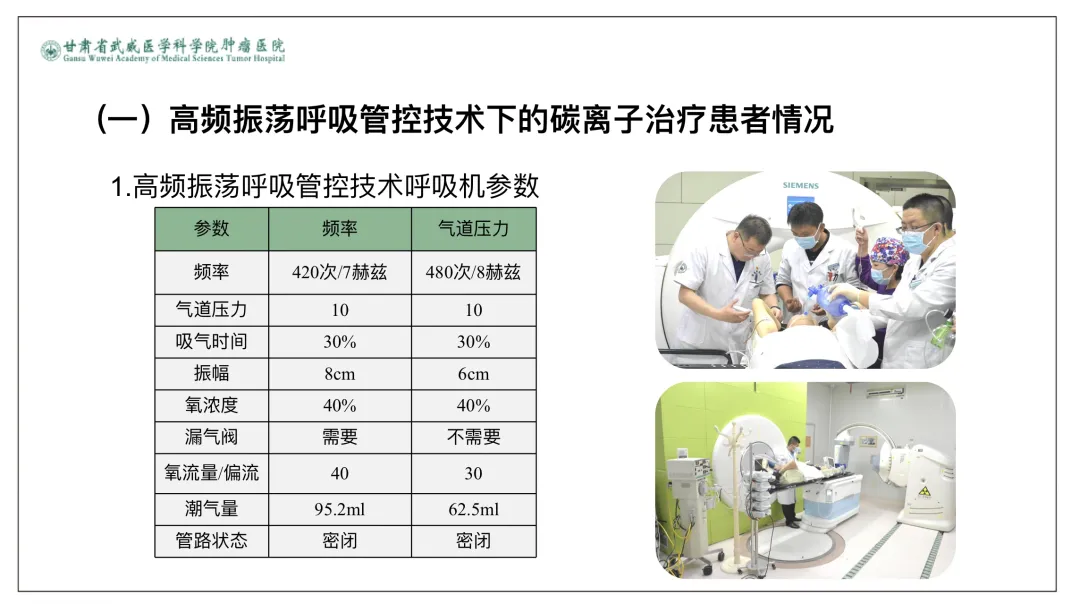
General Anesthesia High-Frequency Oscillatory Ventilator
This technology achieves three major breakthroughs:
1. Sub-millimeter positioning accuracy, which completely eliminates interference from moving organs on target areas, ensuring precise focus of radiotherapy doses on lesions.
2. Exceptional safety performance, clinically validated by 23 healthcare volunteers, demonstrating advantages such as ease of operation, good tolerance, and high reproducibility. It significantly reduces the risk of complications like radiation pneumonitis and minimizes radiation exposure to healthy tissues.
3. Efficient treatment mode, enabling one-time irradiation of multiple sites within the same organ, significantly shortening patient hospitalization cycles and conserving medical resources.
The core of this technological breakthrough lies in establishing a three-dimensional diagnosis and treatment system characterized by "precise targeting + safety protection + efficient therapy." This technology seamlessly integrates the respiratory suppression advantages of high-frequency oscillatory ventilation with the physical properties of heavy ion radiotherapy, opening a new treatment pathway for elderly, frail, or tumor patients in inoperable areas.
Patient Liu*, female, 62 years old. Diagnosis: Secondary malignant lung tumor, pT0N0M1, stage IV. Auxiliary examination: PET/CT dated May 24, 2021, revealed a mixed ground-glass opacity with increased metabolism in the right upper lobe of the lung, suggestive of lung metastasis.
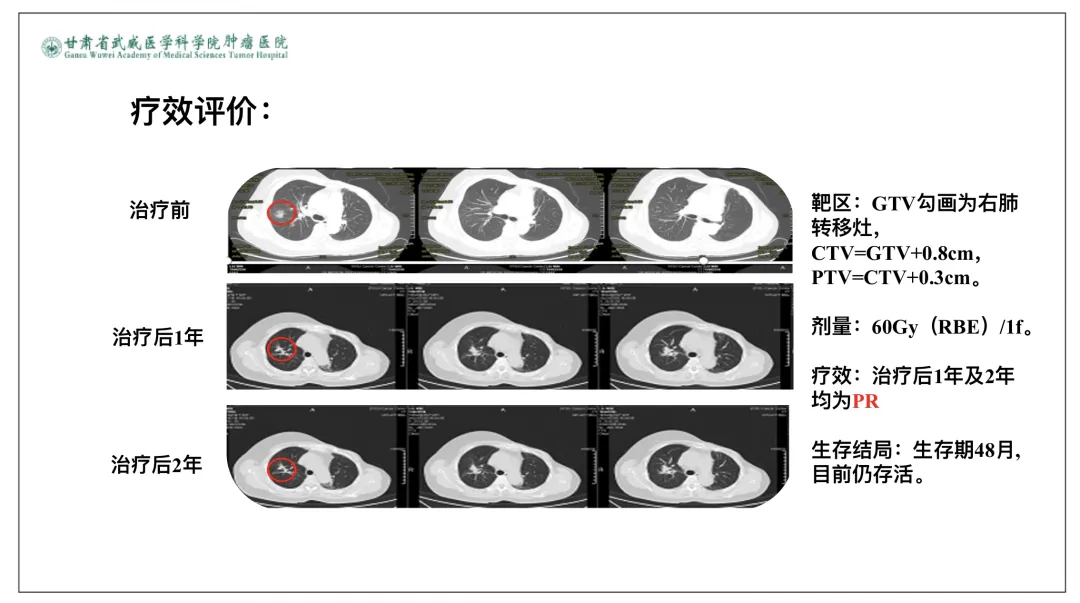
As the "Jinggangshan" of China's heavy ion technology, this breakthrough not only fills the international gap in the application of non-invasive high-frequency oscillatory ventilation in heavy ion therapy but also drives a revolutionary shift in tumor treatment from "invasive radical therapy" to "non-invasive precision therapy," showcasing the robust capabilities of "Chinese innovation." In the future, the further promotion and optimization of this technology will provide a higher-quality diagnosis and treatment experience for cancer patients worldwide, highlighting China's independent innovation capabilities and international leadership in the field of precision medicine.