Our Hospital Successfully Performs High-Difficulty Emergency PCI Guided by OCT Technology
Providing “Keen Insight” for Interventional Surgery — Our Hospital Successfully Performs High-Difficulty Emergency PCI Guided by OCT Technology
Recently, the interventional center team of our hospital's Cardiovascular Medicine Department successfully performed an emergency percutaneous coronary intervention (PCI) assisted by optical coherence tomography (OCT) technology. The application of this technology marks a new milestone for our hospital in the field of precision interventional diagnosis and treatment of coronary heart disease, providing a better treatment solution for patients with complex and critical conditions.
The patient was admitted due to acute coronary syndrome. Coronary angiography revealed complex coronary lesions, with proximal occlusion of the first diagonal branch and severe stenosis of up to 95% accompanied by thrombosis in the proximal segment of the right coronary artery (RCA). Faced with such a complex and critical condition, the team decided to employ advanced OCT technology to guide the procedure.
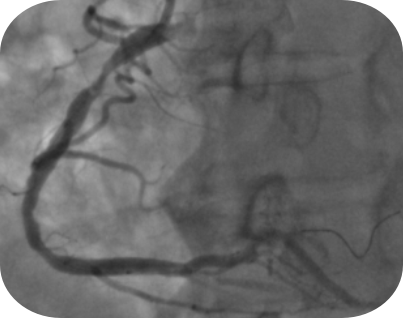
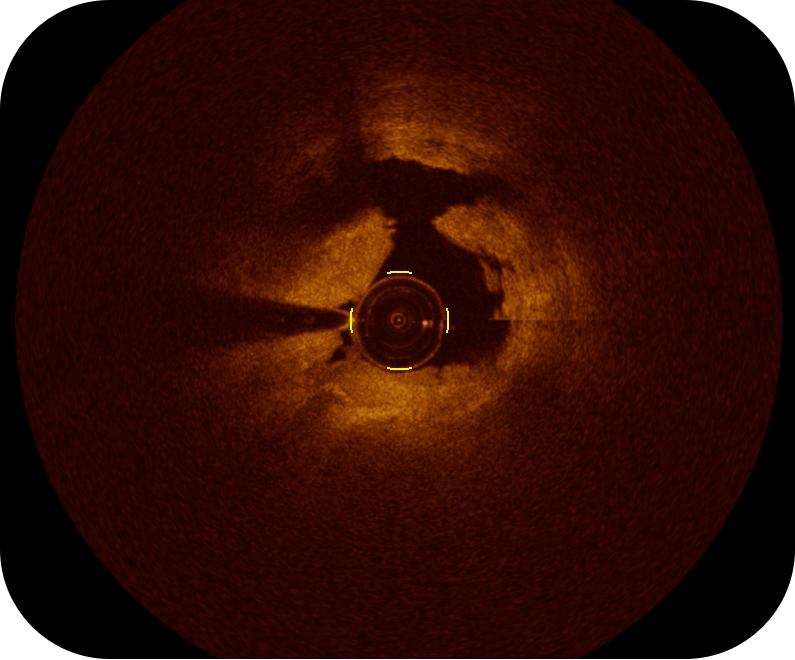
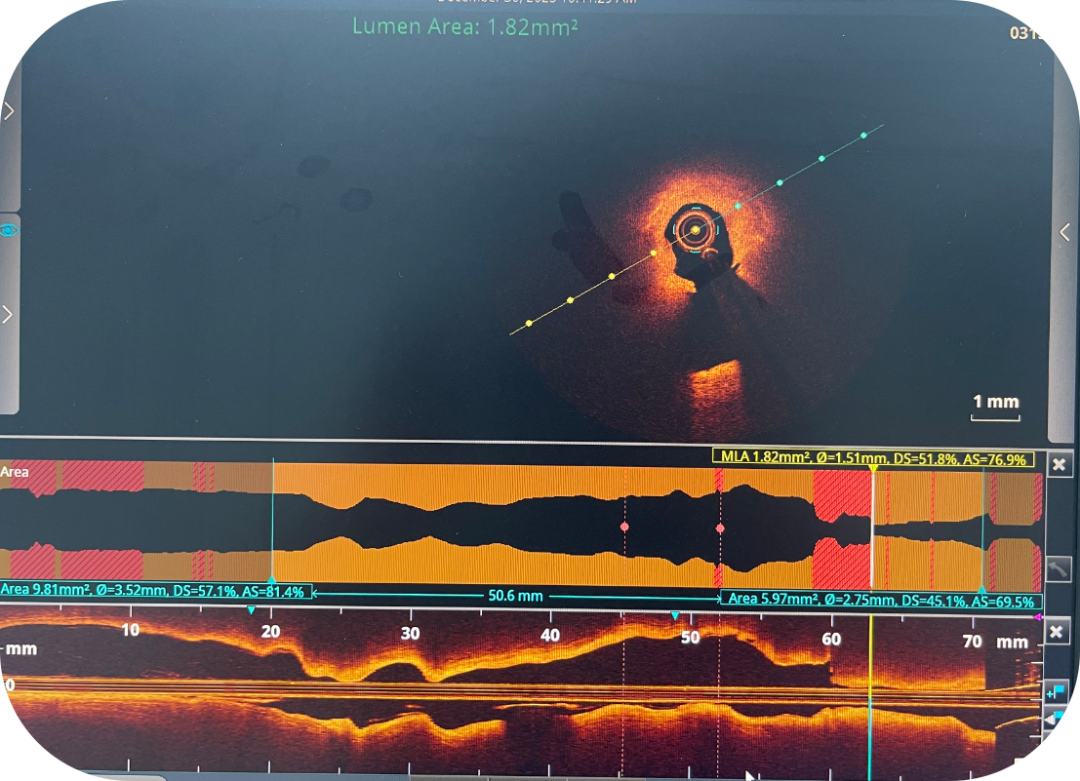
Preoperative angiography and OCT imaging revealed a significant amount of white thrombus in the local segment of the right coronary artery, accompanied by localized rupture
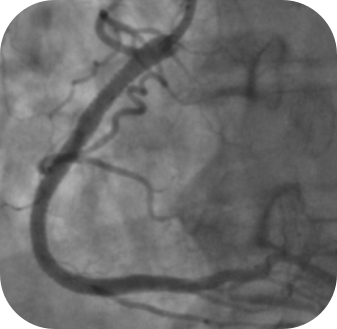
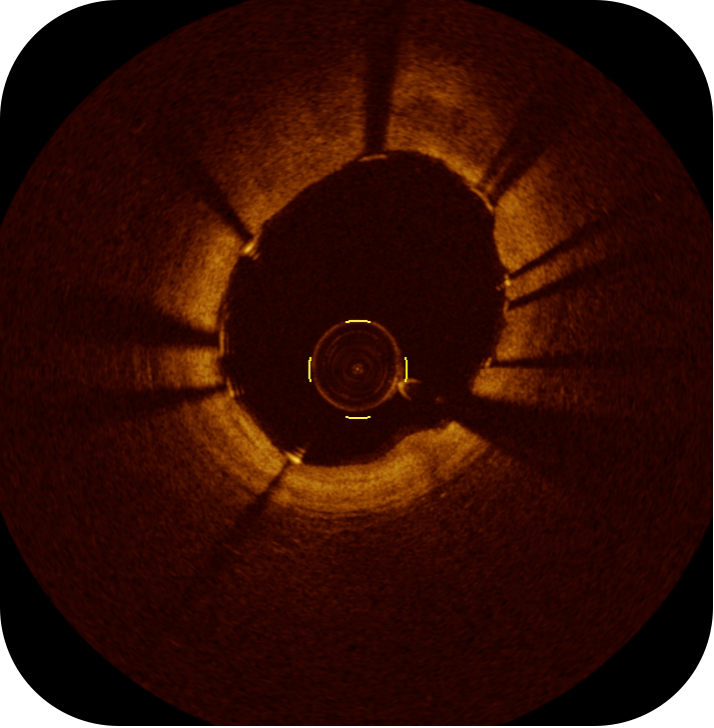
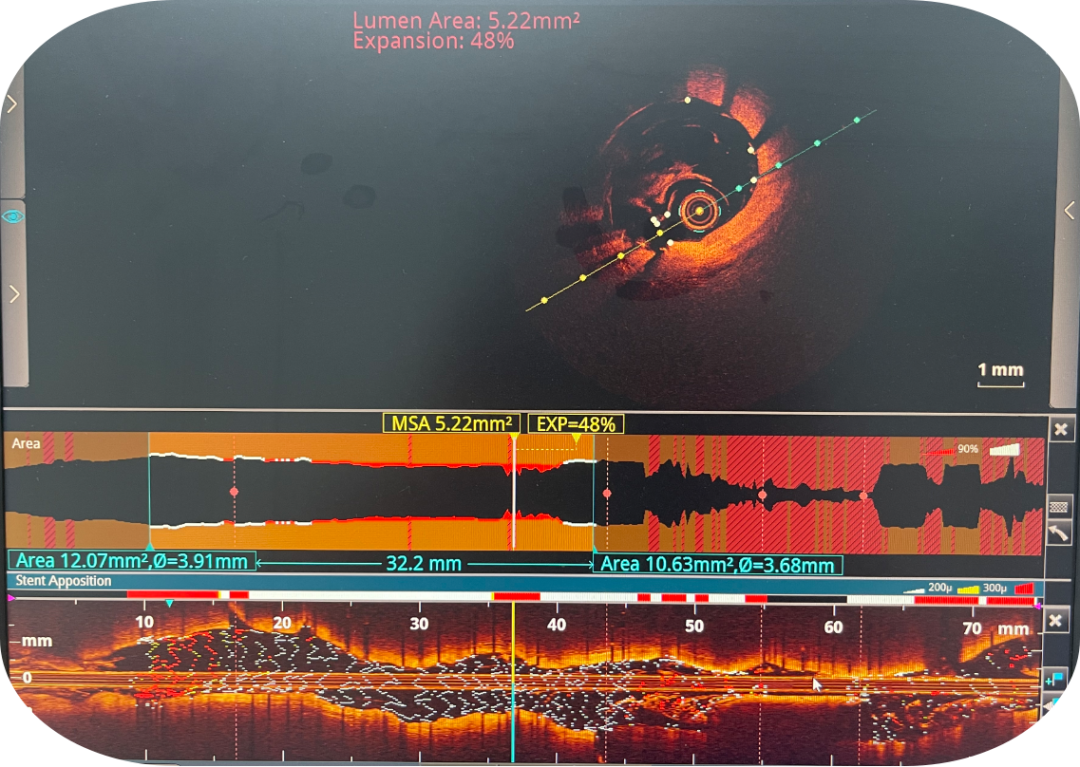
Postoperative angiography and OCT images show that the proximal and distal ends of the stent are well apposed, with immediate and significant improvement in luminal stenosis
Following the pretreatment of the right coronary artery (RCA) lesion and the implantation of a drug-eluting stent, although angiography indicated unobstructed blood flow, the team proceeded with OCT intravascular imaging evaluation to pursue more ideal long-term outcomes. The high-resolution cross-sectional imaging of OCT clearly revealed the apposition of the stent struts to the vessel wall, accurately identifying areas of incomplete apposition. Based on this precise feedback, the operator selected an appropriate non-compliant balloon for targeted post-dilation. Subsequent OCT confirmation showed significant improvement in stent apposition, achieving optimized implantation results.
When addressing the more challenging diagonal branch lesion, OCT technology once again provided critical guidance for key therapeutic decisions. Its high-definition imaging precisely revealed subtle dissections in the vessel wall after balloon angioplasty and their morphological characteristics, assisting the team in comprehensively evaluating the anatomical conditions of the diseased vessel and its response to intervention. Integrating the precise information provided by OCT, the team ultimately formulated a personalized strategy centered on optimized drug therapy, reflecting the core principle of precision medicine.
Technical Highlights and Significance
1. Precise Evaluation, Breaking Visual Limitations: OCT can accurately identify the microstructures of blood vessel walls, precisely assess plaque characteristics, stent apposition, and expansion, thereby addressing the shortcomings of traditional angiography.
2. Optimizing Strategies, Achieving Precision Treatment: Based on objective imaging evidence from OCT, it guides the development of better interventional strategies, including stent sizing, landing zone determination, and postoperative outcome evaluation, thereby enhancing treatment quality.
3. Scientific Decision-Making, Ensuring Patient Benefits: It effectively assists physicians in determining the boundaries of intervention, pursuing optimal therapeutic outcomes while avoiding unnecessary device implantation, thereby maximizing long-term patient benefits.
The successful implementation of this new technology highlights the ability of our hospital's Cardiology Department to keep pace with the forefront of the discipline and continuously pursue technological innovation. In the future, our department will continue to promote the standardized application of precision diagnostic and treatment technologies such as OCT, contributing to the improvement of regional cardiovascular emergency and critical care capabilities.