Heavy Ion Therapy for Esophageal Cancer
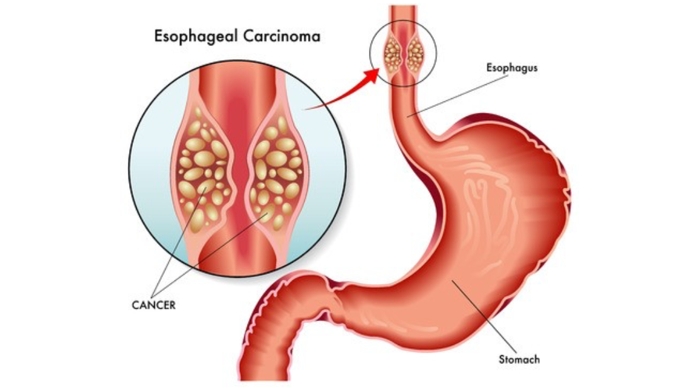
Esophageal cancer is one of the common malignant tumors of the digestive tract. China is the country with the largest number of patients with esophageal cancer in the world. According to the 2015 data from the Chinese Cancer Registry, the incidence and mortality rates of esophageal cancer rank the 4th and 3rd among all tumor types respectively. Over the past two decades, although comprehensive treatment methods such as chemotherapy, surgery, radiotherapy and immunotherapy have been adopted, the treatment effect of esophageal cancer has made progress, but it is still unsatisfactory. Due to the multi-site and multi-focal characteristics of esophageal cancer, surgery often requires extensive resection or even total esophageal resection. The surgical scope is wide, the trauma is large, and the postoperative quality of life is far from satisfactory. Esophageal cancer often has resistance to ordinary photon and proton radiotherapy, chemotherapy is only relatively sensitive, and there are no targeted drugs yet. The progress in immunotherapy is also slow. All these have placed many esophageal cancer patients in an awkward situation, making esophageal cancer one of the most common malignant tumors threatening the health of the Chinese population.
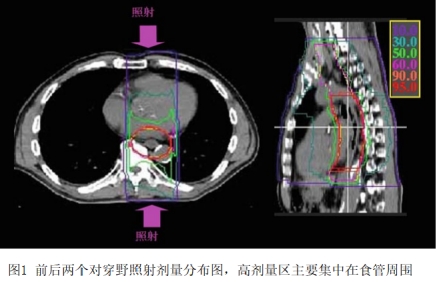
Heavy ions, due to their precise energy-targeted release, directly destroy the double-stranded DNA of tumors and make esophageal cancer cells unable to resist, demonstrating excellent biological and physical characteristics such as these. They can directly damage esophageal cancer tissues while protecting surrounding normal tissues such as the heart, lungs, trachea, spinal cord and skin. Even without undergoing chemotherapy, the high biological effect of heavy ion radiotherapy has the potential to provide excellent anti-tumor effects and effectively control esophageal tumors. Therefore, heavy ion radiotherapy can be used as a minimally invasive treatment. Even for elderly patients with other diseases who cannot receive other treatments, they can also undergo heavy ion therapy. Heavy ion radiotherapy for esophageal cancer began in Japan in July 2004. Initially, heavy ions were used for esophageal cancer heavy ion radiotherapy before surgery, and relatively optimistic data were obtained. In April 2008, Japan began an I/II phase clinical study of dose escalation for radical radiotherapy of esophageal cancer, with the initial planned target area including GTV and the corresponding lymph node regions of the primary tumor. The reduced-field PTV includes the entire primary tumor with an external expansion of 3 cm in the head-to-tail direction and the minimum external expansion of 1 cm for metastatic lymph nodes. During scanning CT and treatment, a respiratory gating system is used, and the radiation field direction is the combined use of anterior-posterior shield fields (Figure 1).
Japanese attempts to treat esophageal cancer using heavy ion therapy alone, without combination chemotherapy and immunization, have achieved promising results. Because the incidence of esophageal cancer is very low in Western countries, and the pathological type is mostly adenocarcinoma, there is little experience in heavy ions. Since its opening in April 2020, Wuwei Heavy Ion Center has treated more than 200 patients, with the largest number of chest tumors and relatively rich experience. Given the high incidence of esophageal cancer in our country and the large number of patients, our center plans to increase the research on heavy ions combined with photons in the treatment of chest tumors, combined with effective chemotherapy and immunization. It is expected to achieve better treatment effect of esophageal cancer and bring good news to patients with esophageal cancer in China. Make our own contribution to the international heavy ion cause!
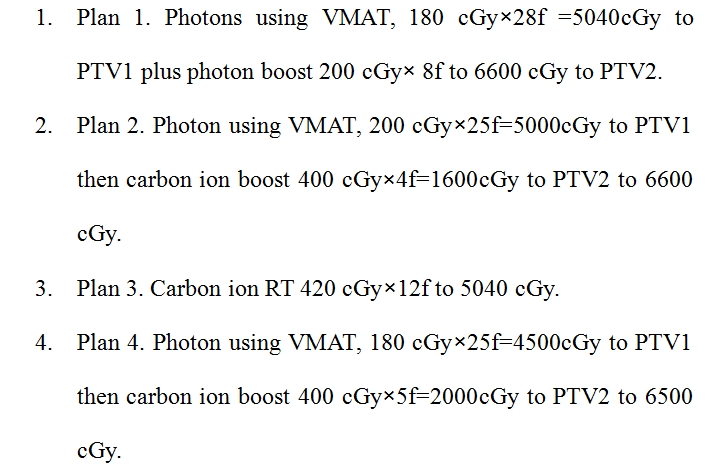
Key research project of esophageal cancer in Wuwei Heavy Ion Center:
Central nervous system tumors: glioma, meningioma, acoustic neuroma, skull base tumor, chordoma; Head and neck tumors: eye tumors (retinoblastoma, ocular melanoma), nasopharyngeal cancer, oral cancer, pharyngeal cancer, laryngeal cancer; Chest and abdominal tumors: lung cancer, esophageal cancer, breast cancer, mediastinal tumor, liver cancer, pancreatic cancer, kidney cancer, ureter cancer; Pelvic tumors: prostate cancer, bladder cancer, rectal cancer, uterine cancer and other unresectable pelvic tumors; Various types of bone and soft tissue sarcomas.