Heavy ion therapy for osteosarcoma
In August 2020, our center treated a child with osteosarcoma at the lower end of the right femur. Although the tumor was relatively large and the symptoms were severe at that time, the patient had no pain and the pain was significantly relieved during treatment. Now, the follow-up of 3 months after the treatment ended, the curative effect was satisfactory, and the purpose of limb saving and tumor inactivation was achieved.
CASE
The patient, a 14-year-old female, was presented with the main complaint of "right thigh pain with mobility disorder for 3 months". CT examination indicated mild dilatant bone destruction in the right lower femur, accompanied by periosteum hyperplasia and soft tissue swelling, and neoplastic lesions (about 3.6x12.1x4.9cm in size) were mainly considered. Biopsy of the right femur mass was performed, and the biopsy results showed osteosarcoma (right lower femur). Diagnosis: osteosarcoma of right femur (cT2N0M0 Stage IIB KPS score: 70). The comprehensive treatment based on carbon ion radiotherapy was started on August 18, 2020. The tumor volume was 188.62cm3, and the heavy ion therapy was completed 12 times in total within three weeks. The treatment will end on September 3, 2020.
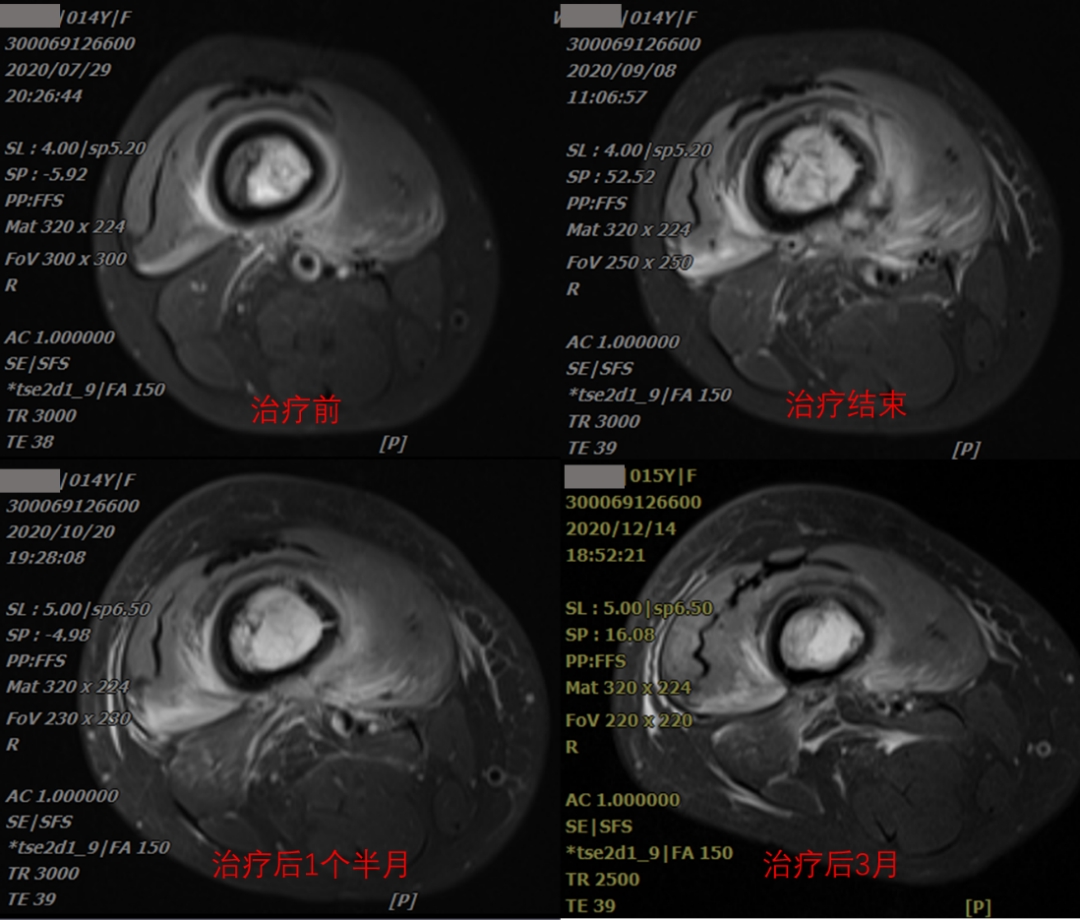
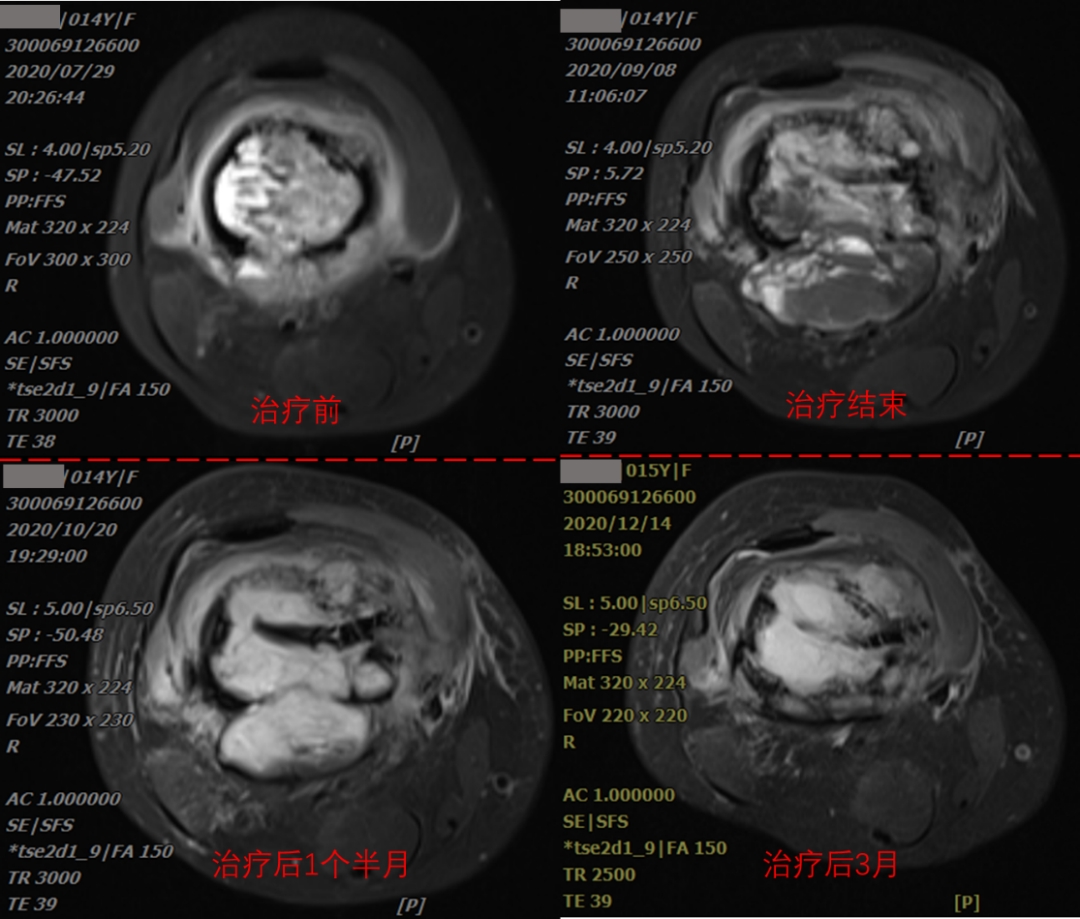
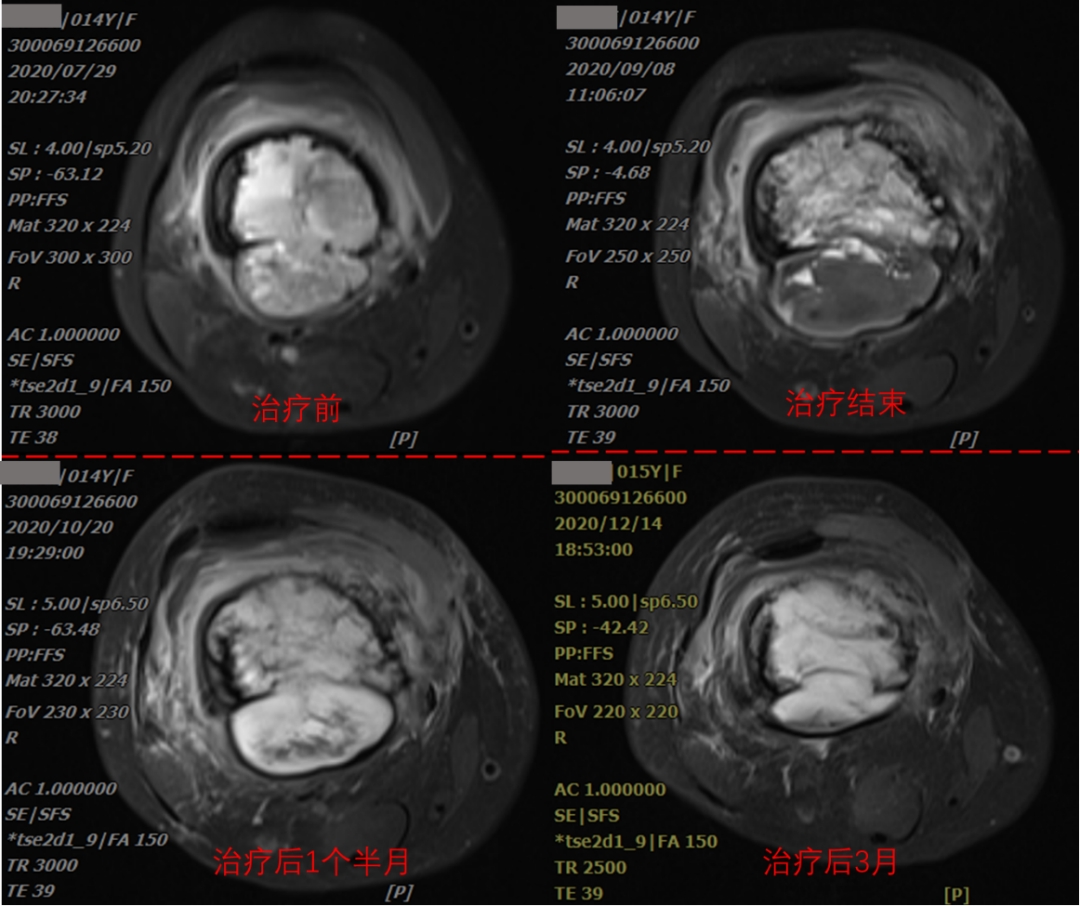
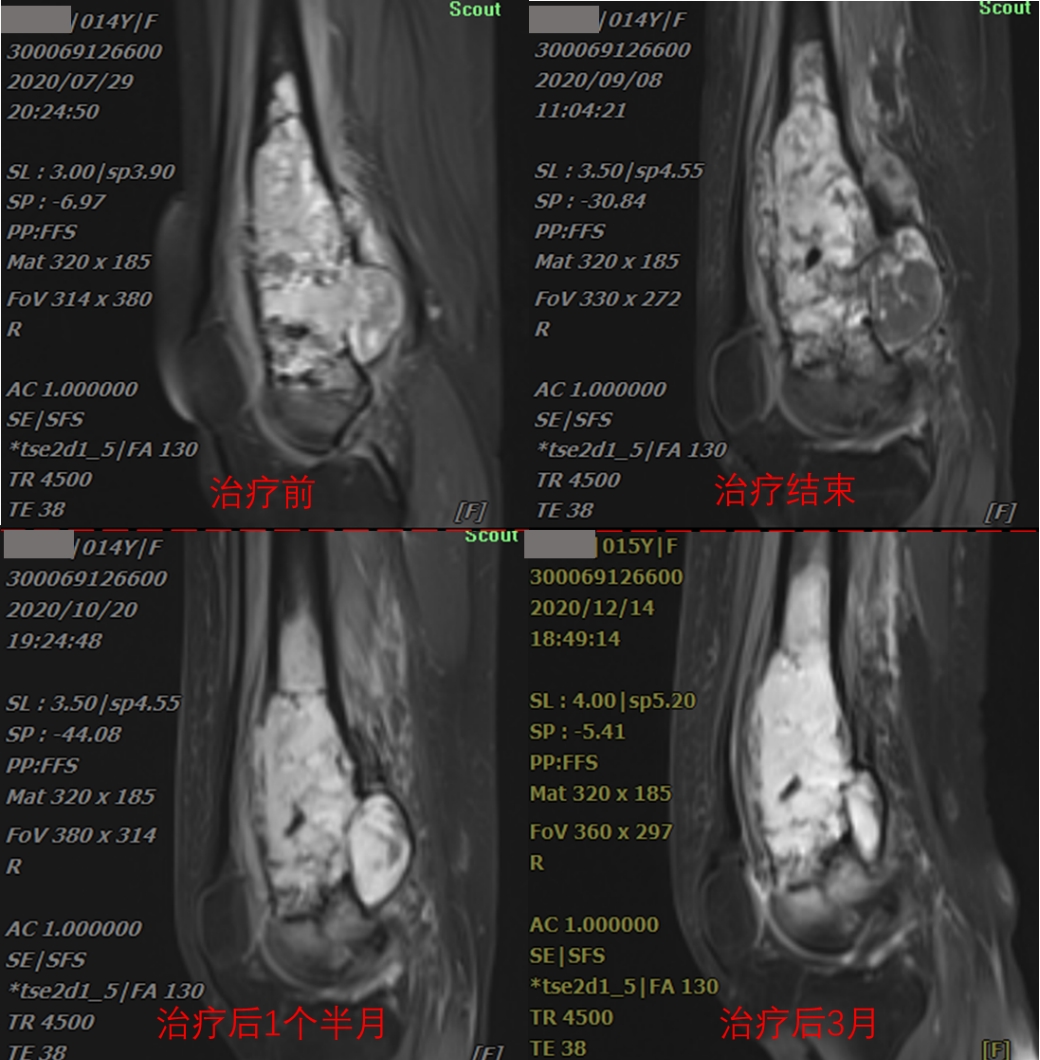
As can be seen from imaging data, tumor inactivation and slow absorption after treatment. According to international experience, it may take 1-2 years for huge sarcomas to be completely absorbed after inactivation. However, after heavy ion treatment, the purpose of limb preservation can be achieved, and anti-tumor immunity can be activated, and distant and side effects can be induced, which can effectively remove tumor tissue outside the tumor body. Combined treatment with chemotherapy and immunotherapy is expected to achieve a better effect, providing a new way for osteosarcoma patients. Through the observation of the treatment process of the patient's osteosarcoma, it can be seen that 1 and a half months after the end of heavy ion treatment of osteosarcoma, the local edema of the tumor was obvious, and 3 months after the end of the treatment, the local tumor was significantly smaller than before the treatment, the patient's symptoms were significantly relieved, and the tumor was well controlled locally. During the treatment, there was no obvious pain, no obvious edema in the lower extremities, and no obvious radiotherapy reaction in the local skin.
Osteosarcoma is the most common primary malignant bone tissue tumor in adolescents, with the lower femur, upper tibia and proximal humerus metaphyseal as the most common sites. Osteosarcoma is highly malignant, extremely aggressive, progresses very rapidly, has a very poor prognosis, is destructive to local bone tissue, and is prone to early metastasis. Some patients have been accompanied by metastasis when diagnosed, especially lung metastasis is the most common, and treatment is difficult, seriously threatening the life safety of the majority of patients.
Clinical treatment methods for osteosarcoma patients include surgery, chemotherapy, radiotherapy, ablative therapy, interventional therapy and a variety of comprehensive treatment, but the therapeutic effect is not satisfactory. The most important treatment is "neoadjuvant chemotherapy + surgical limb salvage surgery + adjuvant chemotherapy" program, but in recent years, the long-term survival rate of patients has not made a significant breakthrough, the reason is that the pathogenesis of osteosarcoma and unknown causes, chemotherapy resistance and other factors seriously restrict its therapeutic effect.
Due to the poor sensitivity of osteosarcoma to conventional photon radiotherapy, radiotherapy is generally not used as the main treatment in clinical practice, but radiotherapy is still considered to be an extremely important adjuvant treatment for comprehensive limb preservation. For osteosarcoma, which is not sensitive to conventional radiotherapy, the application of heavy ions with high LET rays to directly kill tumor cells has become a new hope for the treatment of patients.
The results of the study by the Japan Institute of Medical Research (NIRS) Center found that the 5-year local control rate and overall survival rate of 78 patients with osteosarcoma were 62% and 33%, respectively. At the same time, studies have shown that tumor volume is an important prognostic factor for patient survival and local tumor control. The 5-year local control rate was 88% in 38 patients with tumor volume less than 500cm3, and 31% in 40 patients with tumor volume greater than 500cm3. The overall 5-year survival rate for 38 patients with small-volume tumors was 46%, compared with 19% for the large-volume group. The literature reports that the overall survival rate for inoperable osteosarcoma is 10% or less, so heavy ion radiotherapy provides an effective survival benefit for inoperable osteosarcoma patients.
Indications for heavy ion therapy:
Central nervous system tumors: glioma, meningioma, acoustic neuroma, skull base tumor, chordoma; Head and neck tumors: eye tumors (retinoblastoma, ocular melanoma), nasopharyngeal cancer, oral cancer, pharyngeal cancer, laryngeal cancer; Chest and abdominal tumors: lung cancer, breast cancer, esophageal cancer, mediastinal tumor, liver cancer, pancreatic cancer; Pelvic tumors: prostate cancer, bladder cancer, recurrent rectal cancer, uterine tumors and other unresectable pelvic tumors; Various types of bone and soft tissue sarcomas.