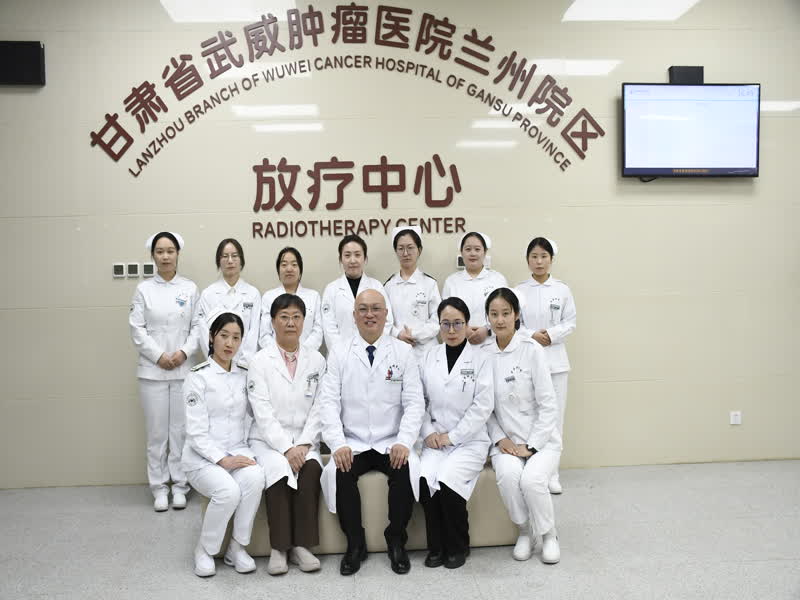
Radiotherapy Department V, Lanzhou Heavy Ion Center, Gansu Wuwei Cancer Hospital
(Heavy Ion Therapy Department for Abdominopelvic Tumors)
I. Department Overview and Positioning
As a specialized radiotherapy department for abdominopelvic tumors, Radiotherapy Department V of the Gansu Wuwei Cancer Hospital Lanzhou Heavy Ion Center is equipped with advanced radiotherapy equipment and a professional medical team. Leveraging the multidisciplinary advantages of the parent Wuwei Heavy Ion Center and guided by renowned domestic and international experts specially appointed at the Lanzhou Heavy Ion Center, the department focuses on radiotherapy for abdominopelvic tumors, establishing a comprehensive treatment system covering the entire chain from precise positioning to personalized therapy. The department actively engages in basic and clinical research related to radiotherapy for abdominopelvic tumors and undertakes multiple scientific research projects. Aiming to be patient-centered and supported by advanced technology, the department is dedicated to improving the cure rate and quality of life for patients with abdominopelvic tumors, providing high-quality, efficient, and patient-friendly medical services.
II. Talent Team and Discipline Echelon
The department currently has 12 medical staff, including 6 physicians (2 Chief Physicians, 4 Resident Physicians) and 7 nurses (2 Nurse-in-Charge, 5 Nurses). The medical team has undergone systematic specialized training in oncology, possesses extensive professional knowledge and a high sense of responsibility, and can provide patients with scientific, reasonable treatment plans as well as specialized, personalized, and precise services.
Professor Wang Junjie, Director of Radiotherapy at Peking University Third Hospital, and Professor Fan Ruitai from the First Affiliated Hospital of Zhengzhou University are specially appointed as Guest Professors of the department. Professor Ma Changying from Qiqihar First Hospital serves as an academic advisor. Furthermore, under the perennial guidance of the renowned Taiwanese physicist Professor Wu Jiaming, the department carries out clinical, scientific research, and teaching activities. The department has completed three municipal-level scientific research projects, winning one excellence award, and has published over 40 papers in core journals and 5 SCI papers.
Director Qiao Hongmei, Chief Physician, has been engaged in radiotherapy and chemotherapy for over 20 years. She has undertaken further studies at renowned cancer hospitals in China, including the Affiliated Hospital of Xi'an Jiaotong University, Peking University Third Hospital, and Shaanxi Cancer Hospital. She has profound expertise in conventional intensity-modulated radiotherapy, stereotactic radiotherapy, and interstitial brachytherapy for tumors, as well as extensive clinical experience in combining carbon-ion radiotherapy with chemotherapy, targeted therapy, and immunotherapy for tumors. She is currently conducting two clinical studies related to carbon-ion therapy.
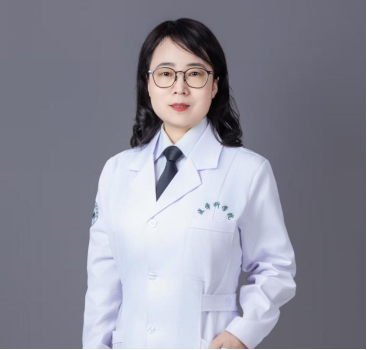
Qiao Hongmei Chief Physician
III. Scope of Diagnosis, Treatment, and Technical Features
The department provides comprehensive diagnosis and treatment for abdominopelvic tumors, primarily focusing on heavy-ion radiotherapy for cholangiocarcinoma, and actively implements heavy-ion and photon radiotherapy techniques for tumors such as pancreatic cancer, liver cancer, gallbladder cancer, renal cancer, prostate cancer, bladder cancer, ureteral cancer, and abdominopelvic sarcomas, offering patients professional radiotherapy and personalized comprehensive cancer treatment services.
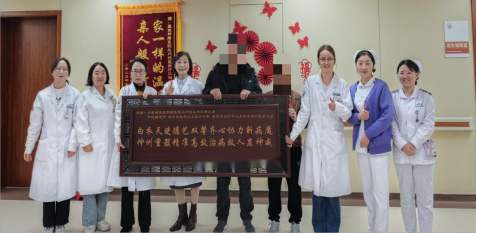
Focusing on international advanced treatment methods and utilizing the platform of the Lanzhou Heavy Ion Center, Radiotherapy Department V has established a comprehensive technical system characterized by heavy-ion therapy and the coordinated development of multi-modal precision radiotherapy techniques, providing personalized and highly effective solutions for refractory abdominopelvic tumors and complex cases. The department fully implements various radiotherapy techniques, including heavy-ion radiotherapy, Spatially Fractionated Radiotherapy (Lattice Radiotherapy), Stereotactic Radiosurgery (SRS) and Stereotactic Ablative Body Radiotherapy (SABR/SBRT), Volumetric Modulated Arc Therapy (VMAT) and Static Intensity-Modulated Radiotherapy (IMRT), Image-Guided Radiotherapy (IGRT), 3D Brachytherapy, Deep Hyperthermia, and tumor biopsy techniques. Since its establishment, the department has completed heavy-ion treatment for numerous domestic and international patients, with the oldest patient being 85 years old. The overall treatment side effects are mild, clinical outcomes are satisfactory, and the department has received widespread recognition from patients and their families.

Departmental Specialty Technology: Heavy Ion Radiotherapy
Heavy ion radiotherapy leverages unique physical and biological properties to precisely disrupt tumor cell DNA double-strreaks, demonstrating superior efficacy against tumors resistant to conventional radiotherapy, such as pancreatic cancer, cholangiocarcinoma, and sarcomas. It significantly enhances tumor control rates while minimizing radiation damage to critical normal tissues like blood vessels and internal organs, substantially reducing side effects. With shorter treatment cycles and improved patient outcomes, it offers new hope for those with refractory tumors.
Case Presentation 1: Pancreatic Head Malignancy
A malignant tumor in the pancreatic head (33×25 mm) caused abnormal dilation of intra- and extrahepatic bile ducts and pancreatic ducts, with enlarged peripancreatic lymph nodes and potential metastasis. Pathology indicated moderately to poorly differentiated ductal adenocarcinoma, staged cT4N1M0 III. Treatment involved carbon-ion radiotherapy with a total dose of PTV 60.2 Gy (RBE)/14 fractions, concurrent chemotherapy (S-1 50 mg twice daily, days 1–14, every 3 weeks), and targeted therapy (nimotuzumab 400 mg weekly). Short-term outcomes achieved partial response.
Imaging Comparison
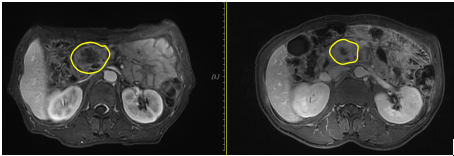
(Pre-treatment)2025-04-03 (1 Month Post-treatment)2025-06-06
Case Presentation 2: Cholangiocarcinoma
An intrahepatic cholangiocarcinoma in liver segment S4 (47×35×37 mm) involved the gallbladder and hepatic portal, with left hepatic duct dilation. Pathology confirmed moderately differentiated adenocarcinoma, staged cT4N1M0 IIIB. The patient received carbon-ion radiotherapy (total dose PTV 68.4 Gy [RBE]/18 fractions) alongside targeted therapy (lusanutuzumab 200 mg every 3 weeks), achieving sustained remission in long-term follow-up.
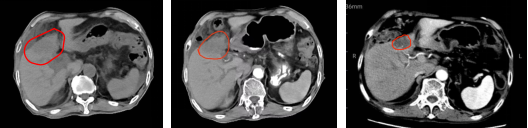
(Pre-treatment)2025-04-23 (2 Weeks Post-treatment)2025-5-7 ( 4 Months Post-treatment)2025-09-26
Case Presentation 3: Malignant Melanoma
A patient with malignant melanoma on the left finger exhibited metastasis to the forearm, upper arm, axilla, and lungs (stage cT4N0M1b IV, KPS 90). Life-threatening bleeding from a massive axillary metastasis prompted palliative carbon-ion radiotherapy (total dose PTV 72 Gy [RBE]/16 fractions). Short-term efficacy was notable, improving quality of life and enabling further treatment opportunities

(Pre-treatment)2025-04-26 (After 2 treatments)2025-05-01
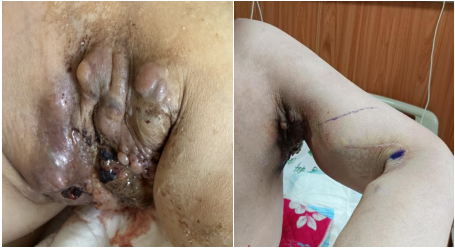
(After 5 treatments)2025-05-08 (Over 1 month after the completion of treatment)2025-07-01
IV. Hardware Facilities
The department has introduced multiple internationally advanced large-scale medical equipment, including: GE Discovery MI large-scale iterative PET-CT, Siemens MAGNETOM Skyra 3.0T superconducting magnetic resonance simulation positioning system, Siemens Somatom Confidence 64-slice simulation positioning CT, Varian VitalBeam linear accelerator, Varian Clinac iX linear accelerator, Elekta Infinity four-dimensional image-guided linear accelerator, and others. These devices collectively form a complete high-precision radiotherapy platform, providing a solid foundation for clinical treatment.
V. Service Philosophy and Patient Care
Led by Chief Physician Qiao Hongmei, the medical team relies on a comprehensive diagnosis and treatment system centered on heavy ion therapy, supplemented by surgery, immunotherapy, and chemotherapy. By integrating cutting-edge heavy ion radiotherapy technology with chemotherapy, targeted therapy, and immunotherapy, and tailoring precise "one person, one policy" plans based on individual differences such as age, tumor type, and physical condition, the team provides accurate, efficient, and personalized medical services for each patient.
VI. Contact Information and Medical Guide
Address: 8th Floor, Inpatient Complex Building, Lanzhou Heavy Ion Center, Gansu Wuwei Cancer Hospital
Phone: +86 0931-2169515
Qiao Hongmei(Chief Physician ): +86 13379389622 (same number for WeChat)